Uniting Heaven and Earth
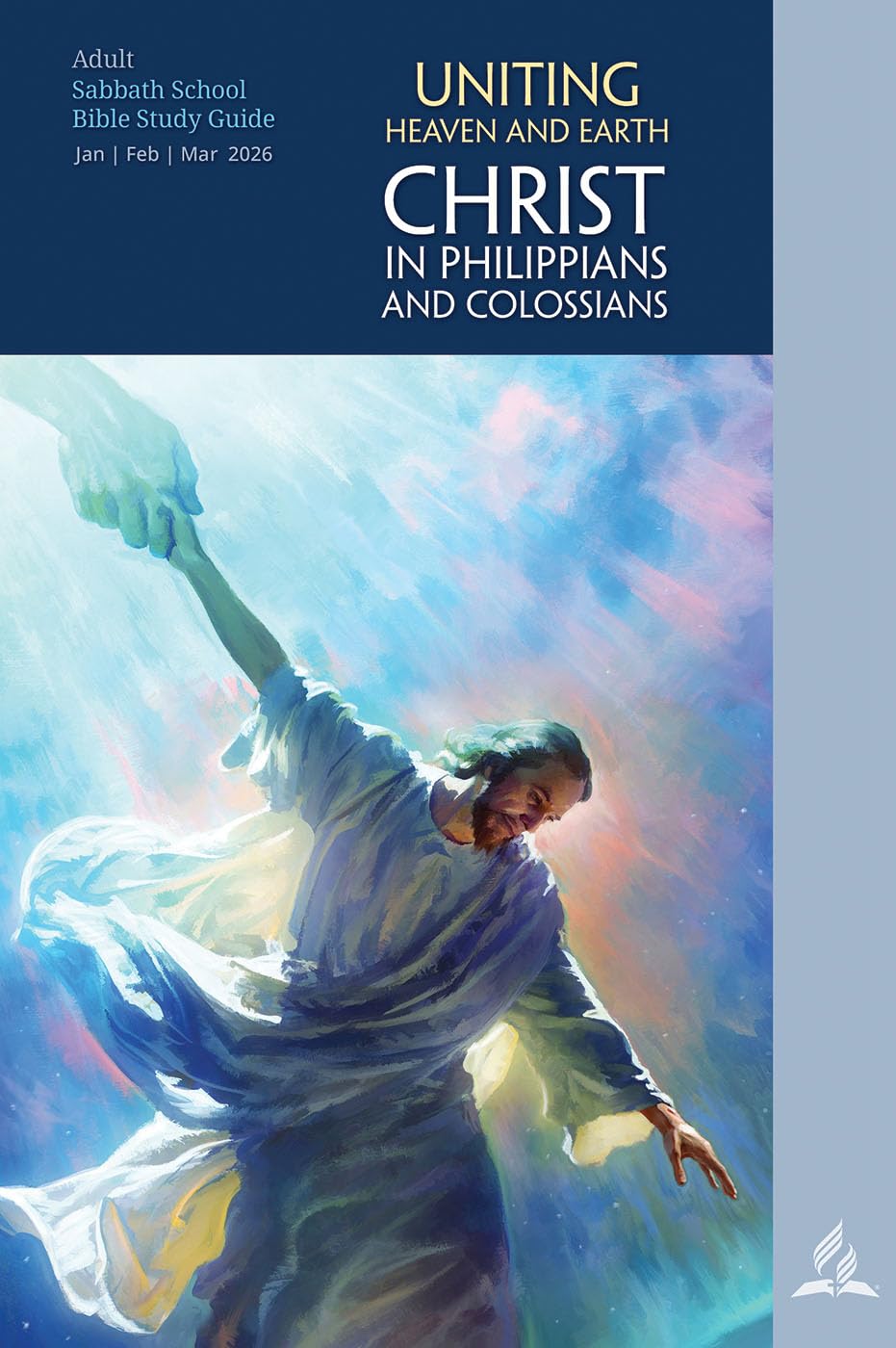
Think of the hardest job you've ever done. What made it hard? Was it the expectations, or the time allotted for the work, or both? Was it your attitude toward the task? Or perhaps it was the people you worked with? Or maybe it just seemed like an impossibility to ever succeed?
Consider the purpose of the plan of salvation: uniting heaven and earth. Sound impossible? Humanly speaking, it certainly is. Nevertheless, just before ascending to heaven, Jesus gave the apostles a seemingly impossible assignment: " 'Go therefore and make disciples of all the nations, baptizing them in the name of the Father and of the Son and of the Holy Spirit, teaching them to observe all things that I have commanded you' " (Matt. 28:19-20, NKJV).
Jesus sent Paul to the Gentiles to accomplish this seemingly impossible task: " 'To open their eyes, in order to turn them from darkness to light, and from the power of Satan to God, that they may receive forgiveness of sins and an inheritance among those who are sanctified by faith in Me' " (Acts 26:18, NKJV).
Some might throw up their hands when given jobs like that. However, we should not overlook the promises Jesus gave on both these occasions. To the apostles, He added, " 'And, lo, I am with you always, even unto the end of the world' " (Matt. 28:20). And to Paul, Jesus said, " ' "I have appeared to you for this purpose, to make you a minister and a witness both of the things which you have seen and of the things which I will yet reveal to you" ' " (Acts 26:16, NKJV).
In short, Jesus gives humanly impossible tasks so we will rely on Him, rather than on ourselves, to accomplish them. He never gives us a job without supplying the power to do it. "As the will of man co-operates with the will of God, it becomes omnipotent. Whatever is to be done at His command may be accomplished in His strength. All His biddings are enablings."--Ellen G. White, Christ's Object Lessons, p. 333.
Amazingly, by the time Paul wrote to the Colossians, the gospel had been "preached to every creature under heaven" (Col. 1:23, NKJV). Of course, not all accepted it. But if we look carefully at the commissions He gave to the apostles (Matt. 28:18-20), and to the apostle Paul, Jesus never promised all would become disciples or all would be converted. The gospel is to be " 'preached in all the world as a witness to all the nations, and then the end will come' " (Matt. 24:14, NKJV, emphasis supplied). What does that witness look like? How exactly is it to be accomplished?
This quarter we'll study Paul's epistles to the Philippians and to the Colossians. They have important similarities. Above all, they reveal Christ, the only One able to unite heaven and earth. He is the ladder Jacob saw stretching from earth to heaven (Gen. 28:12; compare John 1:51). As the Son of man and the Son of God, He redeems us from sin, and He intercedes for us.
In studying these letters, we will see both these aspects of Jesus. We'll consider some of the most sublime statements found anywhere about Christ's divinity and how He gave it all up to save us. We'll see Paul wrestling from prison with problems in one church he raised up (Philippi) and in one that he himself never even visited (Colossae). The connections Paul established throughout the "world church" of that time enabled him, even from a Roman prison, to respond to challenges. He knew his time was short, and he did all he could to draw the church closer to heaven and to each other. In so doing, he shows us how God's church today can unite with heaven to fulfill the last-day commission of Revelation 14, which we know as "the three angels' messages."
Clinton Wahlen, Ph.D., is an associate director of the Biblical Research Institute at the General Conference. His expertise is in the New Testament, hermeneutics, and Adventist history. He has lived and worked in Germany, New Zealand, Russia, the United Kingdom, and the Philippines. He and his wife, Gina, have two grown children, a daughter-in-law, and two grandchildren.
Lesson 1 December 27-January 2
Persecuted but Not Forsaken

Sabbath Afternoon
Read for This Week's Study: Eph. 3:1; 2 Cor. 4:7-12; Acts 9:16; Philemon 15, 16; Col. 4:9; Phil. 1:1-3; Col. 1:1-2
Memory Text: "Rejoice in the Lord always. Again I will say, rejoice!" (Philippians 4:4, NKJV).
An Adventist pastor, imprisoned on false charges, spent nearly two years behind bars. Though at first greatly perplexed, he realized the prison was his God-given mission field. When his fellow prisoners learned that he was a pastor, they asked him to preach. He did, and gave out literature, too. He even baptized prisoners and conducted communion services. "At times," he admitted, "it was difficult ministering in the prison, but there was also joy, especially when you saw prayers answered and lives changed."
Paul wrote Philippians and Colossians from prison (see Phil. 1:7, Col. 4:3). In fact, in Philippi itself, after Paul and Silas were unjustly accused, the jailer put "their feet in the stocks" (Acts 16:24, NKJV). At midnight, they were "praying and singing hymns to God, and the prisoners were listening to them" (Acts 16:25, NKJV). Truly they knew how to "rejoice always."
This week we'll look at the circumstances that Paul faced. He saw a larger purpose for what happened to him, and perhaps we can learn from him when we, as we inevitably do, face our own trials.
Study this week's lesson to prepare for Sabbath, January 3.
Paul, the Prisoner of Jesus Christ
Philippians and Colossians are called Prison Epistles because they were written while Paul was in prison (the others are Ephesians and Philemon). Most commentators think they were written while Paul was in Rome, about A.D. 60-62 (see Acts 28:16).
Read Ephesians 3:1 and Philemon 1. What is the significance of how Paul characterizes his imprisonment?
Paul has given his life in service to Jesus Christ. If that service includes being a prisoner, he is ready. Paul describes himself as "an ambassador in chains" (Eph. 6:20, NKJV). He had been on missionary journeys, raising up churches and training workers for the Lord. He may have asked, "Why am I here when I could be doing so much more without these chains?" Paul was also imprisoned later, when he wrote 2 Timothy, which is considered a Pastoral Epistle. So at least five books of the New Testament were written while he was in prison.
In none of the prison epistles does Paul mention exactly where he was imprisoned; thus, some have suggested either Ephesus or Caesarea. But there is no biblical evidence that Paul was ever imprisoned in Ephesus. Caesarea might seem a more likely possibility, except there is no apparent threat to Paul's life in this city. There definitely is that threat, however, by the time Philippians was written (see Phil. 1:20, Phil. 2:17).
This epistle gives us some other clues as to where Paul was at the time of his imprisonment. First, there was a praetorium. This can refer to a provincial governor's official residence, like the one in Jerusalem, where Jesus was examined by Pilate (Matt. 27:27, John 18:33), and in Caesarea, where Paul was imprisoned (Acts 23:35). But Paul clearly uses this term, not of a place, but in reference to people. He says "the whole palace guard" became familiar with the gospel (Phil. 1:13, NKJV). In Rome, these were elite soldiers, numbering as many as 14,000, who protected the emperor and guarded his prisoners.
Second, Paul also sends greetings from the believers in "Caesar's household" (Phil. 4:22). This indicates that Paul was a prisoner in Rome and in contact with those who served the imperial household.
How do we learn to make the best of whatever tough situation we find ourselves in? Why is that not always easy to do?
Paul in Chains
While in Macedonia, Paul mentions multiple imprisonments (2 Cor. 6:5, 2 Cor. 11:23, 2 Cor. 7:5). The first recorded instance was in Philippi (Acts 16:16-24). Later he was imprisoned in Jerusalem briefly before being transferred to prison in Caesarea.
Elsewhere, Paul mentions being "in my chains" (Philem. 10, 13, NKJV). Although under house arrest in Rome, he was chained to an elite Roman soldier. Ignatius, a Christian of the early second century who was chained up like this, described the soldiers as behaving like "wild beasts ... who only get worse when they are well treated."--Michael W. Holmes, ed., The Apostolic Fathers (Grand Rapids, MI: Baker Academic, 2007), p. 231.
Read 2 Corinthians 4:7-12. In this passage, what reveals how Paul was able to endure the trials he faced? What seems to be the focus of his life?
No matter how hard life got, Paul was able to see a brighter side, and that gave him courage to bear up under stress. Despite Satan hurling everything he could, Paul knew he was not forsaken.
Read 2 Corinthians 6:3-7. What spiritual resources did Paul have available to help him face these difficulties?
Often, we may be tempted to look at our circumstances, our weaknesses, or our past failures and become discouraged. It's at times like these that we need to remember all the amazing provisions God has made for our success in battling evil. One of the most important is the Bible itself, "the word of truth," because we can learn from others' mistakes and also learn how these people have succeeded. Also, the Holy Spirit "makes effectual what has been wrought out by the world's Redeemer. It is by the Spirit that the heart is made pure. Through the Spirit the believer becomes a partaker of the divine nature. Christ has given His Spirit as a divine power to overcome all hereditary and cultivated tendencies to evil, and to impress His own character upon His church."--Ellen G. White, The Desire of Ages, p. 671.
How can we, as laity or as clergy, always "commend ourselves as ministers of God" (2 Cor. 6:4, NKJV)? What does that mean?
Paul in Philippi
During Paul's second missionary journey, shortly after Timothy was added to the team, they are forbidden by the Holy Spirit to continue across Asia Minor (Acts 16:6). So, during a vision of the night, Paul sees a man pleading with him to " 'come over to Macedonia and help us' " (Acts 16:9, NKJV). So immediately they head to the seaport nearest Macedonia and sail from Troas across the Aegean Sea to Neapolis, on the European continent. But rather than evangelize there, Paul, Silas, Timothy, and Luke, who joined them at Troas (as indicated by the use of "we" in Acts 16:11), head to Philippi.
In his evangelistic activity, Paul always thought strategically. Philippi was "the chief city of that part of Macedonia" (Acts 16:12). In fact, it was one of the most honored cities of the Roman Empire, being given the status of Ius Italicum--the highest possible designation a city could be granted. Its citizens had the same privileges as if the city were located in Italy, including exemption from the land tax and the poll tax, and anyone born in the city automatically became a Roman citizen. It was also an important stop along the Via Egnatia, which was the main overland road connecting Rome with the East. Establishing an important Christian presence there enabled them to bring the gospel to many other nearby cities, including Amphipolis, Apollonia, Thessalonica, and Berea (see Acts 17:1, 10).
Interestingly, the official language in first-century Philippi was Latin, evidenced by the predominance of Latin inscriptions. In Philippians 4:15, Paul even addresses them with a Latin-sounding name, Philippēsioi, apparently in recognition of their special Roman status. Nevertheless, Greek was the language of the marketplace and of the surrounding towns and cities and the means by which the gospel was spread. Luke describes how Paul and his team joined people for prayer by the riverside, where Lydia and her household were converted (Acts 16:13-15). Being a businesswoman ("a seller of purple"), she would have been one of the major financial supporters in Philippi of Paul's ministry. The time Paul and Silas spent in prison there led to the conversion of another entire household--that of the jailer.
The Holy Spirit knew that Philippi would be the ideal beachhead for the spread of the gospel through Europe, even though there would also be persecution. However evil it is, persecution can, in certain circumstances, enable the gospel to reach people who otherwise might not be reached.
Read Acts 9:16. How does this help us understand some of Paul's trials? How might this help us understand some of our own?
Paul and Colossae
We have no record of Paul ever visiting Colossae, which again tells us something about the effectiveness of his evangelistic strategy. First, it was Epaphras, a resident of Colossae (Col. 4:12), who brought the gospel to that city (Col. 1:7). But how was he converted? Most likely, it was in the mid-50s, when Paul was in nearby Ephesus and "all they which dwelt in Asia heard the word of the Lord Jesus" (Acts 19:10; compare Acts 20:31).
The book of Revelation witnesses to how widely the gospel spread throughout this area (Rev. 1:4). The most plausible explanation for this success, including its spread to Colossae, is as a result of the work of Paul's converts, who first heard the message in Ephesus, the most important city in Asia Minor and a major port. Epaphras heard Paul's preaching in Ephesus and, becoming one of his coworkers, he took the gospel back to his hometown of Colossae.
The city itself, about nine miles (15 kilometers) southeast of Laodicea, is only now being excavated, so we know less about it compared to more prominent cities of the region. We do know it had a sizable Jewish population with "as many as ten thousand Jews living in that area of Phrygia."--Arthur G. Patzia, New International Biblical Commentary: Ephesians, Colossians, Philemon (Peabody, MA: Hendrickson Publishers Inc., 1990), vol. 10, p. 3. Coins minted at Colossae indicate the people there, as in many Roman cities, worshipped a variety of gods. The pagan practices and strong cultural influences obviously presented Christians there with tremendous challenges, not only in evangelizing the city but also just remaining faithful to the pure faith of the gospel. Another prominent Christian in Colossae was Philemon, who may have been converted about the same time as Epaphras.
Read Philemon 15, 16. See also Colossians 4:9. What course did Paul gently urge Philemon to pursue with Onesimus?
Although Roman law required Paul to return Onesimus to Philemon, Paul appeals to Philemon's heart and conscience as a fellow believer and urges him to treat Onesimus, not as a slave, but as a brother (Philem. 16).
However much we detest the idea of slavery in any form, and wish that Paul would have condemned the practice, how do we come to terms with what Paul says here? (How fascinating that, during slavery in America, Ellen G. White specifically told Adventists to defy the law that ordered people to return escaped slaves.)
The Churches of Philippi and Colossae
Read Philippians 1:1-3 and Colossians 1:1-2. How are the churches in Philippi and Colossae described, and what significance does the depiction have?
Paul's typical greeting in his epistles calls Christians in those places "saints"; that is, through baptism they have been set apart as God's special people, just as the people of Israel, through the practice of circumcision (Exod. 19:5-6; compare 1 Pet. 2:9-10), had been set apart as a "holy nation." (This has utterly nothing to do with the Roman church's practice of canonizing people as "saints.")
Also interesting is the parallel between the greetings of these two epistles. Paul refers to "overseers and deacons" (Phil. 1:1, ESV) in Philippi and "faithful brothers in Christ" (Col. 1:2, ESV) in Colossae. When the New Testament speaks of "faithful brothers," they have a specific ministry in the church (see Eph. 6:21, Col. 4:7, 1 Pet. 5:12). So, it appears Paul is addressing not only the church members but also the church leaders in these cities. The reference to offices that are more specifically described in other places (for example, in 1 Tim. 3:1-12, Titus 1:5-9) witnesses to the existence and importance of organization from the earliest period of the church.
Training coworkers like Timothy and Epaphras and providing for the leadership of local churches was a priority for Paul and augmented his evangelistic efforts. In other words, there was a strategic approach to both outreach and retention. Our Adventist pioneers followed the New Testament model of church organization as many Review and Herald articles from the 1850s show. In fact, James White said, "The divine order of the New Testament is sufficient to organize the church of Christ. If more were needed, it would have been given by inspiration."--"Gospel Order," The Advent Review and Sabbath Herald, Dec. 6, 1853, p. 173. Long before Paul wrote to these churches, the apostles had already begun installing officers for the church in Jerusalem (see Acts 6:1-6, Acts 11:30), which "was to serve as a model for the organization of churches in every other place where messengers of truth should win converts to the gospel."--Ellen G. White, The Acts of the Apostles, p. 91.
It is well known that Paul used literary assistants at times in the composition of his epistles. Timothy is also named as a co-sender elsewhere (see, for example, 2 Cor. 1:1, Philemon 1). The fact that Paul goes on to use "I" rather than "we" shows that his authority stands behind these epistles also.
Further Thought: "God has chosen you to salvation through sanctification of the spirit and belief of the truth. Therefore stand fast... If you serve God faithfully, you will meet with prejudice and opposition; but do not become provoked when you suffer wrongfully. Do not retaliate. Hold fast your integrity in Jesus Christ. Set your face as a flint heavenward. Let others speak their own words, and pursue their own course of action; it is for you to press on in the meekness and lowliness of Christ. Do your work with steadfast purpose, with purity of heart, with all your might and strength, leaning on the arm of God. The true and exalted nature of your work you may never know. The value of your being you can measure only by the life given to save you...
"For every soul who is growing up into Christ there will be times of earnest and long-continued struggle; for the powers of darkness are determined to oppose the way of advance. But when we look to the cross of Christ for grace, we cannot fail. The promise of the Redeemer is, 'I will never leave thee nor forsake thee.' 'I am with you alway, even unto the end of the world.'"--Ellen G. White, in The Youth's Instructor, Nov. 9, 1899.
Discussion Questions:
- Paul was imprisoned several times, always unjustly. How do you respond when you are unfairly treated? What Bible promises can you suggest for such times?
- Of the persecution of Christians, Tertullian, an early church leader, said, "The oftener we are mown down by you, the more in number we grow; the blood of Christians is seed."--Alexander Roberts and James Donaldson, eds., Ante-Nicene Fathers (Peabody, MA: Hendrickson Publishers, Inc., 1999), vol. 3, p. 55. At the same time, persecution in some places and times has greatly hindered the work of the church. What are ways that we can support those who suffer persecution for their faith?
- Think about the memory text for this week in light of the hardships Paul suffered. "Rejoice always"? What does that mean? How are we supposed to do that? Someone you love is sick or dies. You lose your job. You are in great physical pain. Perhaps the key to understanding this is to ask, "Rejoice always in what?" That is, no matter our situation, what can we always rejoice in?

Marilene Stevenson
Marilene Stevenson
Investing in Thirteenth Sabbath
An Australian woman took a second look at Thirteenth Sabbath mission projects when her church encouraged members to give more than whatever they had in their pockets on the last Sabbath of each quarter.
Marilene Stevenson remembered a time when church members baked cakes and grew vegetables and sold them to raise money for Sabbath School investment projects. She wondered if she could do something similar and give the money to the Thirteenth Sabbath Offering, also known as the Quarterly Mission Project Offering.
Marilene didn't have the time, or inclination, to bake cakes and grow vegetables. However, she had started using a throat spray that she found helpful and had been recommending to others. When other people expressed interest in the spray, Marilene came up with the idea of buying it wholesale and reselling it. Any profit would go directly to the Thirteenth Sabbath Offering.
That first investment in throat spray spurred Marilene to seek more ways to raise money for mission.
"It really began with me buying stuff that I wanted," she said. "But it turns out that the things that I like to buy are the things that other people want to buy, too, they just don't have the time to go and buy them!"
Working with local farms and factories, Marilene was able to purchase healthy products at wholesale cost and sell them to family and friends at a cheaper rate than retail. She has sold exotic fruits, fresh tofu, and specialty vegan items over the years. She also has made floral arrangements and sold them for special occasions such as Mother's Day.
"It gives me a real buzz," she said. "I'm helping the people who I am selling to and, at the same time, raising money for a good cause."
Since she began investing, Marilene has raised 300 to 600 Australian dollars (U.S.$200 to $400) each quarter for Thirteenth Sabbath mission projects.
She encourages all church members to give generously to Thirteenth Sabbath projects, even if it requires an investment to give a little more.
"I hope that it will inspire others to do something more than just a token offering like I was doing," she said. "God has truly blessed me with firsthand experience of His great faithfulness. How can I not want to share that?"
This quarter's Thirteenth Sabbath mission projects are in the South Pacific Division, whose territory includes Marilene's home country of Australia. Thank you for planning a generous offering on March 28.
Sabbath School Net is a volunteer ministry independent of the General Conference Sabbath School Department.
For questions and concerns about the Adult Bible Study Guide,
please contact the editor of the Bible Study Guide, Clifford Goldstein
The web version of the Sabbath School lesson is published on
this site by permission of the Office of the Adult Bible Study Guide, General Conference of Seventh-day Adventists.
Website contents copyright 1996-2025 by Sabbath School Net, an independent supporting ministry.
For permission to copy contents of the web version of the Sabbath School lesson, please contact both the Office of the Adult Bible Study Guide and the publisher of this site.
All art in these lessons and on the cover is published on this site by permission of
GoodSalt.com.

We invite you to join a discussion of this lesson each day on the Sabbath School Net Daily
Lessons blog. And on Sabbath mornings, you are warmly invited to join a group discussion of the week's lesson in your local Seventh-day Adventist congregation. If you do not know where to find your nearest Seventh-day Adventist Church, you can check out the
Seventh-day Adventist church locator.
Sabbath School Net is a supporting website not affiliated with nor funded by the Sabbath School Department of the General Conference of Seventh-day Adventists)It is run by volunteers and costs are covered solely by donations from the users of this site as well as the small commissions generated by sales through our links to online stores.

If you are using this site regularly, please pray for God's blessing on our visitors. Please also ask Him to impress you how you can help with the costs of putting this site up every month. We appreciate any gift to support the ongoing publication of Sabbath School Net, and only you and God know how much you can give. Even a small donation every month helps. And larger gifts are much appreciated. (No, you don't need a PayPal account. Just choose the "Continue" link to the left of the PayPal registration. And, yes, it's safe - as safe as your online bank account.)
Sabbath School Net
You can find a sampling of materials available to aid you in your studies at our Sabbath School Net "Store." (We will get a small commission not only from any books you purchase but also from whatever else you purchase at the same time. These commissions help to underwrite a small portion of the cost of publishing this site.)
You can also go directly to the home pages of stores which will pay us a small commission for whatever you choose to buy, without costing you a penny extra: Amazon.com | AbeBooks Store
Sabbath School Net Home page | Directory of Sabbath School Bible Study materials
Looking for an older lesson? You will likely find it in our Lesson Archives
Contact the Sabbath School Net Web Team
Go back to top of page