Lesson 10 May 30-June 5
Repentance and Forgiveness

Sabbath Afternoon
Read for This Week’s Study: Isa. 61:10; Hosea 6; Acts 3:18-19; Exod. 34:1-10; Rom. 6:23; Matt. 22:1-14
Memory Text: “If we confess our sins, He is faithful and just to forgive us our sins and to cleanse us from all unrighteousness” (1 John 1:9, NKJV).
The Promised Land seemed so far away to the Israelites, who camped beneath the pillar of cloud on the plain. Moses had ascended into the thick darkness, which had covered the top of the mountain many days earlier. Surely their leader had died by now, they reasoned, if not from starvation then perhaps from the consuming fire on its peak. The mixed multitude (the Israelites along with those who left Egypt with them on the Exodus) among them felt restless and impatient, ready to move on to the land flowing with milk and honey. Although these same people had, just a few days earlier, made a solemn covenant with God to obey Him, they wanted an image they could see. And so, they rallied around Aaron’s tent and demanded that he create an idol for them. Fearing for his own safety, Aaron agreed. In Exodus 32-34, we read how this sad story unravels.
This account is just one story from Scripture that teaches us about repentance and forgiveness, the theme of this week’s lesson study. Keep the theme of this week’s memory verse in your mind as you go through each day’s study. Yes, we sin, but thanks to Jesus’ death on the cross and the plan of salvation, forgiveness is there for the sincere confessing and repentant sinner.
*Study this week’s lesson to prepare for Sabbath, June 6.
The Rush of Life
It had been a very busy week. Although she knew there was a lot to be done before Sabbath, the urgent seemed to consume the important, and before she knew it, the sun had gone down. The family shared a special Friday night meal and worship together.
But when Sabbath morning came and she woke up early, she couldn’t help noticing the dirty bathroom, which she wiped down. Then she saw that her young son had wet the bed, so she threw his sheets into the washer with other clothes. As she prepared breakfast for her family, she realized there was no dessert for lunch, so she quickly baked some banana bread. She saw that her husband needed a shirt ironed for church, so she did that, too, then folded some clothes and took out the trash.
And then it hit her. It’s Sabbath--a day I love more than any other! Yet here I am, doing all these chores and allowing these things to distract me from what Sabbath is really about--drawing near to God.
For just a moment, her mind started justifying her actions--these were all things that needed doing. Were they really? She realized that she was acting like Martha, “distracted with much serving” (Luke 10:40, NKJV), but the words of Jesus echoed in her mind: “You are worried and troubled about many things. But one thing is needed, and Mary has chosen that good part, which will not be taken away from her” (Luke 10:41-42, NKJV). That good part. Sitting at Jesus’ feet out of a deep love for Him--not just on Sabbath, but every day. She hadn’t chosen that this morning.
She loved God, yet it was easy to forget that He had given her the Sabbath as a gift in time to make their relationship stronger. Silent tears fell from her eyes as she stood there in the kitchen.
The purpose of this example is not to focus on what we should or shouldn’t do on Sabbath; rather it is a reminder of why it’s important for us to notice the things that weaken or break down our relationship with God. When our hearts feel the pain of sin and separation and we call out to Him, Jesus is very close (Ps. 53:2). In His bloodstained hands, He holds a white robe. He sees our tears of repentance and takes away our dirty clothes. He then wraps His pure robe of righteousness all the way around us. His purity covers our confessed sin--completely and perfectly. We can wash our robe in His blood (Rev. 7:14).
How do Isaiah 64:6, Zechariah 3:4, and Isaiah 61:10 reveal this important truth about Christ’s righteousness to us? Why must we always cling fervently to what’s promised here?
Holy Spirit Promptings
As he thought about the distance between himself and his wife, he knew that he had been wrong. He’d been unkind and harsh and had said some things he’d regretted. Yet his next thought was Didn’t she deserve it, even a little bit?
Is this thought process familiar to you? It’s easy to flip from a sense of remorse to a justification of our thoughts and actions. It’s not always easy to say “I’m sorry …” when we have done wrong, yet this is so essential to rebuilding or strengthening any relationship.
The same is true of us and God. The Holy Spirit often prompts our minds to think about the sins that we commit. Our hearts are moved because of these promptings, but it can be easy to push away that still, small voice as we justify why we acted a certain way. One of the roles of the Holy Spirit is to “convict the world of sin” (John 16:8, NKJV). What an incredible gift from God (Luke 11:13), for how we need such convictions to repair the distance that can creep into our walk with Him!
Read Hosea 6. What specifically do you notice here about how God describes Himself in His appeal for repentance?
Consider the role of the Holy Spirit in the process of grafting us back onto the Vine (John 15:4). “We often sorrow because our evil deeds bring unpleasant consequences to ourselves; but this is not repentance. Real sorrow for sin is the result of the working of the Holy Spirit. The Spirit reveals the ingratitude of the heart that has slighted and grieved the Saviour, and brings us in contrition to the foot of the cross. By every sin Jesus is wounded afresh; … we mourn for the sins that have brought anguish upon Him. Such mourning will lead to the renunciation of sin.”--Ellen G. White, The Desire of Ages, p. 300.
The truth is, we can’t grow in our relationship with God when chosen and cherished sin stands between us and Him. We’ve all fallen short of the glory of God, but we can--and should--repent of our sins when the Holy Spirit brings them into our minds (Eph. 4:30).
When did you last hear a rebuke or a call to repentance? How did you respond? Spend some time right now in prayer, asking God to soften your heart and open your ears to His voice in His Word this week.
Real Repentance
The secular world bombards us with messages of independence, indulgence, and self-promotion--the opposite of the principles of God’s kingdom. Interestingly, the first words recorded in the Bible by John the Baptist and Jesus were similar. John said, “Repent, for the kingdom of heaven is at hand!” (Matt. 3:1-2, NKJV). Jesus said, “The time is fulfilled, and the kingdom of God is at hand. Repent, and believe in the gospel” (Mark 1:14-15, NKJV; see also Luke 24:46-47). Both Jesus and John called those listening to repentance because the kingdom of heaven was near. Could it be that this same message is equally as relevant to us today?
Read Acts 3:18-19. Why is repentance so important in the process of spiritual growth? What is a time of “refreshing”?
The kindness and goodness of God lead us to repentance (Rom. 2:4). Repentance involves two steps: (1) sincere pain and sorrow for our sins; and (2) the honest decision to abandon sin. In the Bible, repentance is almost always connected to forgiveness. We genuinely repent; God forgives. It’s that simple (1 John 1:9, Rev. 3:19). “The Lord is not slack concerning His promise, as some count slackness, but is longsuffering toward us, not willing that any should perish but that all should come to repentance” (2 Pet. 3:9, NKJV). As we personally prepare our souls for the Second Coming, God is giving us time to make things right with Him.
Jesus suffered, died, and rose so that when we repent, His grace can work a miracle in our lives. Contrary to the world, which tells us we are fine just the way we are, God asks that we turn to Him in repentance and faith (Acts 20:21), placing ourselves fully in His hands so that He can prune and beautifully shape our characters into His likeness, to testify of Him (John 15:2, 8). We then grow and produce fruit in keeping with repentance (Matt. 3:8). “No repentance is genuine that does not work reformation. The righteousness of Christ is not a cloak to cover unconfessed and unforsaken sin; it is a principle of life that transforms the character and controls the conduct.”--Ellen G. White, The Desire of Ages, pp. 555, 556.
Repentance leads to life (Acts 11:18) and is a vital part of growing in a relationship with God. In the process of surrender, repentance, and allowing God to prune you, what step is most challenging for you?
Sufficient Grace
When we feel the weight of our sin and allow the Holy Spirit to lead us to the foot of the cross, we should ask for God’s forgiveness, knowing that “the LORD is merciful and gracious, slow to anger, and abounding in mercy” (Ps. 103:8, NKJV). This same verse was spoken by God Himself (Exod. 34:6) after His chosen nation had grieved Him.
Read Exodus 34:1-10. What crucial truth is found here?
The fact that the Lord is merciful and gracious, slow to anger, and abounding in mercy is also the very reason Jesus died on the cross--so that our relationship with God could be made right again.
It’s when we are willing to acknowledge and confess our sin; when we say, O, Lord, here I am again … “Be merciful to me a sinner!” (Luke 18:13, NKJV), that Jesus--who has already been working in us and for us with the Holy Spirit before we even call out to Him--sees the weight and takes it from us. Our burdens are lifted at Calvary, and Jesus is surely very near when we come to Him and, even before, seeks us as the Good Shepherd and stands at the door and knocks (Rev. 3:20). Let’s not stay away from the Cross, looking at God from a distance. Let’s run to Jesus and exchange our sins and burdens for His righteousness (Zech. 3:4).
Slowly read the following verses. Write in your own words what they tell you about God’s grace toward you: “For the wages of sin is death, but the gift of God is eternal life in Christ Jesus our Lord” (Rom. 6:23, NKJV).
“But where sin abounded, grace abounded much more, so that as sin reigned in death, even so grace might reign through righteousness to eternal life through Jesus Christ our Lord” (Rom. 5:20-21, NKJV).
“But God demonstrates His own love toward us, in that while we were still sinners, Christ died for us” (Rom. 5:8, NKJV).
The Most Expensive Robe
Nice clothing too often defines the rich by worldly standards. Some people say, “I dress this way to express who I am.” But in heaven, everything other than our relationships will fade away (Matt. 6:19-21, NKJV). Our personal identity should be wrapped up in Jesus and His perfect robe of righteousness.
Read the parable in Matthew 22:1-14 that Jesus told to explain this. What messages can you find in this parable?
Jesus called the man without a robe “friend,” and despite his lack of response, they must have had a relationship. The man must have known about the robe but had chosen not to wear it. Jesus’ character is perfect and spotless, and He offers this to us “that she should be arrayed in fine linen, clean and white” (Rev. 19:8), “not having spot, or wrinkle, or any such thing” (Eph. 5:27).
The white linen “is the righteousness of Christ, His own unblemished character, that through faith is imparted to all who receive Him as their personal Saviour.”--Ellen G. White, Christ’s Object Lessons, p. 310.
Adam and Eve wore a white robe of soft light before they sinned; after they sinned, they realized they were naked (Gen. 3:7) and made clothing of fig leaves. Then God replaced their fig leaves with a clothing from animal skins. There was a sacrifice that produced their garment. In a similar way, we accept Jesus’ sacrifice by accepting His robe of righteousness. “Naked and ashamed, they tried to supply the place of the heavenly garments by sewing together fig leaves for covering…. Nothing can man devise to supply the place of his lost robe of innocence. No fig-leaf garment, no worldly citizen dress, can be worn by those who sit down with Christ and angels at the marriage supper of the Lamb. Only the covering which Christ Himself has provided can make us meet to appear in God’s presence. This covering, the robe of His own righteousness, Christ will put upon every repenting, believing soul.”--Ellen G. White, Christ’s Object Lessons, p. 311.
Reflect: We should daily choose to be clothed with Jesus’ robe of righteousness. What does this really mean, and how do we do this?
Further Thought: The Bible often uses agricultural metaphors to describe our spiritual condition. Hosea 10:12 is one example that captures what we have discussed this week: “Sow for yourselves righteousness;
Reap in mercy;
Break up your fallow ground,
For it is time to seek the LORD,
Till He comes and rains righteousness on you” (NKJV).
We sow, reap, break up the hard soil, and seek God to come close to us. The soil of our hearts must be prepared and ready for the rain (Holy Spirit) to fall. God can give us the desire to prepare the soil, but, ultimately, a relationship with God is a partnership (see Phil. 2:12-13). We have to turn our heads toward Him, reach out to Him, and cling onto Him. Then He works in us to do the rest.
One great example of what clinging to God means can be found in these verses: “Your eyes have seen what the LORD did because of Baalpeor: for all the men that followed Baalpeor, the LORD thy God hath destroyed them from among you. But ye that did cleave unto the LORD your God are alive every one of you this day” (Deut. 4:3-4).
Discussion Questions:
- “Lead us not into temptation, but deliver us from evil” (Matt. 6:13). Jesus specifically taught His disciples to pray this way, but do we keep this line of thought in our daily prayers? How regularly do you pray for protection against temptation and sin?
- How would you explain the precious gift of Christ’s robe of righteousness to a non-Christian or a new believer?
- How does Christ’s robe of righteousness connect to the message of the sanctuary, which is all about God forgiving and cleaning the repentant sinner? How well do you understand the beauty and richness of this message?
Summary: Identifying our sins in response to the Holy Spirit’s promptings and surrendering self in repentance are vital parts of having a thriving relationship with God. Knowing that we are completely forgiven and covered by Jesus’ robe of righteousness is the most transformative experience for a human being. Not only do we feel the weight of sin lifted, but we feel the love of God surround us as we are drawn closer to Him. This binds us to God, strengthens us spiritually, and compels us to love Him with every fiber of our being.
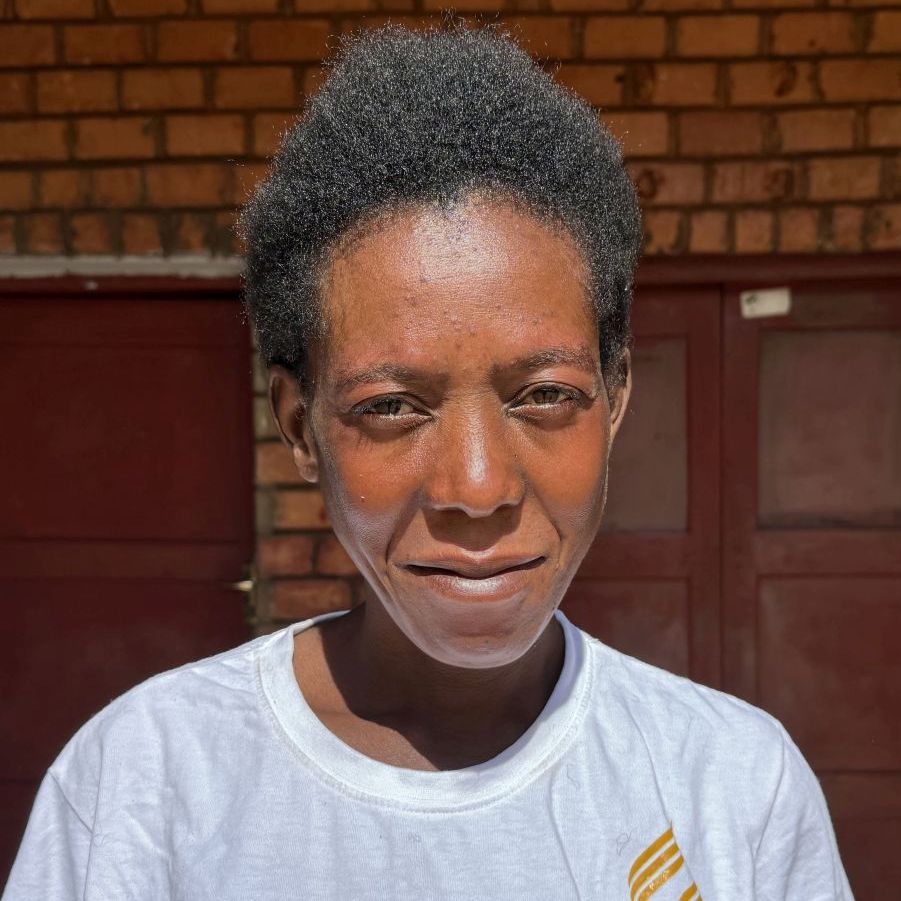
Miriam
Miriam
Voice Speaks at a Cooking Pot
Miriam, a 41-year-old mother in Zambia, didn't feel well. Her head pounded. Her body ached. Dark sadness filled her mind.
With a heavy heart, she went to the opening night of a weeklong evangelistic meeting in Livingston. At the meeting, she was befriended by a Seventh-day Adventist woman named Majorie. Miriam poured out the pain of her heart and asked for prayer. Majorie prayed for her.
Then something unusual happened. The next day, Miriam was stirring a pot of maize porridge on a fire outside her house at 11 a.m. Like many Zambians, she did her cooking outdoors because a national power shortage had left many homes without electricity. As she stirred, she sensed a voice say, "Go and read the Bible right now. Leave your pot and read the Bible."
Miriam didn't know what to read in the Bible. She went inside the house, opened her Bible, and read the first chapter that she saw. She was amazed. She felt like God was talking directly to her. She closed the Bible and finished cooking the porridge outside. Then she returned and read another chapter. It seemed like God was telling her, "Do you know that I still love you? Live how I want you to live."
Joy flooded her heart. Her body aches disappeared, and her headache went away. She knelt down and prayed, "Forgive me, God."
Miriam returned to the evangelistic meeting in the evening. She darted over to Marjorie and told her about what had happened.
Tears came to Marjorie's eyes when she learned that Miriam had heard the voice telling her to read the Bible at 11 a.m. At that exact time, she had felt an urge to pray for Miriam at home.
"Find time to read the Bible every day, and don't forget to pray all the time," Marjorie said. "The Bible and prayer are the key for everything."
Months have passed since Miriam began reading the Bible and praying regularly. Her head has stopped pounding. Her body has stopped aching. The dark sadness that once filled her heart has been replaced with sunny joy and a fervent desire to live for God. "The Bible has encouraged me," she said. "God is working through the Bible. If the devil wants to bring confusion, I just claim the promises of the Bible and pray."
This mission story illustrates the "Mission For All" objective of the Seventh-day Adventist Church's "I Will Go" strategic plan, which says in part, "Christ mingled, showed sympathy, ministered to needs, won confidence, then invited people to follow Him. The goal is to take a genuine interest in people, leading them to Christ and inviting them to unite with the Seventh-day Adventist Church as disciples of Christ who make disciples." Read more at IWillGo.org. Watch a short YouTube video of Miriam at: bit.ly/Miriam-IS.
Sabbath School Net is a volunteer ministry independent of the General Conference Sabbath School Department.
For questions and concerns about the Adult Bible Study Guide,
please contact the editor of the Bible Study Guide, Clifford Goldstein
The web version of the Sabbath School lesson is published on
this site by permission of the Office of the Adult Bible Study Guide, General Conference of Seventh-day Adventists.
Website contents copyright 1996-2025 by Sabbath School Net, an independent supporting ministry.
For permission to copy contents of the web version of the Sabbath School lesson, please contact both the Office of the Adult Bible Study Guide and the publisher of this site.
All art in these lessons and on the cover is published on this site by permission of
GoodSalt.com.

We invite you to join a discussion of this lesson each day on the Sabbath School Net Daily
Lessons blog. And on Sabbath mornings, you are warmly invited to join a group discussion of the week's lesson in your local Seventh-day Adventist congregation. If you do not know where to find your nearest Seventh-day Adventist Church, you can check out the
Seventh-day Adventist church locator.
Sabbath School Net is a supporting website not affiliated with nor funded by the Sabbath School Department of the General Conference of Seventh-day Adventists)It is run by volunteers and costs are covered solely by donations from the users of this site as well as the small commissions generated by sales through our links to online stores.

If you are using this site regularly, please pray for God's blessing on our visitors. Please also ask Him to impress you how you can help with the costs of putting this site up every month. We appreciate any gift to support the ongoing publication of Sabbath School Net, and only you and God know how much you can give. Even a small donation every month helps. And larger gifts are much appreciated. (No, you don't need a PayPal account. Just choose the "Continue" link to the left of the PayPal registration. And, yes, it's safe - as safe as your online bank account.)
Sabbath School Net
You can find a sampling of materials available to aid you in your studies at our Sabbath School Net "Store." (We will get a small commission not only from any books you purchase but also from whatever else you purchase at the same time. These commissions help to underwrite a small portion of the cost of publishing this site.)
You can also go directly to the home pages of stores which will pay us a small commission for whatever you choose to buy, without costing you a penny extra: Amazon.com | AbeBooks Store
Sabbath School Net Home page | Directory of Sabbath School Bible Study materials
Looking for an older lesson? You will likely find it in our Lesson Archives
Contact the Sabbath School Net Web Team
Go back to top of page