The Gift of Prophecy
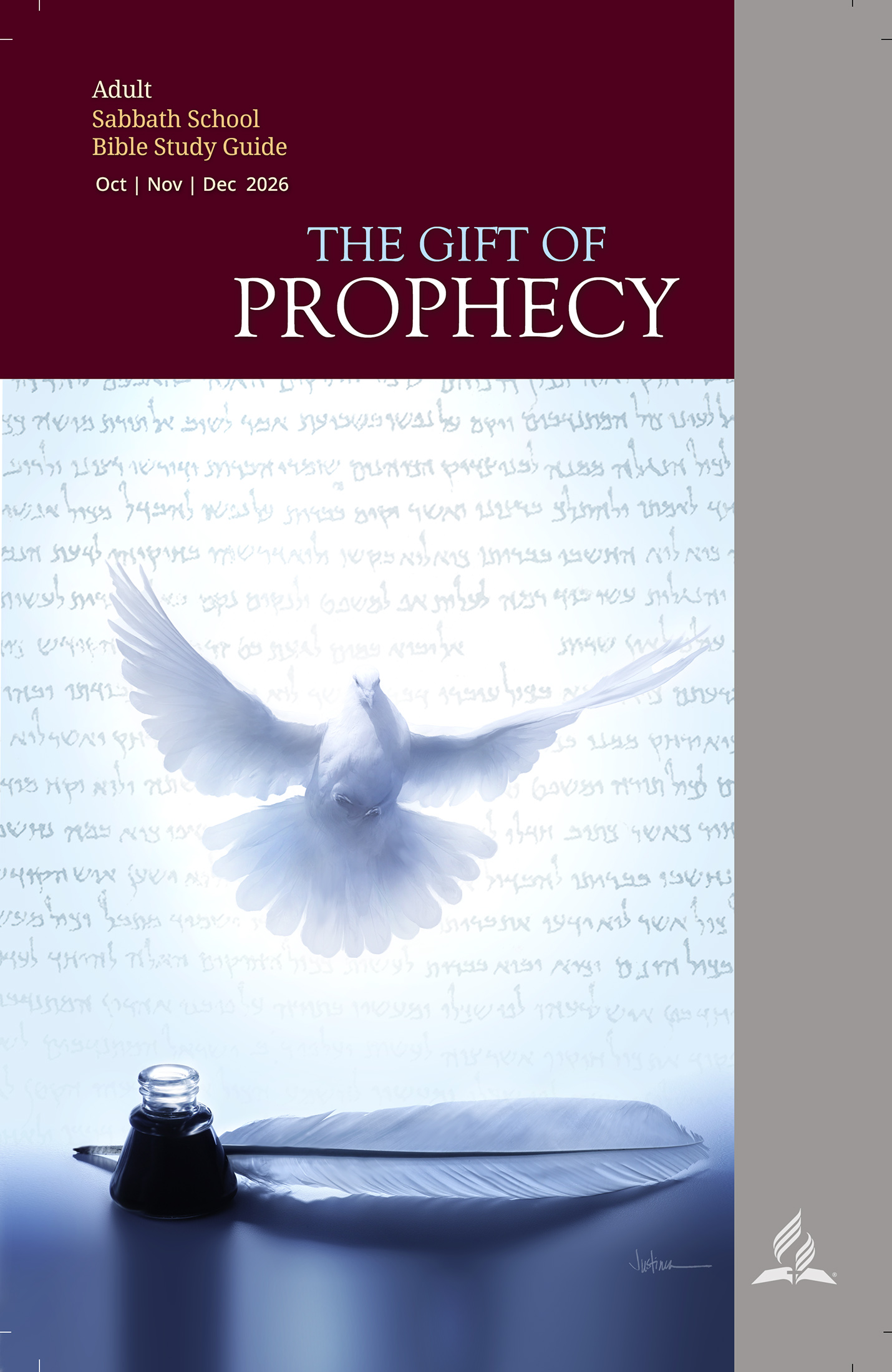
Neuroscientists have begun to understand the marvelous facility of human infants for language acquisition. At 6 months, a baby can understand the sounds that comprise English words, or words from any of the other 7,000-plus spoken languages. If exposed to a second language, they can acquire that language, as well. During this period a mysterious mental door opens, allowing infants to distinguish the 40 or so sounds that generally make up a native language from the 800 different sounds that they can perceive at birth. But there is one catch: babies must be spoken to. You might call it voice lessons for newborns.
Why would God create us with this wonderful capacity for speech recognition and language acquisition if He never intended to speak to us? The question is rhetorical, of course—for the Bible declares, "God, who at various times and in various ways spoke in time past to the fathers by the prophets, has in these last days spoken to us by His Son, whom He has appointed heir of all things, through whom also He made the worlds" (Heb. 1:1-2, NKJV).
When sin shattered Adam's and Eve's communion with God, He did not wash His hands of them and leave the fallen pair to self-destruct. He came looking for them both, asking Adam, " 'Where are you?' " (Gen. 3:9, NKJV). He went on to prophesy about the birth of One who would save the world from sin (Gen. 3:15). From its inception, right there in Eden after the Fall, prophecy has uplifted Jesus and pointed sinners to Him, their only hope.
This quarter we will study the gift of prophecy, God's ingenious innovation for communicating His will and way to fallen human beings, who can no longer commune face-to-face with Him. This special gift of the Holy Spirit is mentioned prominently in 1 Corinthians 12, 1 Corinthians 14, Ephesians 4, and Romans 12. The Holy Spirit is the Great Dispenser of this and all other spiritual gifts, "distributing to each one individually as He wills" (1 Cor. 12:11, NKJV). Throughout time, spiritually gifted spokespersons have delivered divine messages to restore and renew our relationship with God, just as God did in Eden after the Fall.
We will learn how God calls prophets and how we can test their authenticity. We will see the similarities and differences between Old and New Testament prophets, as well as gain a working understanding of how revelation and inspiration function in their lives. While some prophets spoke, others wrote; some did both. We will examine these and other modes of divine discourse, their implications, and the blessings of obeying the messages that these prophets delivered.
God uses the gift of prophecy for five crucial purposes: 1. To reveal Himself, His truth, and His will for fallen humanity. 2. To give insight and counsel regarding important events and happenings. 3. To equip the body of Christ—the church—for mission. 4. To provide spiritual encouragement to His followers. 5. To awaken sinners and call them to repentance. In addition, "the spirit of prophecy" is one of two distinguishing marks of God's end-time remnant church (Rev. 12:17, Rev. 19:10).
So invested is God in guiding the lost safely home that the gift of prophecy is provided for the last days as well (Joel 2:28-31). Seventh-day Adventists believe—with very good reasons—that Ellen G. White, cofounder of the church, exercised a modern manifestation of the prophetic gift.
This is why, along with our study of the gift of prophecy in Scripture, each Friday we will explore the dynamics of Ellen G. White's call to prophetic ministry. We, as a church, have been given this wonderful gift. How do we best use it?
Yes, from infancy onward, we have been wired to be spoken to. How important, then, that we listen to what God's prophets tell us!
This Adult Bible Study Guide was produced by the ministry team of the White Estate office, in Silver Spring, Maryland. By sharing Ellen White's prophetic ministry and writings throughout the world, the Ellen G. White Estate, Inc., supports the mission of the Seventh-day Adventist Church in uplifting Jesus Christ and His Word.
Lesson 1 *September 26-October 2
The Creator Speaks

Sabbath Afternoon
Read for This Week’s Study: Gen. 1:27-28; Gen. 3:1-8; Luke 15:11-32; Gen. 3:14-24; Exod. 19:16-22; John 10:27-30
Memory Text: "God, who at various times and in various ways spoke in time past to the fathers by the prophets, has in these last days spoken to us by His Son, whom He has appointed heir of all things, through whom also He made the worlds" (Hebrews 1:1-2, NKJV).
Digital technology allows many of us to see friends and relatives in faraway places. This is fine. But, still, how much better to meet in person! There is something special that happens when we get together, exchange hugs, and talk face-to-face.
This week we will be reminded that human beings were created for a face-to-face relationship with their Creator. Sin, however, destroyed this intimate connection long ago. To restore that communication with His beloved creatures, God has provided ways to speak to us. His most recognized form of divine interaction with humankind is carefully chosen spokespersons, known as prophets, who reveal His messages to us. These prophets often have writings in the Bible, but not always.
God's ultimate plan is to restore His image in us, the image that sin has shattered. This is what the plan of salvation is about: restoration, a restoration that will be complete when God creates "new heavens and a new earth in which righteousness dwells" (2 Pet. 3:13, NKJV).
Until then, God still talks to us, and He still uses His prophets to do just that.
*Study this week's lesson to prepare for Sabbath, October 3.
Communication in Eden
Genesis 1 and 2 tell the Creation story. God created a beautiful world, and in it He put Adam and Eve, the crowning act of creation. Humans differed from every other creature on earth because they were made "in the image of God" (Gen. 1:27, NKJV), something said only about them and not, for example, about the birds or about other animals. As such, they were to live wholistically abundant lives, experience love in all its forms, and walk in communion with God Himself.
Also, we read in Genesis 2:18-23 that God created Eve for Adam because, God said, it was " 'not good that man should be alone' " (Gen. 2:18, NKJV). Right from the beginning, then, humans were created as social beings. Sociologists today teach that human interaction provides numerous benefits to our physical and mental well-being, while loneliness is a killer.
It is no wonder, then, that after the creation of Eve, Adam exclaimed, " 'This is now bone of my bones and flesh of my flesh; she shall be called Woman, because she was taken out of Man' " (Gen. 2:23, NKJV). The familial structure established by one male and one female joined in matrimony is the first social institution God provided for humans, in order for them to experience wholistic relationship and communion. It is no wonder that one of Satan's main goals always has been to destroy the fundamental dynamics of the original family.
Read Genesis 1:27-28; Genesis 2:15-17; and Genesis 3:9. What kind of communication existed between God and humans in the Garden of Eden?
Adam and Eve enjoyed face-to-face communion with God. As intelligent beings, they were able to meet with God and to listen to His instructions. As stewards of God's wonderful garden, they grew in knowledge and skill as they cared for the living flora and fauna. Each day they also had special time with God "in the cool of the day" (Gen. 3:8). The Sabbath day in particular, an essential part of God's creative act, was to be a specially dedicated time of communion between God and His children (Gen. 2:2-3; Exod. 20:8-11). On that day, our first parents experienced God's love and care for them in a special way.
It's hard for us today, thousands of years from Eden, to imagine what it must have been like before sin. Yet, even now, how does the natural world point back to God's original creation?
Hiding From God
Because God is love (1 John 4:8), He would not create human "robots." Love embraces choice. To be able to love, Adam and Eve had to be created with free will; otherwise, love, true love, would be impossible for them to give.
Thus, Adam and Eve had the freedom to obey or disobey their Creator. The reality of this free choice was depicted in the command not to eat from the tree of the knowledge of good and evil (see Gen. 2:15-17). Why warn them against eating from it unless they had the freedom to do so in the first place?
"Our first parents, though created innocent and holy, were not placed beyond the possibility of wrongdoing. God made them free moral agents, capable of appreciating the wisdom and benevolence of His character and the justice of His requirements, and with full liberty to yield or to withhold obedience. They were to enjoy communion with God and with holy angels. . . . Without freedom of choice, his obedience would not have been voluntary, but forced."—Ellen G. White, Patriarchs and Prophets, pp. 48, 49.
Why did Adam and Eve attempt to hide from their Creator after they disobeyed Him? See Genesis 3:1-8 (compare with Jer. 23:24 and Heb. 4:13).
Genesis 3 depicts an awful scene—the fall of Adam and Eve. After the epic conversation between the serpent (Satan) and Eve, our first parents were tempted to eat from the "tree of the knowledge of good and evil," which they were forbidden to do. Satan used the power of words, emotions, and pleasurable enticements to convince Eve, who then convinced Adam, to go against God's command. Eve noted that the tree was "good for food," "pleasant to the eyes," and "desirable to make one wise" (Gen. 3:6, NKJV). The promise of Satan that they would be " 'like God, knowing good and evil' " (Gen. 3:5, NKJV) sounded irresistible.
In reality, Satan's discourse was riddled with error. Satan hid from them the consequences of their disobedience. After they disobeyed God, their eyes were immediately "opened," and they saw that they were "naked." God's "garment" of light and glory (Ps. 104:1-2), which reflected the divine "image," was gone. They were no longer covered by that which God had provided for them. No wonder Adam and Eve hid themselves from their Creator (as if it were really possible to hide from God). They attempted to hide because sin makes us feel guilty and, in our guilt, we want to flee from the presence of God.
What has been your own experience with shame and seeking to hide from God after you have sinned?
God Seeks Humanity
We can see from Genesis 3:9-10 that God took the initiative to seek His fallen children. The question "Where are you?" was rhetorical, because God knew what Adam and Eve had done and where they were. Sin, nevertheless, cut off the usual communication that existed between Him and the first human couple. God's immediate concern was to restore communication with His children, to meet with them, and to give them hope in their despair. In fact, the Hebrew verb qara', "call," in Genesis 3:9, is often used to describe God's call to establish communication with His people.
Read Luke 15:11-32. How does this parable reflect what happened in Genesis 3:9-10?
God's seeking Adam and Eve reveals His unconditional love for His children. God never gives up on us (see Luke 15). He goes to great lengths to re-establish His communion with us, even when we go into hiding. Before Jesus' crucifixion, when Peter denied Jesus three times, Christ "turned and looked" (Luke 22:61, NKJV) at him. Even without words, He "spoke" to Peter and sought to reach His erring friend.
Notice, in Genesis 3:11-13, how sin suddenly changed Adam's and Eve's relationship. Instead of confessing their individual sin, they began to blame others. Adam blamed Eve and, indirectly, God, because He gave him Eve. " 'The woman whom You gave to be with me, she gave me of the tree, and I ate,' " he said (Gen. 3:12, NKJV). Eve, meanwhile, blamed the serpent for her disobedience. " 'The serpent deceived me, and I ate' " (Gen. 3:13) was her excuse. Neither one of them, at least when first confronted for their sin, would own up to their own guilt. How little has changed in six thousand years.
The reality is that sin has affected all human beings. The apostle Paul describes our condition well in Romans 7:15-24, when he detailed the pain of desiring to do what is right, only to find himself doing the opposite: "For what I am doing, I do not understand. For what I will to do, that I do not practice; but what I hate, that I do" (Rom. 7:15, NKJV).
Who cannot relate?
What Paul says is profound. We are all broken people who keep on doing things we know we should not do. Who hasn't experienced this reality?
Our only hope, says Paul, is deliverance "through Jesus Christ our Lord" (Rom. 7:25). This is why God continues to seek us to lead us to Jesus, who alone can mold us into His image and save us from the devastation caused by sin.
Expelled From the Garden
One of the most devastating consequences of Adam's and Eve's sin was separation from God. They were expelled from the Garden and could no longer speak with God face-to-face. The prophet Isaiah memorably wrote about this challenging human condition: "Your iniquities have separated you from your God; and your sins have hidden His face from you" (Isa. 59:2, NKJV).
In truth, Adam and Eve were still God's children. However, the result of sin could not be avoided, and they had to leave Eden. Nothing was to be the same after their disobedience.
Sin has changed humanity in many ways (see Gen. 3:14-24). But how has sin specifically changed our communication with God? (See also Exod. 19:16-22.)
Sin entirely changed human life in ways we cannot imagine, and that is because all we know is a world of sin. Because of sin, the land was "cursed" and was to produce "thorns and thistles." Humans would now experience pain, and they would have to "sweat" in order to provide food for themselves, only finally to die and return to the ground. Of all the reminders of sin, death remains the most powerful. At the same time, too, because of sin we lost our face-to-face communication with God.
However, Adam and Eve were promised a solution to counteract the ravages of sin. Although our first parents were not to see and talk to God directly, they left Eden with hope for the present and future. God took the initiative and explained to them His rescue plan.
Genesis 3:15, what has been called "the first gospel promise," was filled with hope for them (and us), despite what had happened. The promise of a coming Redeemer would provide present enmity against sin and hope for the future salvation of humanity. In fact, God's provision of clothing for Adam and Eve before they left the Garden was a symbolic act depicting their future redemption. Through the future death and resurrection of Jesus, communion with God was to be restored (John 14:1-3).
That is, right there in Eden, right after the entrance of sin, humanity was given the hope and promise that the sin problem ultimately would be solved. As soon as there was sin, there was the promise of a Savior.
How have you felt after doing something that was not right? Guilt? Shame? Self-loathing? What were the consequences? How did your faith in God, and the promise of the gospel, keep you from giving up on faith entirely?
God's Spokespeople
What do the following texts reveal about how God has spoken to humanity after the entrance of sin? (Read Heb. 1:1-2; Rom. 1:19-20; Num. 12:6; 2 Tim. 3:16-17; John 14:7-9; John 10:27-30.)
In spite of sin, God found many ways to communicate with fallen human beings. One way God reveals Himself to us is through creation. Nature is a powerful revelation of His wonderful acts. Scientists are amazed by the wonders of our universe and at the complexity of even the "simplest" life. Yet nature also displays the consequences of the Fall, with the death of every living thing the most powerful example.
Another way in which God has spoken to humanity is through the prophets—individuals whom He has chosen as His spokespersons. For example, God spoke to Noah, Abraham, Moses, and Daniel, revealing His will for His people. At their core, God's prophetic messages are a reminder that He has not forgotten His children and is still with them. And though some of the prophets wrote what has come to us as Scripture, others never wrote any books of the Bible.
However, many of the prophets' words were communicated through Scripture (2 Tim. 3:16-17). The Bible is a revelation of God Himself. It is through His words that we learn who He is, see His relentless love, and discover His guidance for how we are to live.
Moreover, it is through the Bible that we understand who we are, where we came from, and where we are going. There we find God's purpose for our lives.
But the most effective way in which God has spoken to us is through Jesus Christ, who, of course, is revealed to us in the Bible. As God sought Adam and Eve in the Garden of Eden, so Christ came to "seek and to save that which was lost" (Luke 19:10). " 'He who has seen Me has seen the Father,' " Jesus declared (John 14:9, NKJV). Through His life, death, and resurrection, Christ fulfilled the promise given to Adam and Eve in Eden. He came and died in our place so that we may have eternal life through Him.
After Jesus' ascension to heaven, the Holy Spirit has continued to guide us " 'into all the truth' " and to speak to us of " 'what is yet to come' " (John 16:13, NIV).
How much comfort do you get from knowing that Jesus, His love, His character, and His self-sacrifice, reveal to us what God the Father is really like?
Ellen G. White
God's communication is not limited to biblical times. As we will see in coming weeks, God speaks to human beings in perpetuity, and His words will be manifested in modern ways until Christ returns.
Ellen Gould Harmon White and her twin sister Elizabeth were born on November 26, 1827, in Gorham, Maine. They were the youngest of eight children born to Robert and Eunice Harmon. In a few years, the family moved to the city of Portland, Maine, where Robert Harmon hoped to expand his hat-making business. At age 9, Ellen suffered an injury that affected her physically, emotionally, and socially. While she was in a park near her home, an angry classmate threw a stone that struck her in the face, leaving Ellen in a semi-conscious state for several weeks. This accident abruptly ended her formal education and left her with lifelong health challenges. The facial injuries also left Ellen self-conscious about her appearance, limiting her social interactions.
It is in this context of uncertainty that the young Ellen Harmon began to think about her spiritual destiny. She was afraid of God and felt unworthy of heaven. Such fearful feelings intensified when the Harmon family accepted the Millerite doctrine of the soon second coming of Jesus. Even after her baptism by immersion into the Methodist Church in 1842, Ellen did not feel worthy of God's love. She believed she was "forever lost" (Life Sketches of Ellen G. White, p. 29; also see pp. 20-31).
Amid these agonizing thoughts, young Ellen had two dreams that began to change her mind about God. But it was not until she met Levi Stockman, a Methodist preacher, that she understood and felt God's love and grace. It was as if God spoke to her in her despair. "Faith now took possession of my heart," she wrote later. "I felt an inexpressible love for God and had the witness of His Spirit that my sins were pardoned. My views of the Father were changed. I now looked upon Him as a kind and tender parent, rather than a stern tyrant compelling men to a blind obedience. My heart went out toward Him in a deep and fervent love."—Life Sketches of Ellen G. White, p. 39. At the same time, Ellen White also understood the doctrine of the "state of the dead" and gradually grasped the idea that there was no forever-burning hell. Her new understanding of God and His love completely changed her attitude. As we will learn each Friday in the weeks to come, Ellen White fell deeply in love with Jesus and served Him for the rest of her life.
To discover more, visit https://whiteestate.org/absg/1.
Hearts Awakened: The Beginnings of Adventism in Poland
In 1888, as Poland remained partitioned and its people struggled under foreign rule, a flicker of new spiritual light appeared—small, quiet, and full of promise. That year, Herman Szkubowiec, the first Pole to become a Seventh-day Adventist, moved from the Crimea to Zarnówka in Volhynia, establishing what would become the first Adventist church in Polish territory.
From these humble beginnings, the Adventist message began spreading. In 1893, two early Polish converts, Karol Fendel and Jozef Szlodzinski, traveled from Zarnówka to Łódź. There, they shared their faith with a Baptist family named Lach. The Lachs embraced the Adventist message, opening their home for Sabbath worship. It was not an easy time to share new religious ideas. Poland’s political and religious environment was dominated by tradition and suspicion of outsiders. Yet in the heart of Łódź, amid adversity and uncertainty, the Adventist message took root in prayerful home gatherings. By 1895, a new congregation had formed in Łódź, nurtured by public meetings held by Russian Pastor Henrich Loebsack, who baptized the first Adventist members in the city.
A particularly inspirational moment came when Pastor Herbert Schmitz, a German who spoke no Polish, felt called to preach in Warsaw. Undeterred by the language barrier, he began going door to door, searching for German names. When welcomed in, he would explain the Adventist faith. Though his early audience was small and mostly German-speaking, this seed of faith grew. In just a few months, a church was organized in the capital, eventually conducting services in Polish as well.
By 1912, the growing work in Poland led to the formation of the Polish Mission, with Schmitz as its first leader. That same year, the Moravian-Silesian Mission was also organized, reaching southern Polish territories like Bielsko-Biała, Cieszyn, and Skoczów. This mission laid the groundwork for generations of Polish Adventist ministers.
Despite the devastation of World War I, the Adventist message continued to spread. In 1921, under the guidance of L. R. Conradi, the Seventh-day Adventist Union in Poland was officially organized. With 1,080 members at the time, the newly unified conferences set out to rebuild and expand. Evangelistic meetings, literature ministry, and schools followed.
But perhaps the most remarkable story remains that of those early missionaries—humble pioneers knocking on doors, preaching in private homes, and baptizing new believers in secret. They didn’t wait for perfect conditions. They followed the Spirit’s leading, one home, one heart at a time.
By the time Poland celebrated the centennial of Adventist work in 1988, the small group meeting in the Lach family home had become a vibrant national church. Their courage and conviction remind us that the gospel’s light shines brightest in dark places, kindled by faith, fanned by love, and carried by those willing to go.
Adapted from the Encyclopedia of Seventh-day Adventists, available at encyclopedia.adventist.org
Sabbath School Net is a volunteer ministry independent of the General Conference Sabbath School Department.
For questions and concerns about the Adult Bible Study Guide,
please contact the editor of the Bible Study Guide, Clifford Goldstein
The web version of the Sabbath School lesson is published on
this site by permission of the Office of the Adult Bible Study Guide, General Conference of Seventh-day Adventists.
Website contents copyright 1996-2025 by Sabbath School Net, an independent supporting ministry.
For permission to copy contents of the web version of the Sabbath School lesson, please contact both the Office of the Adult Bible Study Guide and the publisher of this site.
All art in these lessons and on the cover is published on this site by permission of
GoodSalt.com.

We invite you to join a discussion of this lesson each day on the Sabbath School Net Daily
Lessons blog. And on Sabbath mornings, you are warmly invited to join a group discussion of the week's lesson in your local Seventh-day Adventist congregation. If you do not know where to find your nearest Seventh-day Adventist Church, you can check out the
Seventh-day Adventist church locator.
Sabbath School Net is a supporting website not affiliated with nor funded by the Sabbath School Department of the General Conference of Seventh-day Adventists)It is run by volunteers and costs are covered solely by donations from the users of this site as well as the small commissions generated by sales through our links to online stores.

If you are using this site regularly, please pray for God's blessing on our visitors. Please also ask Him to impress you how you can help with the costs of putting this site up every month. We appreciate any gift to support the ongoing publication of Sabbath School Net, and only you and God know how much you can give. Even a small donation every month helps. And larger gifts are much appreciated. (No, you don't need a PayPal account. Just choose the "Continue" link to the left of the PayPal registration. And, yes, it's safe - as safe as your online bank account.)
Sabbath School Net
You can find a sampling of materials available to aid you in your studies at our Sabbath School Net "Store." (We will get a small commission not only from any books you purchase but also from whatever else you purchase at the same time. These commissions help to underwrite a small portion of the cost of publishing this site.)
You can also go directly to the home pages of stores which will pay us a small commission for whatever you choose to buy, without costing you a penny extra: Amazon.com | AbeBooks Store
Sabbath School Net Home page | Directory of Sabbath School Bible Study materials
Looking for an older lesson? You will likely find it in our Lesson Archives
Contact the Sabbath School Net Web Team
Go back to top of page