Lesson 3 *October 10-16
Old Testament Prophets
Sabbath Afternoon
Read for This Week’s Study: James 5:17-18; 1 Kings 19:1-16; 1 Kings 22:1-14; Exod. 15:20; 2 Kings 22:11-14; Jer. 14:1-15
Memory Text: "Jehoshaphat stood and said, 'Hear me, O Judah and you inhabitants of Jerusalem: Believe in the Lord your God, and you shall be established; believe His prophets, and you shall prosper'" (2 Chronicles 20:20, NKJV).
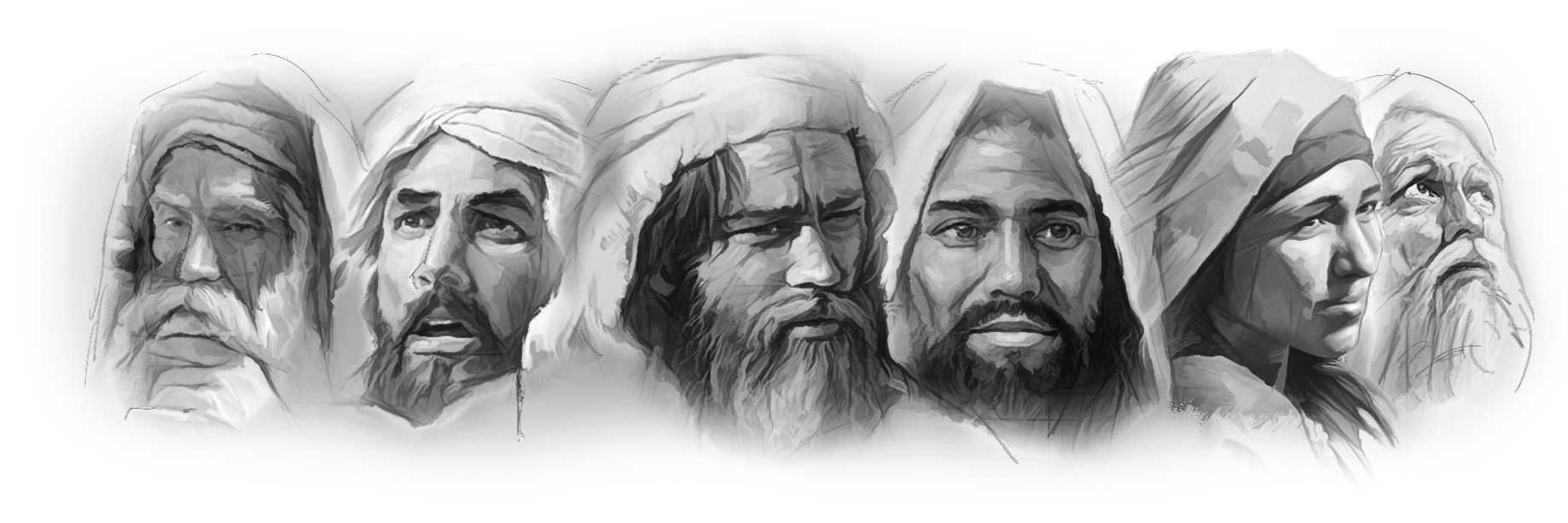
The Global Positioning System (GPS) helps travelers know where they are, where they are going, and even provides warnings against hazards. Spiritual travelers journeying to heaven also need guidance now and in the future from a heavenly "positioning system." One way that God did this in times past was through the ministry of Old Testament prophets. In their narratives, counsels, prophecies, poetry, and songs, we discover a lot about the dozens of prophets who presented God's messages to the people.
This week's lesson explores Old Testament descriptions of prophets, descriptions that help us understand the gift of prophecy as it had been manifested by some of these servants of God.
As we will see, these were people like us, in that they were frail human beings subject to fear, anger, and discouragement. Life for them was not easy, but filled with challenges and hardships, as it is for all of us.
What, then, can we learn from looking at a few of these specially called servants of God?
*Study this week's lesson to prepare for Sabbath, October 17.
The Humanity of Prophets
As we saw last week, the Lord used Elijah the prophet to do a tremendous work in Israel, despite fervent opposition. What the Lord had accomplished through him was incredible. And yet . . . what?
Reflect on how James presents Elijah the prophet, in James 5:17-18. What might he mean by saying that Elijah had "a nature like ours" (NKJV)?
___________________________________________________________
___________________________________________________________
Elijah had a stunning success on Mount Carmel (1 Kings 18); God had worked in a mighty way through him, and one of the most astonishing miracles depicted in Old Testament history occurred: at the sound of Elijah's own words, fire literally came down from heaven (1 Kings 18:38)! You would have thought that this man of God would have been exceedingly happy after something like that.
Read 1 Kings 19:1-16. What does this tell us about the emotional state of God's prophet?
___________________________________________________________
___________________________________________________________
" 'It is enough! Now, Lord, take my life, for I am no better than my fathers!' " (1 Kings 19:4, NKJV). This sounds like a man suffering from some form of depression. Why? What happened on Mount Carmel would not be an easy act to follow, for sure; but, still, something else is going on here.
Perhaps the key could be found in his words, " 'I have been very zealous for the Lord God of hosts; for the children of Israel have forsaken Your covenant, torn down Your altars, and killed Your prophets with the sword. I alone am left; and they seek to take my life' " (1 Kings 19:10, NKJV). This sounds as if he's lamenting what he believes to be his failures in ministry. Apostasy remains, despite his best efforts, as if he alone could have stemmed the tide. Whatever ultimately is going on here, we can see the humanity and fragility of this man of God. In other words, Elijah was a man who had "a nature like ours."
Why might it be easy at times to have a sense of "failure" in your own life or endeavors? What Bible promises can you claim to help you work through discouragement?
Identifying True Prophets
In the early history of Israel there is evidence of false prophets (Deut. 18:20). God, therefore, did not leave His people without guidance on who His true prophets were.
As recipients of God's revelation and inspiration, true prophets faithfully, accurately, and honestly transmitted God's messages, even if, at times, this made them unpopular with the people in power.
Read 1 Kings 22:1-14. What does it tell us about how faithful prophets operate?
___________________________________________________________
___________________________________________________________
To have a king say of a prophet that " 'I hate him, because he does not prophesy good concerning me, but evil' " (1 Kings 22:8, NKJV) says a lot about the king, but more about the prophet. He was, obviously, a man not afraid to speak the truth, even to the king himself—not a way to win royal favor, to say the least.
Micaiah stood alone against 400 false prophets as he presented the truth revealed to him. In the face of coercion to alter negative messages from the Lord to placate evil King Ahab and his wife, Jezebel (1 Kings 22:13-14), Micaiah presented God's truth, regardless of how it might be received.
Read 1 Samuel 9:3-14. What do these verses tell us about how others viewed faithful prophets of God?
___________________________________________________________
___________________________________________________________
There are numerous examples of the quality of life lived by prophets in the Bible. In this case, Saul was sent by his father, Kish, to look for his lost donkeys. The servant traveling with Saul suggested that he not abandon the search, because there was " 'in this city a man of God, and he is an honorable man' " (1 Sam. 9:6, NKJV). The description given here of Samuel the prophet depicts the qualities expected of God's prophets. True prophets in Scripture are identified as "men of God," chosen in part to exemplify His character. At the same time, just because some among the "men of God" may be prophets, this doesn't make them flawless human beings.
Who, even among the most esteemed "men of God," have you known to be flawless?
Functions of Prophets
Read 1 Samuel 8:4-22 and Leviticus 8:10-13. How did prophets function in relation to kings and priests?
___________________________________________________________
___________________________________________________________
Prophets interacted with kings in both pleasant and unpleasant situations. When Israel demanded a king (1 Sam. 8:4-22), they said we want "a king to judge us like all the nations" (1 Sam. 8:5). What a sad but powerful example of the danger that God's people have faced in every age: the desire to be like those around them. In this case, they had no idea what this request would bring, even though they were forewarned (1 Sam. 8:11-18) by God through His prophet. Based on their desires, and despite his warning to them, Samuel soon anointed Israel's first king, known in biblical history as King Saul.
The Old Testament books of 1 and 2 Kings and 1 and 2 Chronicles record the kind and quality of rulership exhibited by the kings of Israel and Judah. Sacred history shows that the kings who did evil far outnumbered those who did good in the sight of God. One of the core functions of the prophets was to help lead unfaithful kings back to obedience to God's law. As a result, these prophets faced threats, with some even harmed and killed by kings who led God's people away from Him (1 Kings 18:4-19, 2 Chron. 24:20-22).
Prophets also interacted with priests. Moses, a prophet of God, anointed Aaron and his sons as the first Israelite priests (Lev. 8:10-13). There were times priests received words of rebuke from God through the prophets (Hos. 6:9, Mal. 2:1-3). One striking example of this is the entire household of Eli, who were confronted for their corrupt practices (1 Sam. 2:27-36). These were some very strong rebukes against rampant corruption among people given special privileges.
Prophets were teachers of the people (2 Chronicles 34). They presented messages from God to the priests, kings, and the nation (Jer. 5:31, Ezek. 22:26). Prophets also spoke to surrounding nations outlining God's plan for them, a theme repeated several times in the messages of the Old Testament prophets (Isa. 60:1-3; Isa. 62:1-2). Prophets were expected not only to pass on faithfully the messages God gave them but were sometimes instructed to write them down and preserve them (2 Chron. 13:22). Again, no matter how human the prophets were (and all the attending frailties that go with that), they were men and women of prayer, the Word, and service to God and His people (Jer. 42:4; 2 Kings 22:15-17).
Women Prophets
Read Exodus 15:20, Judges 4:4, 2 Kings 22:14, and Nehemiah 6:14. What do these texts also teach about the prophetic role?
___________________________________________________________
___________________________________________________________
There is abundant evidence in Scripture that God called women to be prophets. (See the use of the Hebrew word nevi'ah [Exod. 15:20] and the Greek word prophētis [Luke 2:36].) In Micah 6:4, Miriam is listed with Moses and Aaron as those sent to the people. Miriam is presented as a prophetess who sang a song of victory when the Israelites crossed the Red Sea (Exod. 15:20-21). Yet, this prophetess, like her male counterparts, was not without fault, as her shameful attitude toward Moses and his Ethiopian wife reveal, actions for which the prophetess had been duly punished (see Num. 12:1-10).
We can see the work of another prophet in the story of Deborah, who served as a judge in Israel (Judg. 4:1-4).
In fact, there is clear evidence that Deborah (Judg. 4:4) received revelation from God (Judg. 4:4-9, 14-22). Her song of victory (Judg. 5:2-31) is an acknowledgment of God's intervention and had deep theological significance for the nation at that time in history.
Read 2 Kings 22:11-14. Why did King Josiah's men go to Huldah? What should this tell us about her important role in the nation?
___________________________________________________________
___________________________________________________________
Huldah "the prophetess," was consulted by the top men of King Josiah's council (2 Kings 22:14, 2 Chron. 34:22) after they read the words of the "Book of the Law" (2 Kings 22:8, NKJV) (believed to be Deuteronomy) to the king, who, in response, "tore his clothes" (2 Kings 22:11, NKJV). This was obviously a very serious matter, and the king took it that way, which is why his men went right to Huldah. She had received a message from God regarding the impending judgment of Judah. Josiah's reforms resulted from Huldah's prophetic messages and averted God's judgment on His people.
Men prophets and women prophets though called of God, were also sinners in need of grace. What hope can you take from their stories?
False Prophets
No matter what God does, Satan has his counterfeits. It's the same with prophets. Israel faced true and false prophets. The key was to know the difference.
Read Jeremiah 14:1-15. What was happening here, and how did the Lord regard those who spoke falsely as "prophets" in His name?
___________________________________________________________
___________________________________________________________
In Jeremiah 14, God gave Jeremiah a message of judgment for Judah, a judgment that would come in the form of a sword (war), famine, and pestilence. False prophets at the time contradicted Jeremiah's message. Jeremiah describes them in very clear terms: "And the Lord said to me, 'The prophets prophesy lies in My name. I have not sent them, commanded them, nor spoken to them; they prophesy to you a false vision, divination, a worthless thing, and the deceit of their heart' " (Jer. 14:14, NKJV).
False prophets are corrupt because their source of prophetic claims is often the false "gods" whom they worship (Jer. 23:13-14). God warns, " 'I have not sent them, commanded them, nor spoken to them' " (Jer. 14:14, NKJV). They are " 'prophets of the deceit of their own heart' " (Jer. 23:26, NKJV). Ezekiel was instructed to prophesy against " 'the prophets . . . who prophesy out of their own heart' " (Ezek. 13:2, NKJV).
False prophets often follow popular views. This was the case in 1 Kings 22, when a group of 400 "prophets" gathered at the command of King Ahab (1 Kings 22:6). With one voice they advised the king to fight against Ramoth-Gilead. Ahab counseled with Jehoshaphat, king of Judah, after they heard the prophetic counsel from the prophets of Asherah. Jehoshaphat urged Ahab to consult the prophet Micaiah as to whether they should go to battle or not. "Then the messenger who had gone to call Micaiah spoke to him, saying, 'Now listen, the words of the prophets with one accord encourage the king. Please, let your word be like the word of one of them, and speak encouragement' " (1 Kings 22:13, NKJV).
The pressure Micaiah experienced to lie was likely the same pressure felt by the false prophets of Asherah, but Micaiah did not follow this popular view; instead, he waited for God to tell him what to say (1 Kings 22:14).
Whether or not you are a prophet, it's always easy to follow the popular thing. Considering how corrupt culture can be, why is this never a good idea?
Not Perfect but Willing
As we have seen, the lives of Old Testament prophets make clear that it has never been easy to be God's messenger. Ellen G. White experienced the same anxieties that biblical prophets felt. As we learned last Friday, she was young, shy, and in poor health when she received God's call. While a second vision confirmed her call, Ellen Harmon (White) remained apprehensive about God's call, writing:
"About one week after this the Lord gave me another view, and showed me the trials I must pass through; that I must go and relate to others what he had revealed to me; that I should meet with great opposition, and suffer anguish of spirit. . . .
This vision troubled me exceedingly. My health was very poor, and I was only seventeen years old. . . . I earnestly prayed that the burden might be laid on some other one. But all the light I could get was, 'Make known to others what I have revealed to you.' I was unreconciled to go out into the world. I had naturally but little confidence. . . . I looked with desire into the grave. Death appeared to me preferable to the responsibilities I should have to bear."—Spiritual Gifts, vol. 2, pp. 35, 36.
Did you notice that Ellen Harmon (White) would rather die than to accept her call? After much prayer and encouragement by fellow believers, she acquiesced and devoted the remainder of her life to following "[H]is bidding."—Ellen G. White, Spiritual Gifts, vol. 2, p. 38.
She would become the most influential voice to—and even of—the future Seventh-day Adventist Church. Nevertheless, Ellen Harmon (White) was human and had her own personal faults and physical trials, family challenges, and interpersonal struggles. Yet amid her humanity, we see a great lesson: God chooses imperfect people who are willing to serve Him.
Under the guidance of the Holy Spirit, Ellen G. White's prophetic ministry would encourage believers and connect them to Bible truths. By 1860, she had played a leading role in the development of the fledgling Seventh-day Adventist denomination and its mission to proclaim the three angels' messages to the world. God would lead these believers to organize the Seventh-day Adventist Church in 1863. In later decades, Ellen G. White's prophetic voice was influential in establishing the global Adventist health and educational systems. However, the most important contribution of her ministry is her writings, totaling approximately 100,000 pages. Ellen G. White's inspired writings continue to speak throughout the world today.
To discover more, visit https://whiteestate.org/absg/3.
…To Adventist Leader
Marek’s life began to change as he read The Great Controversy in Poland. He decided to keep the seventh-day Sabbath. He read that smoking is bad and decided to quit. But he couldn’t.
One Saturday, he passed a street poster offering a five-day stop smoking class. The address was a Seventh-day Adventist church. Marek had never heard of the denomination before, even after reading The Great Controversy and visiting the Adventist bookstore where he had bought the book.
Marek went straight to the church. He saw a poster for The Great Controversy on the church bulletin board and knew he had found the right place. It was 2 o’clock on a Saturday afternoon, and the church normally would have been empty after worship services, but a group of literature evangelists were there, and they invited Marek to return the next Sabbath morning to worship.
Marek returned the next Sabbath and enjoyed the sermon. He was amazed at the kindness of the churchgoers. They told him that a large group of young people would meet in a nearby city the next Sabbath and invited him to go with them.
The next Sabbath morning, Marek waited by a road for the Adventists to pick him up. It was a hot day, and he was wearing shorts and a T-shirt. As he waited, he sensed two voices speaking to him. One said, “Stay outside, and enjoy the nice weather.” The other urged, “Wait here because it’s really important that you go to this meeting.”
The Adventists arrived and took him to the meeting. The worship service amazed Marek. Every word was meaningful to him. The preacher, a British pastor from London, spoke until noon. Then he said, “I know I am supposed to end now, but I know there is somebody here who needs Jesus.”
Marek thought, “Who told him about me?”
The pastor then shared his personal story. He was born into a religious family but had left the church. He had used drugs and drank. His church and even his mother had stopped praying for him.
“Then I met Jesus,” he said. “He took me up from the bottom where I was, and now I’m here to tell you about His power. And that He can change your life.”
Then the pastor made his appeal. “If you want Jesus to change your life, just come here to the front,” he said.
Marek saw 1,000 people in the crowd and cringed at the thought of standing in front of them. With the very next sentence, the pastor addressed his doubts.
“Don’t think about others looking at you,” he said. “Just come here. Come to the front. It’s between you and God.”
Marek stood up. He couldn’t sit anymore. His heart beat wildly as he went to the front. As the pastor prayed, Marek understood the plan of salvation for the first time. He had lived a bad life, and Jesus had taken his place. Marek began to cry, and nobody could stop him. The tears flowed freely. But Marek also was excited and joyful.
“I really feel that God saved my life not only for His kingdom but also from physical death,” Marek said later.
While studying at the Adventist seminary, he learned that his childhood friend Matthew was found dead with a knife in his heart. He had been using a lot of drugs, and no one knows what happened. He was only 23. His other childhood friend, Martin, ended up in prison for seven
“I really want to help young people find their purpose in life sooner than I did,” he said. “Maybe they will live better lives after hearing my story. I’m really thankful to God. He saved me from everything, and He gave me everything. So, I have given everything to Him.”

