Lesson 11 *December 5-11
Prophetic Manifestation in Crucial Moments
Sabbath Afternoon
Read for This Week’s Study: 2 Pet. 2:5; Judg. 4:4-16; 1 Kings 18:21, 38, 39; Isa. 59:1-4; Neh. 9:30; Rev. 1:1-3
Memory Text: "Surely the Lord God does nothing, unless He reveals His secret to His servants the prophets" (Amos 3:7, NKJV).
Since the Fall, human beings have been predisposed to choose the pleasures of sin for a season, as opposed to eternal life in Jesus. God knows this sad truth, and, despite it, He loves us and works for our salvation anyway.
This is why, at crucial junctures in history, God has acted in remarkable ways through the prophetic office in behalf of His people. However, when His efforts have been repeatedly refused, He has warned of judgment.
Through His prophets, the Lord always communicates His actions before He does them (Amos 3:7). If people repent, He is quick to forgive.
He continues to communicate with us in the same way today. It is reasonable, therefore, that God should speak to His people in earth's last days, just as He spoke to His people in centuries past.
This week's study will look back at crucial times in salvation history when God used prophets to make His will clear to His people and to the wider world. We will also explore the role of Ellen G. White's inspired ministry at pivotal times in the growth of the Adventist movement.
*Study this week's lesson to prepare for Sabbath, December 12.
Disaster Warning
God wants to rescue humanity. Even after the Fall, He sought a relationship with Adam and Eve, and for a time the inhabitants of earth called "on the name of the Lord" (Gen. 4:26). As generations passed, the number of those who walked with God decreased. Those who continued to follow God testified to His goodness, condemned the sins of those around them, and warned of the consequences of their actions.
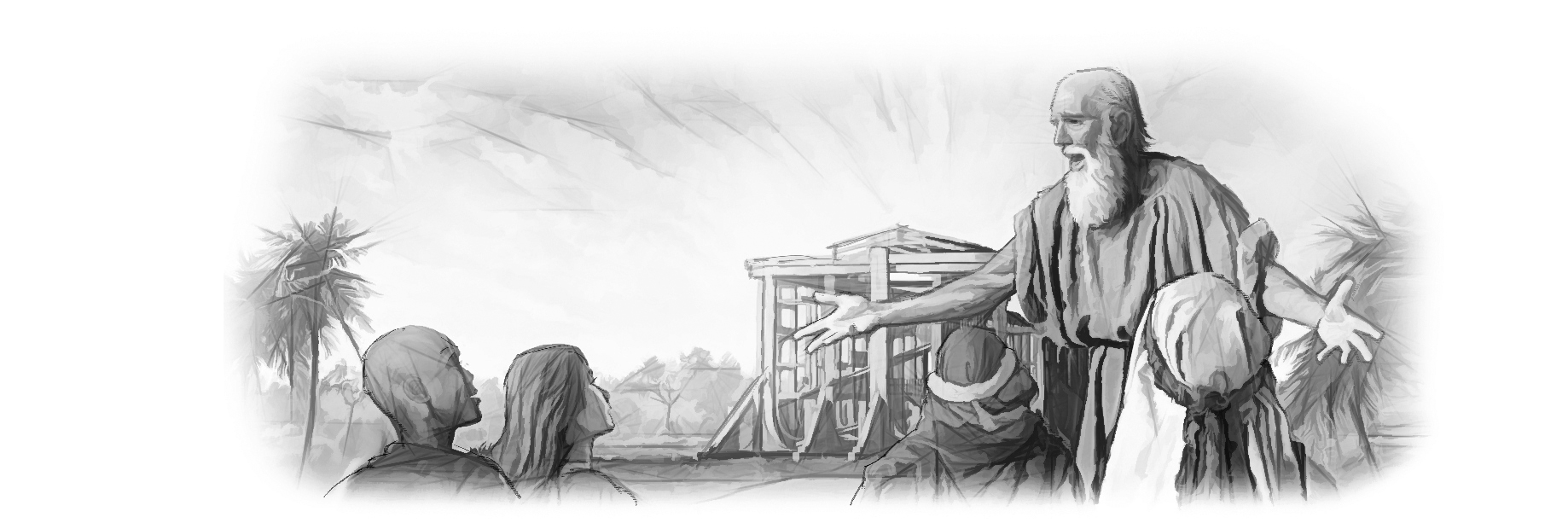
By the time of Noah, however, the inhabitants of the earth were so wicked that God chose to destroy them (Gen. 6:5-7). Noah, a preacher of righteousness (2 Pet. 2:5), no doubt warned all who would listen about the destruction to come. God also gave Noah instructions for building a lifeboat (the ark) for the saving of all who would listen to his warnings and repent.
Read Hebrews 11:7, 2 Peter 2:5, and Genesis 6:9. In what ways was Noah a "preacher of righteousness"?
___________________________________________________________
___________________________________________________________
The Flood was a pivotal moment in human history, and the account appears repeatedly throughout both the Old and New Testaments as an example of the depths of human depravity and the height of God's amazing grace. God's righteousness is manifested in His judgment against a sinful creation and in His deliverance of all who would accept salvation.
"Amid the prevailing corruption, Methuselah, Noah, and many others labored to keep alive the knowledge of the true God and to stay the tide of moral evil. A hundred and twenty years before the Flood, the Lord by a holy angel declared to Noah His purpose, and directed him to build an ark. While building the ark he was to preach that God would bring a flood of water upon the earth to destroy the wicked. Those who would believe the message, and would prepare for that event by repentance and reformation, should find pardon and be saved."—Ellen G. White, Patriarchs and Prophets, p. 92.
God not only told Noah about the Flood and rescued the occupants of the ark, He also established a covenant with Noah and all creation, promising never to destroy the world again with water (Gen. 9:8–17). Every rainbow contains the promise, and the hope, of redemption.
Next time you see a rainbow, think about the promise found there. Why should it give you comfort, knowing that God keeps His promises?
A Mother in Israel
After delivering the Israelites from slavery in Egypt, God gave them the land of Canaan. He promised to bless them abundantly if they followed His laws and commandments. He also warned that breaking their covenant with Him would result in suffering and destruction (Deuteronomy 27–30). Following the death of Joshua, the Israelites turned away from keeping the covenant. They were then oppressed by the neighboring peoples and cried out to God. In response, "the Lord raised up judges who delivered them out of the hand of those who plundered them" (Judg. 2:16, NKJV). He also sent prophets to encourage the Israelites to renew their covenant with God and to empower them against their oppressors.
Read Judges 4:4-16 and Judges 5:1-5. What did Deborah do for Israel?
___________________________________________________________
___________________________________________________________
Deborah played a pivotal prophetic part in relaying God's message to Israel and Barak, the nation's commander, as he rallied the troops. It was Deborah who gave Barak the signal to begin the battle, stating, " 'Up! For this is the day in which the Lord has delivered Sisera into your hand. Has not the Lord gone out before you?' " (Judg. 4:14, NKJV).
As a judge in Israel, Deborah was key. Her leadership and her faith in God's promise of victory strengthened the Israelites in their fight against their enemies. Barak's skill as a war commander and his willingness, however reluctant, to lead the army of Israel also was important, but that was not what won the battle.
This is perhaps the most important message of the story of the prophet Deborah and of soldier Barak. In the middle of celebrating a stunning victory, the most powerful people in Israel—a judge and a victorious commander—led the community to glorify God. This is the nature of true spiritual leadership.
The prophetic ministry of Deborah testifies to the faithfulness of God in times of distress and oppression. When God gave her the message for Barak, she did not question the feasibility of summoning enough troops, nor did she argue that the Israelites were too weak to win. Instead, she relayed her message with conviction and encouraged Barak to set aside his doubts and to trust the providence of God.
How can we learn to trust God when, at the present moment, things do not look very hopeful?
A Call for Repentance
Read Judges 2:16-19. What pattern, or motif, is seen here?
___________________________________________________________
___________________________________________________________
With the crucial transition to kingship, and with Israel's request for a king (1 Samuel 8), the time of the judges ended. But this change brought an even greater need for prophets to advise, to correct, and to rebuke the king, the nation's leaders, and the people.
During the reign of Ahab, God sent Elijah with a message of judgment: there would be no rain because Israel had " 'forsaken the commandments of the Lord and have followed the Baals' " (1 Kings 18:18, NKJV). Rather than repent, Ahab tried to hunt down Elijah and kill him, but God protected him (1 Kings 18:10-12). When, in the third year of the famine, Elijah finally approached the king, Ahab blamed him for the lack of rain (1 Kings 18:17)!
Elijah then summoned all Israel for a final showdown between God and the prophets of Baal (1 Kings 18:19).
Read Elijah's proclamation to Israel and the response in 1 Kings 18:21, 38, 39. What happened?
___________________________________________________________
___________________________________________________________
The divine act of fire falling from heaven, coupled with Elijah's prophetic message, dramatically affected God's people and led them to repent. Just as the Israelites were reluctant to make a full commitment to God, we live in cultures that do not acknowledge God as Creator and Redeemer. Rather than serve as God's witnesses to urge others to be faithful to Him, we often shirk our calling by following our own desires, as Israel had done.
God warns that following our own desires will lead to brokenness, pain, and eventually death. But if we follow His voice, then the " 'Lord will guide you continually, and satisfy your soul in drought, and strengthen your bones; you shall be like a watered garden, and like a spring of water, whose waters do not fail' " (Isa. 58:11, NKJV).
Our carnal natures push us to rebel, even subconsciously, against God. What choices do we need to make in order not to succumb to that nature?
Hope in Exile
"And the Lord God of their fathers sent warnings to them by His messengers, rising up early and sending them, because He had compassion on His people and on His dwelling place" (2 Chron. 36:15, NKJV).
God sent numerous prophets after Elijah to comfort, warn, and instruct His people, but the kingdoms of Israel and Judah fell into such depravity that God compared them to Sodom and Gomorrah (Isa. 1:9-10). The people of God had become proud, greedy, and idolatrous. They oppressed their workers, widows, orphans, and the strangers who came to them for help. (See Isaiah 58 for God's response to Israel's failings.) Finally, God's judgment brought Israel into Assyrian captivity (2 Kings 17:1-6) and exiled Judah to the land of Babylon (2 Kings 24, 25).
While God punished His people, He did not leave them alone in exile. He still sent them prophets, such as Ezekiel and Daniel, to give them hope for the future.
Read Isaiah 59:1-4 and Nehemiah 9:30. What is being said here that applies all though the ages?
___________________________________________________________
___________________________________________________________
Throughout their history, the kingdoms of Israel and Judah suffered the consequences of sin. In turning away from God, they had left the safety of His care and elicited His judgment. God does not tolerate oppression and idolatry, but He did not send them into exile the first time they had sinned. God labored with His people, pleading through His prophets for them to repent and return to Him. The people refused to listen. In fact, it is amazing, actually, how long the Lord sought to turn His people away from their sins. For long centuries, through prophet after prophet, issuing warning after warning, God sought to reach them.
Jesus Himself said it best: " 'O Jerusalem, Jerusalem, the one who kills the prophets and stones those who are sent to her! How often I wanted to gather your children together, as a hen gathers her chicks under her wings, but you were not willing!' " (Matt. 23:37, NKJV).
Yet even while they were in exile, God never left His people without hope. Despite their perpetual failures, God promised, " 'The Redeemer will come to Zion, and to those who turn from transgression in Jacob' " (Isa. 59:20, NKJV).
Think about God's faithfulness even when Israel turned away from Him. How have you seen the reality of this aspect of God's loving character in your own life? Where would you be if He weren't so patient and loving?
A Prophet for the Time of Waiting
Read Revelation 1:1-3. What was John called to do?
___________________________________________________________
___________________________________________________________
Early Christians lived in a state of anticipation for the promised return of Jesus. The apostle John had seen Christ rise into the clouds and heard the angel explain that He would return in the same way (Acts 1:10-11). Now the early church faced the unknown. Yes, Jesus said He would return. But when?
While he was exiled on the island of Patmos, John wrote about the promise of Jesus' second coming: "Behold, He is coming with clouds, and every eye will see Him, even they who pierced Him" (Rev. 1:7, NKJV). John also received an expansive revelation of the events that would signal the end of time. Besides encouragement and rebuke for the seven churches (Revelation 2, 3), the revelations included visions of judgment (Rev. 14:6-12), of the end of the world (Revelation 20), of the second coming of Christ (Rev. 14:14-16), and of the re-creation of the world (Revelation 21, 22).
John identified himself as a "brother and companion in the tribulation and kingdom and patience of Jesus Christ" (Rev. 1:9, NKJV). He knew what it was to suffer, not just from the agony of waiting, but from the persecution that came with proclaiming the Word of God and having the testimony of Jesus Christ.
Throughout the book of Revelation, John was invited to see and was commanded to write what he saw. In the last chapter he wrote, "Now I, John, saw and heard these things" (Rev. 22:8, NKJV). John was a prophetic witness to the events of the last days, commissioned to share with the churches of his day what had been shown him in vision (Rev. 22:16). He is reminiscent of John the Baptist, who heralded the first advent of Jesus Christ (John 1:6-8) at a crucial moment in earth's history.
We also are called to testify as John did. We also must keep the testimony of Jesus (Rev. 19:10)—the testimony He gave about Himself through the prophets. We may not receive visions as John did, but we can wait patiently for Christ's return while giving witness to His work in our lives and watching for signs of our deliverance.
Think about all the light we have been given. What responsibilities rest upon us simply because we have been given so much?
The Prophetic Voice
God always has communicated with people through His prophets. This was particularly true at crucial moments in history. Is it not reasonable to expect, then, that God would speak to His people at the end of time?
When Millerite Adventists experienced the "Great Disappointment" on October 22, 1844, God called Ellen Harmon (White) to prophetic ministry and gave her a message for the disappointed believers. Her first vision was to comfort them in their despair.
Another critical juncture was the beginning of Adventist publications and the official organization of Sabbath-keeping Adventists into a denomination. Through their publications and evangelism, these Sabbatarians, by the 1860s, had grown to several thousand members. They needed to organize to proclaim the three angels' messages (Rev. 14:6-12) more effectively. While some objected to the idea of organization, God used Ellen G. White to encourage this step. On May 21, 1863, the Seventh-day Adventist church was officially born.
That same year, God used the gift of prophecy to encourage health reform among believers. Most Seventh-day Adventists did not possess good health or live healthy lives. Through Ellen G. White's two comprehensive health visions in 1863 and 1865, this trajectory was changed. Seventh-day Adventists became promoters of health and healthful living.
From the 1870s to 1890s, Ellen G. White was instrumental in developing the Adventist educational system. Her philosophy of wholistic education (academic, practical, and spiritual) was gradually adopted and implemented. As she would point out: "True education means more than the pursual of a certain course of study. It means more than a preparation for the life that now is. It has to do with the whole being, and with the whole period of existence possible to man. It is the harmonious development of the physical, the mental, and the spiritual powers."—Education, p. 13.
In the 1880s, she played a critical role in bringing balance to Seventh-day Adventist theology on salvation. She emphasized the centrality of God's grace and righteousness by faith within the framework of Adventists' unique emphasis on the law. From 1901 to 1903, she helped reorganize the denominational structure so that the church's mission to the world would be better accomplished.
In short, there would be no Seventh-day Adventist denomination as we know it today without Ellen G. White's ministry. She was God's messenger in critical moments.
To discover more, visit https://whiteestate.org/absg/11.
Demons and Death, Part 1
Leena abruptly turned to her friends, Anneli and Timo, during a Bible study in her apartment in Raahe, a Finnish town located about 370 miles (600 kilometers) north of the capital, Helsinki.
“I have a bad feeling,” she said. “Let’s pray.”
The three university students sank onto their knees. At that moment, a tall dark figure burst into the living room and darted over to Anneli. She reeled in stark horror as the dark figure tried to grab her.
Timo and Leena prayed more earnestly.
Then a light figure entered the room and chased out the dark figure. The dark figure stood by the door and tried to reenter but the light figure blocked every attempt. After about 10 minutes, the dark figure gave up and left.
When calm returned to the room, the shaken students pieced together what had happened. Leena described the exchange between the light and dark figures. Timo had only seen light and dark shadows streak past him on the floor. Anneli didn’t want to talk about what she had seen.
Later on, the students learned that the attack had unfolded at the same time as a suicide in a nearby home.
“That’s why I had that bad feeling,” Leena declared.
Breaking her silence, Anneli acknowledged that she had practiced spiritism in the past and was still harassed by evil spirits. God, however, was more powerful, she said. Alone in bed after the attack, she had seen the light figure enter her room and sit on the bed until dawn.
The demonic attacks stopped after Anneli was baptized into the Seventh-day Adventist Church.
It was the first time that Timo had encountered the great controversy between Christ and Satan up close. It was not the last. Timo, usually a sound sleeper, woke up one night with the sensation that someone was staring at him in the darkness. Then he heard a voice.
“Don’t get baptized,” the voice said.
Timo, a software engineering student, was preparing to be baptized into the Adventist Church. He peered into the darkness. He couldn’t see anything, but he could sense someone’s presence. He prayed, and the presence left.
The next day, Leena told Timo that someone had committed suicide near his home the previous night.
“Do you know what time?” Timo asked.
She did. It was the exact time when he had woken up.

