Lesson 7 May 9-15
Practical Prayer

Sabbath Afternoon
Read for This Week’s Study: 1 Kings 19:1-18; Matt. 6:5-8; Luke 11:2-4. Matt. 6:5-15; Dan. 9:4-19; Rom. 8:26-27
Memory Text: “Trust in Him at all times, you people; pour out your heart before Him; God is a refuge for us” (Psalm 62:8, NKJV).
What is your prayer life like? How often do you pray? How fervently? How expectantly? Do you pray daily or only in emergencies? Are your prayers always asking for something, or do you praise God in your prayers as well?
Also, do you find yourself offering a prayer in the morning before you eat and perhaps partway through your busy day? Perhaps you’ve been part of a regular prayer group or even experienced what it’s like to pray around the clock. Have you experienced the power and presence of God through prayer that changes everything in your life?
Prayer is the constant connection between us (the branches) and Jesus (the Vine). “If we would grow and flourish, we must continually draw sap and nourishment from the Living Vine; for separated from the Vine we have no strength.”--Ellen G. White, Early Writings, p. 73. This is the blessing of abiding prayer. God hears us, and He always answers in His time and in His perfect way--though not always in the way we might expect.
This week let’s study other praying individuals in the Bible and consider practical ways to strengthen prayer in our daily lives.
*Study this week’s lesson to prepare for Sabbath, May 16.
Elijah--Praying in Crisis
Faithful Elijah lived in evil times, with King Ahab doing more “to provoke the LORD God of Israel to anger than all the kings of Israel who were before him” (1 Kings 16:33, NKJV). By far the most dramatic moments in Elijah’s life came with the confrontation at Mount Carmel (see 1 Kings 18). At the climax of this incredible story, Ahab and his kingdom saw with their own eyes the truth that God answers prayer. This was an unforgettable moment in Israel’s history and is why the sudden change of events in this story catches us by surprise.
Read 1 Kings 19:1-18, specifically noting Elijah’s prayers and God’s interaction with him. What is at the heart of Elijah’s dejection here? How is God’s response different from what happened at Mount Carmel?
Throughout the course of one day, although God answers every one of Elijah’s prayers, the prophet’s emotional, mental, and physical state soon shifts. Although Elijah had experienced a great victory with God that day, he had, in a moment of weariness, allowed the fear of death to overcome his faith in God. What is so striking about this story is that, although Elijah gave in to despondency and discouragement, God came to him in tenderness and care, providing food and water again (1 Kings 19:5-6)--so much so that he lasted for 40 days and 40 nights (1 Kings 19:8). And when God finally revealed Himself, it was in a very different manner than He had before.
Sometimes in our lives, God answers in very direct, powerful, and undeniable ways. This strengthens our faith, and we feel the closeness of God in our lives.
Other times we waver and give in to temptation, thinking that it’s too hard to follow God with unswerving faith. We look for God’s answers in ways we expect Him to respond, not realizing that His thoughts and ways are far higher and wiser than our own (Isa. 55:8-9). Just as there is much about God’s creation that we don’t understand, we shouldn’t be surprised that there is much about God’s ways that we don’t understand either.
God, our good and kind Father, knows exactly what you need. How can you be still enough to trust Him and keep your eyes steadfast on Him through it all? Talk to Him about this now.
When Prayers Seem Unanswered
Perhaps you’ve prayed about something for a long time, maybe even years, and it feels as if God hasn’t heard your prayers. The Bible tells us to “ask, and it shall be given you” (Matt. 7:7), “if we ask anything according to His will” (1 John 5:14, NKJV). What is your understanding of these promises?
Hannah is an example of a devoted woman who prayed for something very specific (1 Sam. 1:10-17). At first it seemed that God did not answer her prayers, but she persisted, and God did answer, in His perfect time and according to His will. Sometimes the waiting deepens our walk with God, as we learn to trust Him more.
Psalm 62:8 says, “Trust in Him at all times, you people; pour out your heart before Him; God is a refuge for us” (NKJV). Trust. Do we trust that He really does know what’s best, even when we don’t see an immediate answer to our prayers? Do we trust that eventually He will answer in His perfect time and way?
Sometimes our prayers may not be answered as quickly as we want or in the manner that we hope they will be. What counsel does the Bible give us about this?
- Seek God’s will, not your own (Matt. 6:10; 1 John 5:14-15).
- Consider your motives (Prov. 16:2, James 4:3).
- Think about whether you have a cherished sin (Ps. 66:18, 1 Pet. 3:12, Prov. 15:29).
- Abide in God and in His Word (John 15:7).
- Have faith when you pray (Heb. 11:6, James 1:6, Mark 11:24, Matt. 21:22).
- Consider the state of your heart (humble or proud) (James 4:6, 1 Pet. 5:6).
- Persevere (1 Thess. 5:17-18).
- Forgive others (Mark 11:25-26).
- Ultimately, God sees the big picture and knows what is best for us (Rom. 8:28, Eph. 3:20, Jer. 29:11-13). Sometimes His answer merely is as it was for Paul: “My grace is sufficient for you” (2 Cor. 12:9, NKJV).
A key fact that determines our response to what seems like unanswered prayers is our picture of God. If we see God as distant and disinterested, our relationship with Him weakens. In such times, search the Bible for evidence of His love and care for you, and pray that your distorted picture of Him will become clearer.
Jesus Teaches Us How to Pray
In the time of Jesus, prayers that were long and carefully crafted like a performance--using complex words and often memorized--were highly esteemed. Jesus had nothing good to say about these kinds of prayers (see Matt. 6:5-8). He revealed them to be what they were: ostentatious shows of “piety.”
The disciples saw Jesus pray, and they knew that prayer was a vital part of His life (see Luke 5:16, Luke 6:12, Luke 9:18, Luke 22:41, Luke 24:30, Mark 1:35, Mark 6:46). As they watched Jesus, they saw a contrast from the religious leaders and realized that there was so much more to prayer than they had ever considered. So, the disciples came to Jesus, asking, “Lord, teach us to pray” (Luke 11:1).
Jesus modeled to His disciples (and to us) that we can pray simply in everyday language. He showed us that our prayers should be sincere and from our hearts.
Read Luke 11:2-4 and Matthew 6:5-15 and notice the following aspects of the prayer Jesus taught:
- Our Father in heaven: Acknowledging your personal relationship with the Father of all.
- Hallowed be Your name: Recognizing God’s holiness makes us come in reverence and respect.
- Your kingdom come: Longing for God’s return and an indwelling of the Holy Spirit until He does so.
- Your will be done on earth as it is in heaven: Surrendering and praying for God’s will to be done in our lives, trusting that He knows best, rather than merely praying for what we want.
- Give us this day our daily bread: Asking for what we need to live, both physically (food and water) and spiritually (Jesus and His living Word).
- Forgive our trespasses as we forgive those who trespass against us: Repenting, seeking forgiveness, and remembering to pardon those who have hurt us as freely as God forgives us.
- Lead us not into temptation, but deliver us from evil: Asking for protection and shelter from the evil in this world (Psalm 91).
- For Thine is the kingdom, the power, and the glory forever. Amen: Acknowledging that all we are, all we have, and all we do belongs to God. He alone deserves our glory and praise (1 Chron. 29:11).
Why not pray more and turn your face to God each morning to talk to the One who loves you more than any other? What is stopping you from doing this as you know you should? Pray right now, as Jesus has invited us to.
Praise, Confession, Requests, Thanksgiving
In the same way that Jesus taught us how to pray in Matthew 6:5-15, we can follow this simple model when we come to God privately, with our families, or as a church, remembering that prayer is speaking to God as a friend. Too often our prayers are full of requests when Jesus has taught us to pray for so much more!
Read Daniel’s prayer in Daniel 9:4-19 and look for different parts of his prayer.
Consider how you might include the following components in your prayers:
Praise: Praise is expressed adoration for who God is and what He is like. Read Psalm 100, the beautiful praise song to God. Consider God’s many names and His magnificent character. Praise Him for being your Redeemer, Savior, Comforter, Healer, Good Shepherd, Alpha and Omega, and Rock, to mention just a few.
Confession and Forgiveness: When we find ourselves talking with and abiding in God, we can’t help letting go of whatever might be holding us back or separating us from Him. The closer we are to Him, the more we see our unworthiness and wretchedness. This makes us beg Him to remove our sins and shape our character in His likeness. If we expect God to forgive us, we need to be ready to forgive others as well. “Confess your trespasses to one another, and pray for one another, that you may be healed. The effective, fervent prayer of a righteous man avails much” (James 5:16, NKJV).
Requests: What challenges are you facing, perhaps with your family, friends, health, finances, work, or study? Where, specifically, do you need God’s leading hand to guide? Who needs your support, and how can you best give it? Pray specifically about these areas and people, asking for God’s will to be done.
Thanksgiving: Read Philippians 4:6 and think about the blessings in your life. Significant things might come to mind, but what about the small things that we so often take for granted? We are the constant recipients of God’s mercies; yet, how little gratitude we express, how little we praise Him for what He has done for us.
What things do you need to praise God for, confess to Him, request from Him, and to thank Him for? Why not do it right now?
Other Questions About Prayer
Why pray when God already knows? Why should we pray when God is all-knowing? Ellen G. White explains it like this: “Not that it is necessary in order to make known to God what we are, but in order to enable us to receive Him. Prayer does not bring God down to us, but brings us up to Him.”--Steps to Christ, p. 93. Indeed, God knows our desires and our needs, and He reads every intent of our hearts. Yet, praying is good for us. It invites us to stop amid the rush in our lives, to pause and acknowledge that God is sovereign over all, and to place ourselves at His feet. Avenues might also be opened for God to act when we invite Him to do so. The Holy Spirit intercedes for us when we don’t know how to pray as we should (Rom. 8:26-27).
Why pray when all is well? Self-sufficiency and pride (see Lesson 3) can be one of the greatest barriers to a strong prayer life. If we’d only realize how much we need God, we’d come to Him much more! If perfect angels adore and worship Him, why should we, as sinful humans, think we’re in less need? What do Matthew 5:6 and Isaiah 44:3 say about this truth?
What is the role of faith in prayer? Read Hebrews 11:6 and ponder these words: “Prayer and faith are closely allied, and they need to be studied together. In the prayer of faith there is a divine science; it is a science that everyone who would make his lifework a success must understand. Christ says, ‘What things soever ye desire, when ye pray, believe that ye receive them, and ye shall have them.’ Mark 11:24. He makes it plain that our asking must be according to God’s will; we must ask for the things that He has promised, and whatever we receive must be used in doing His will. The conditions met, the promise is unequivocal…. We need look for no outward evidence of the blessing.”--Ellen G. White, Education, pp. 257, 258.
With whom should I pray? We should pray most of all privately (just God and you), as prayer and Bible study are the lifeblood of your relationship with God. Set aside time to search your heart as you talk and listen to God (Matt. 6:6). We should also pray with our families or in small groups (Acts 12:12), for where two or three are gathered, God is there (Matt. 18:20). Finally, we should pray with our church communities (James 5:13-16). All three types of prayer are important.
How should I listen? Prayer is more than just talking to God; we also need to allow Him to “prune” us and speak into our lives. The clearest and safest way to do this is to read the Bible and combine prayer and Bible study in your devotional time. Beware of emptying your mind or listening to your own thoughts rather than searching the Bible.
What do you find most challenging from the points above?
Further Thought: “If we thought and talked more of Jesus, and less of self, we should have far more of His presence.”--Ellen G. White, Steps to Christ, p. 102. “If we take counsel with our doubts and fears, or try to solve everything that we cannot see clearly, before we have faith, perplexities will only increase and deepen. But if we come to God, feeling helpless and dependent, as we really are, and in humble, trusting faith make known our wants to Him whose knowledge is infinite, who sees everything in creation, and who governs everything by His will and word, He can and will attend to our cry, and will let light shine into our hearts.”--Steps to Christ, pp. 96, 97. “The soul may ascend nearer heaven on the wings of praise. God is worshiped with song and music in the courts above, and as we express our gratitude we are approximating to the worship of the heavenly hosts…. Let us with reverent joy come before our Creator, with ‘thanksgiving, and the voice of melody.’ Isaiah 51:3.”--Steps to Christ. p. 104.
Discussion Questions:
- Which concept in the quotes above inspires you the most? Which concept challenges you the most?
- What other lessons can we learn from the prayer lives of others in the Bible? (See Ezra 10:1; 2 Kings 13:4; Jon. 4:2-3; Hab. 3:1; 2 Kings 19:14-19; Jer. 32:16-25, Neh. 1:4-11, 1 Kings 8:22-54, to list just a few.)
- What is the role of fasting alongside prayer?
- Is there anything new that you would like to change or implement in your prayer life as a result of this week’s lesson? Why not make the changes?
Summary: The Bible shares accounts of individuals who had vibrant, abiding prayer lives and others who didn’t. As we search its pages, we’ll always find someone we can relate to, regardless of the state of our relationship with God. We’ll also find many, many promises that will encourage and guide us in our devotional lives. Spiritual growth should be our goal--our eyes on Jesus, the ultimate example in all things and the Author and Finisher of our faith.
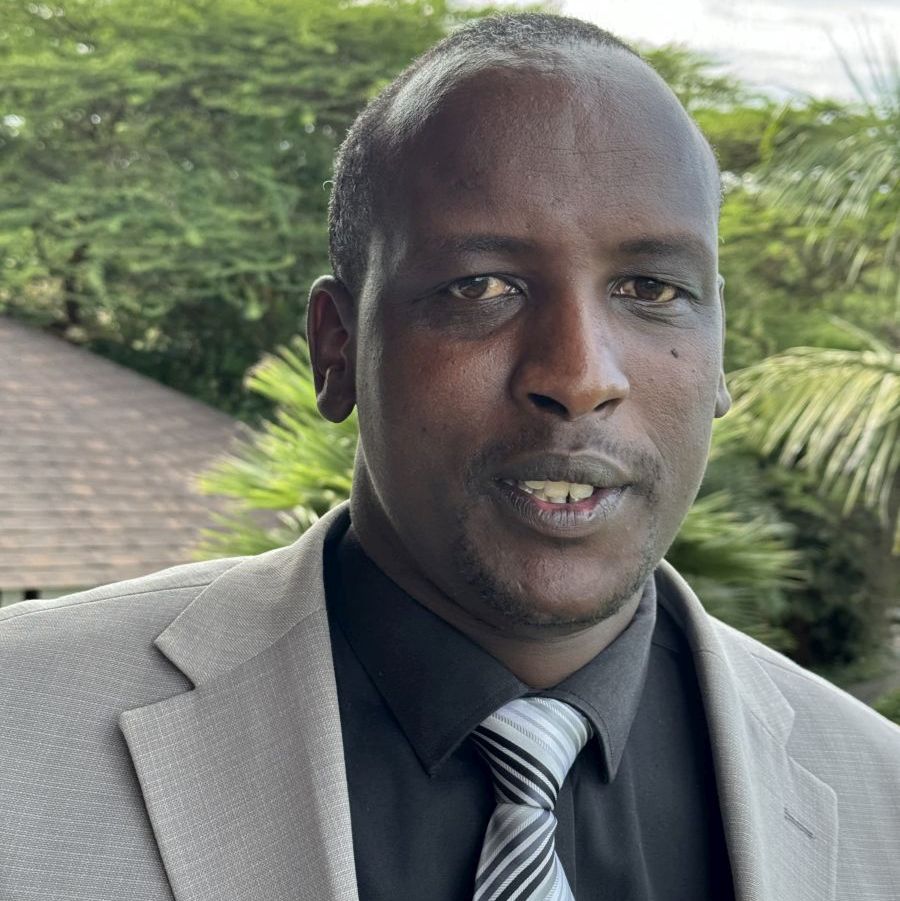
Rompas
Rompas
Giving Hope to Maasai People
Rompas, a 16-year-old Maasai boy in Kenya, decided to go to school after being baptized. More than anything, he wanted to read the Bible for himself.
He faced opposition from his father and many of his 82 siblings, who didn't see any need for a Maasai boy to obtain an education. But he became the first person in his family to complete grade school and then high school. After that, he decided to study theology at Bugema University, a Seventh-day Adventist university in Uganda. But he needed money.
One evening, he summoned brothers and sisters who, like him, kept the Sabbath and asked them to pray for 7,000 Kenyan shillings so he could travel to Uganda to apply for admission at Bugema University. The siblings prayed as Rompas knelt on the floor. After the last "amen," a knock sounded on the door. It was a politician named Alex who had come to see Rompas' father. Politicians liked to visit because Rompas' large family represented many votes at election time. This politician was not an Adventist, and he asked an unusual question. "Does this big family have a pastor?" he said. Rompas was introduced to Alex as the boy nicknamed "Pastor" as a child.
"What's your biggest need?" Alex asked.
"I need to earn a university degree at Bugema University in Uganda."
Alex put a hand into his pocket and pulled out 15,000 Kenyan shillings. It was more than double the amount that Rompas had sought in prayer.
Rompas traveled to Uganda and was accepted into the theology program. Then he returned home to wait for the start of classes. On the same day that he arrived home, Alex came for another visit. Hearing that Rompas had been admitted, he handed over a wad of U.S. dollars. Rompas had never held U.S. dollars before. It was enough to pay for three years at the university.
Today, Rompas Josphat Lekishon is an Adventist pastor with a heart for mission. Through his efforts, six churches have become Seventh-day Adventist. He has also opened a church on a plot of his father's land that he donated to the Adventist Church. Thirty-three family members worship there every Sabbath. He especially likes sharing the good news of Jesus' coming with the Maasai people. He has distributed more than 500 Bibles in the Maasai language. "The thing I love the most is giving the Bible to the Maasai people," he said. "It is giving hope to the hopeless."
Part of this quarter's Thirteenth Sabbath Offering, also known as the Quarterly Mission Project Offering, will support projects in Kenya and elsewhere in the East-Central Africa Division. Watch a YouTube video of Rompas at: bit.ly/Rompas-IS.
Sabbath School Net is a volunteer ministry independent of the General Conference Sabbath School Department.
For questions and concerns about the Adult Bible Study Guide,
please contact the editor of the Bible Study Guide, Clifford Goldstein
The web version of the Sabbath School lesson is published on
this site by permission of the Office of the Adult Bible Study Guide, General Conference of Seventh-day Adventists.
Website contents copyright 1996-2025 by Sabbath School Net, an independent supporting ministry.
For permission to copy contents of the web version of the Sabbath School lesson, please contact both the Office of the Adult Bible Study Guide and the publisher of this site.
All art in these lessons and on the cover is published on this site by permission of
GoodSalt.com.

We invite you to join a discussion of this lesson each day on the Sabbath School Net Daily
Lessons blog. And on Sabbath mornings, you are warmly invited to join a group discussion of the week's lesson in your local Seventh-day Adventist congregation. If you do not know where to find your nearest Seventh-day Adventist Church, you can check out the
Seventh-day Adventist church locator.
Sabbath School Net is a supporting website not affiliated with nor funded by the Sabbath School Department of the General Conference of Seventh-day Adventists)It is run by volunteers and costs are covered solely by donations from the users of this site as well as the small commissions generated by sales through our links to online stores.

If you are using this site regularly, please pray for God's blessing on our visitors. Please also ask Him to impress you how you can help with the costs of putting this site up every month. We appreciate any gift to support the ongoing publication of Sabbath School Net, and only you and God know how much you can give. Even a small donation every month helps. And larger gifts are much appreciated. (No, you don't need a PayPal account. Just choose the "Continue" link to the left of the PayPal registration. And, yes, it's safe - as safe as your online bank account.)
Sabbath School Net
You can find a sampling of materials available to aid you in your studies at our Sabbath School Net "Store." (We will get a small commission not only from any books you purchase but also from whatever else you purchase at the same time. These commissions help to underwrite a small portion of the cost of publishing this site.)
You can also go directly to the home pages of stores which will pay us a small commission for whatever you choose to buy, without costing you a penny extra: Amazon.com | AbeBooks Store
Sabbath School Net Home page | Directory of Sabbath School Bible Study materials
Looking for an older lesson? You will likely find it in our Lesson Archives
Contact the Sabbath School Net Web Team
Go back to top of page