
Wednesday: Gospel Fruit

Daily Lesson for Wednesday 7th of January 2026
Paul’s relationship with the Colossians was different from his relationship with those in Philippi. He included them among those who “have not seen my face in the flesh” (Colossians 2:1). Nevertheless, Paul assures them, as he did the Philippians, that he thanks God for them and is “always” praying for them.
Read Colossians 1:3-8. What three things does Paul thank God for?
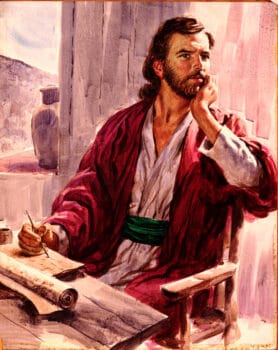
Image © Providence Collection at Goodsalt.com
Paul brings together the three virtues that he mentions in other places: faith, hope, and love (see 1 Corinthians 13:13, 1 Thessalonians 1:3, 1 Thessalonians 5:8). Notice that Paul doesn’t credit the Colossians for these things. He thanks the Father for them, because as James says they are among the “good and perfect” gifts that we receive from Him (James 1:17, NIV). When we see the love God has for us, it leads us to faith in Christ (Ephesians 2:4-8), and we receive the hope of heaven. Peter describes it as “an inheritance incorruptible and undefiled and that does not fade away, reserved in heaven for you” (1 Peter 1:4, NKJV).
Paul also emphasizes that the gospel is trustworthy because it is based on “the word of truth.” This is an expression Paul uses elsewhere in reference to the inspired word of God (see 2 Corinthians 6:7, 2 Timothy 2:15). Unlike “the word of men,” it works “effectually” in those who believe (1 Thessalonians 2:13) and accomplishes God’s will (Isaiah 55:11). So, when the gospel is proclaimed, the power of God is manifested through the work of the Holy Spirit on the hearts of the hearers, and people respond. The gospel itself produces the fruit because it is “the word of life” (Philippians 2:16).
Perhaps what is most amazing is the spread of the gospel in such a short period of time. Within about thirty years of Christ’s death and resurrection, Paul could already say it had spread “in all the world” (Colossians 1:6). A little later in the same chapter, he says the gospel “was preached to every creature under heaven” (Colossians 1:23, NKJV). The extensive Roman road system made possible rapid communication and travel, which is how Paul’s epistles could be circulated so widely and quickly. But it is the power of God working through the word that gives birth to spiritual life in a person (James 1:18, 1 Peter 1:23), making them a new creature in Christ (2 Corinthians 5:17).
|
In Colossians 1:5, Paul writes about “the hope which is laid up for you in heaven.” What is your understanding of that hope, and why does it apply to you personally, even though you are truly unworthy? |

Paul uses some of the most dynamic and powerful words in the New Testament to describe the gospel of Jesus Christ. As far as Paul is concerned, the gospel is not simply information about salvation, but it is God’s power to change individuals, people, communities and destinies. To him, the gospel does not simply contain power, but it is power itself. That is, the power of God. “For I am not ashamed of the gospel, for it is the power of God for salvation…” (Romans 1:16). The gospel is active, effective and transformational. This power of God can rescue, liberate and produce new life. Paul describes the gospel as having the power of deliverance, healing, restoration and bringing complete wholeness.
It is so sweet and completely reassuring to listen to how Paul elevates the gospel of Jesus Christ. It has the power to reconcile God with man. “God… reconciled us to himself through Christ.” (2 Corinthians 5:18–19). The gospel ends the separation between God and humanity. The gospel makes enemies become friends. It restores broken relationships and brings peace where there are hostilities. Above all these, Paul says that the gospel has the power to create new life. “If anyone is in Christ, he is a new creation.” (2 Corinthians 5:17). This is not a modification of the old life, but a new life.
In essence, the gospel is the transforming power of God at work in human life.
It is interesting to reflect on what Paul meant when he used the word “Gospel”. After all, he used the word nearly 70 times in his epistles. The Greek word is εὐαγγέλιον (euangelion) and it literally means good news. But, as is often the case, words sometimes have special meanings in the context. In Roman times, the word was used to announce military victories, or to proclaim the birth, or commencement of the reign of a new emperor. The Christian Church intentionally used this political word to identify the ideas we now associate with the Gospel.
And just what were these ideas:
There is no doubt we can add to the list. Perhaps it would be a good idea to make a list for our modern world that is easily understood, too. No theological semantic gymnastics; just a simple statement with practical implications for believers.
The lesson states that the gospel is reliable because it is based on the words of truth—what does this mean?
Truth is authoritative—but what makes something true? Is it true because God says it, or does God say whatever He says because it is true?
This is not semantics, it actually makes a difference in how we think, choose, believe, and who we trust.
Is the Sabbath holy because God said it is holy, or does God say it is holy because it is somehow objectively different from the other days and holy in some manner?
When God said it is not good for Adam to be alone—was it good for Adam to be alone until God said it and as soon as God said it is not good, then something happened in Adam that caused things not to be good? Or was it already not good by God’s meaning of that statement, in that it was still incomplete and God’s statement didn’t cause it to be that way, His statement acknowledge, proclaimed, revealed the truth that it was in fact that way?
So truth is reliable but again, is truth truth because God speaks it or what God speaks is truth because it is that way?
If we believe truth is truth because God uses His power to make it that way, then if someone convinces us that God is speaking, or the message is from God, we are vulnerable to believing it to be so because God’s word makes it so.
Satan, who tried to deceive Jesus, tried this in the desert when he pretended to be an angel from heaven, a messenger from God, who was quoting the Bible. God has said it, that makes it true, believe
it and do it. If one takes this approach they are not required to think about the idea itself, to consider what it means, whether it is objectively true, consistent with the evidences built into reality that God has given, all they need to think about is whether they believe the message is from God or not. If they believe it is from God, then it must be true.
Satan is going to impersonate Jesus one day, many people will believe him to be Christ and when he speaks, they will accept it without thinking through whether what he is saying is true. They won’t examine what he has says because once they are convinced it is Jesus, then if Jesus says it, it must be true—so they will be deceived. The righteous are those who have developed by practice the ability to
discern right from wrong, and they will recognize the truth because they understand reality, God’s design laws built into the operations of life, and God’s character and will know that love only operates and exists in freedom and imposed laws with imposed punishments are not part of God’s kingdom,
they are the methods of creatures and inflicting punishments for lack of love and trust only causes the destruction of love and trust.
I believe that sometimes we can get analysis paralysis by over scrutinizing things and setting ourselves as the arbiter of truth. When Satan tried to use scripture against Jesus he was doing what many do today, he was misquoting it and taking it out of context. Romans 3:4 sets the record straight. God’s truth and faithfulness are absolute and unchangeable, even if all humanity proves false or contradicts Him. God’s Words are truth because they come from Him, the source of all truth. Satan succeeded against Eve because he made her question the truthfulness of God’s words. He tried a similar tactic against Jesus, but was rebuked by the scriptures. This is how we are to fight against temptation ourselves today. Jesus declared himself to be the truth, the life, and the way. Jesus didn’t leave it subject to interpretation by saying that He was a Truth, Life, or way. We are told in scripture that it is impossible for God to lie. Why is that? I believe that God’s holy and truthful nature makes deception impossible; verses like Hebrews 6:18, Numbers 23:19, and Titus 1:2 emphasize this, explaining that God is truth itself and cannot contradict His own character, thus providing assurance for believers. The saying; “God said it. I believe it. That settles it,” has served me well. Therefore I must say that the answer to your first quesion is, yes. 😉😊
On one level you are correct. There is a law of love that the universe runs on. Violations of that law of love are wrong and they are not arbitrary. It’s not about God randomly making rules.
The Sabbath, however, is a little different. It is holy because God blessed it and made it holy. God chose that day as a day of rest. To say any day is holy apart from God’s blessing is not sensible.
However, I don’t see the Sabbath as an arbitrary command either – it points to creation and the day links with it. If we honor God as creator, we don’t have the right to just substitute another day for the Sabbath. But the day in and of itself is not holy without God.
As Christians, our hope is in Jesus. The “secret” of the whole Scriptures points to Him. He is the beginning, meaning, and ending of all things. So He has to be the main reason for our existence. Our hope must be grounded in God’s love, and Jesus is the ultimate expression of it.
Hope is the expectation of something positive. Hope drives our need to persevere and persist. The love of God for His children and His plans to spend eternity with them is the Christian’s hope.
Living in the 2026 era should be the time to look back and examine our past study habits and see whether or how the past Sabbath School lesson quarterly studies have impacted our relationship with Christ. What has been our biggest spiritual benefit from studying the daily lessons ?
Have we been casually reading through or taking quality time to study our Sabbath School lessons? A person who is not born again by the Spirit will never benefit from the Sabbath School lessons no matter how devoted he is in reading or studying it. Paul warned Timothy that in the last days, Christians shall behave differently and many of them shall be ” Ever learning , and never able to come to the knowledge of the truth” ( 2Timothy 3:7). Let us take things more seriously in 2026 and ask God not only to teach us his ways but also to trust that He will enable us to accomplish his will for us and in us by His Spirit. So that we might bear much fruits.The gospel itself produces the fruit because it is “the word of life” (Philippians 2:16
Amen brother! We can be ever learning yet never coming to the knowledge of the truth (2 Tim. 3:7) as were the Pharisees. They were so busy studying the prophecies of the coming Messiah that when He stood in their midst they missed him. Let us not use the Sabbath School lesson or even this forum to puff out our chest or enlarge our hat size. If our time in study and discussion of God’s Word doesn’t change our heart then we are wasting our time. We are not saved or made righteous by our intelligence, rather by our faith. May our faith and not just our intelligence continue to grow as we continue to spend time with, and in God’s Word and the Ssnet forum. Blessed New Year my friends.
To me receiving the gospel is the transaction of trading in my sinful selfish life for Christ’s perfect unselfish life that he lived on my behalf so that my hope before God is in Christ Jesus and not myself. That is good news indeed!
Faith, love, and hope. Yet the greatest of these three is charity(love). 1 Corinthians 13:13.
Omwenga states: “To him [Paul], the gospel does not simply contain power, but it is power itself. Rom.1:16.
Maurice states: “The Christian Church intentionally used this political word [Gospel] to identify the ideas we now associate with the Gospel.”
I was perplexed to find the original meaning of the word ‘gospel’ to have been used for declaring secular ‘good news’. If this is true, then we would need to look at Jesus Christ as our King, governing His spiritual kingdom here on earth, and requiring its citizens to ‘live by the power of the Word – His Gospel.
His kingdom is a spiritual kingdom. By which means does His ‘Gospel’ reach mankind? By the power inherent in His Word. Through the power of the Holy Spirit within, by FAITH in the power of His WORD, lives are changed. FAITH is this spiritual kingdom’s ‘GOOD NEWS’! It is available to all who choose Jesus Christ as their Lord and Savior, wanting to live in His spiritual kingdom for the purpose to proclaim the eternal Power of the Gospel of Jesus Christ.
Don’t be perplexed, Brigitte. The writers of the Bible used human words. If they didn’t, they would not be understood. It shows the power of Jesus that the original meaning of gospel has long been forgotten.
Christina – I appreciate your thoughts. Since your comment shows interest in this matter, I want to share deeper findings, hoping they are helpful when placing the meaning of the word ‘Gospel’ in the context of politics, power, spirit and time.
Maurice’s comment prompted me to learn more about how the word ‘Gospel’ was used, or what it meant in the days of the ancient Greco-Roman world, then known as Euangelion, compared to our modern time.
The word ‘gospel’ is narrowly defind. As Maurice noted – ‘used for official imperial announcements of the Emperor’s power or military victories. In addition, I noted that the word ‘gospel’ has a highly political relevance, concluding, that the original meaning of the word ‘gospel’ is very much alive in our time.
Then, as it is now, spreading Jesus’ Gospel – His Good News’ – is considered a direct challenge to the existing political structure and authorities.’ These powers can not tolerate the spreading of ‘Good News’by another authority which would ‘weaken/undermine’ the existing status quo – it had, and still has to be suppressed.
I discovered a powerful article by Jonathan Leeman entitled: “The Church’s Most Powerful Political Word: The Gospel”. His article is found at: 9marks.org.
In this extensive expose`, the writer states: “They (the world) will oppose us because of what we say Jesus requires in their lives and ours. Jesus is a ‘king’. He’s political. He makes demands, and specific ones at that. So if you would follow this king, get used to the rage.”
Another statement: “You are the Christ, the Son of the living God,” Peter confessed – Matt.16:16. That’s the confession which would inaugurate a whole new kingdom. And nothing is as politically powerful as a message that inaugurates a kingdom especially a global one that crosses physical, ethnic, cultural, and language boundaries.” Especially when inaugurated by God – Rom.13:1; Mark 1:14-15; Heb.1:2.
Hope is Jeremiah 29:11
… added by moderator