
Wednesday: Stand Fast in Unity

Daily Lesson for Wednesday 14th of January 2026
Jesus’ last prayer for His disciples was dominated by one key theme: unity. Jesus looked beyond the cross to reunion with His Father and reunion with us: “Father, I desire that they also whom You gave Me may be with Me where I am, that they may behold My glory which You have given Me” (John 17:24, NKJV). Jesus prayed that the Father would keep His children so “that they may be one as We are” (John 17:11, NKJV). He also underscored the dire consequences of disunity—it becomes a reason for many not to believe. Twice in this brief prayer, Jesus emphasizes our oneness with Him and the Father is so “that the world may believe” and so “that the world may know that You have sent Me” (John 17:21,23, NKJV).
Read Philippians 1:27 and compare John 17:17-19. What do both Jesus and Paul say is indispensable for unity in the church?
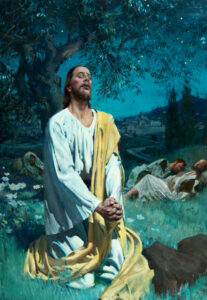
Image © Review & Herald Publishing at Goodsalt.com
The Greek word in Philippians 1:27 translated “let your conduct be worthy” is politeuomai, which means “live as a citizen”—not of any earthly kingdom but as a citizen of the heavenly kingdom. The Sermon on the Mount paints a beautiful picture of what it means to be children of the heavenly Father and members of His kingdom: poor in spirit, meek, hungering and thirsting for righteousness, merciful, pure in heart, peacemakers, turning the other cheek, loving one’s enemies, blessing those who curse us, doing good to those who hate us. In short, “to do justly, and to love mercy, and to walk humbly with thy God” (Micah 6:8).
It’s difficult to be upset or angry with someone like that, or is it? Sometimes we resent people who seem to be too good. We may even be tempted to cut them down to size or find a weak point to prove that they’re not as good as they seem, all so that we feel better about ourselves. Instead, why not see how much more loving we can be, how generous, how merciful, how humble?
Ellen G. White spoke of those who “love the world and its gain better than they love God or the truth.”—Testimonies for the Church, vol. 5, p. 277.
So often disunity in the church ultimately stems from pride. “As pride and worldly ambition have been cherished, the spirit of Christ has departed, and emulation, dissension, and strife have come in to distract and weaken the church.”—Testimonies for the Church, vol. 5, Pages 240, 241.
How crucial that we each learn the humility and meekness that Jesus modeled for us! What a different church we would have, wouldn’t we?

Unity in the Christian sense seems elusive these days. In recent weeks we have seen the schism in the Anglican church essentially on demographic lines. It is a salient message for Seventh-day Adventists who face similar demographic challenges. The idea of church unity come up in several General Conference sessions and with votes teetering around the 50% mark where strong feelings are exhibited, once can hardly say the issues have been resolved. We fire off spiritual salvos at one another, each side claiming we are being led by the Holy Spirit.
Paul prayed for Christian Unity:
It’s a great prayer and we could quote at length about “Unity in Christ” and give a whole list of AI generated ideas about what this means. However, it is worth going back a few verses because this verse has a context.
Paul could have easily taken offense but chose rather to rejoice that Christ was being preached.
“Unity in Christ” has to be more than some sort of mystical glue. It has to work in the church were people disagree with one another about who should preach, what music should be played, whether the church service should be before or after Sabbath School, and even when we differ on prophetic interpretation. And part of that glue has to be about tolerance to differences.
The other day I bought a couple of those solar powered LEDs curb lights so that Carmel can see where the driveway is when she drives the car at night. We had a problem. The curb was concrete and the lights were metal. We had to join the two together somehow so the join could withstand the weather, cars being driven over them, grandsons mowing the lawn and so on. We chose Gorilla Grip a new polyurethane glue that sets with moisture. It is working. The glue sticks the metal to the concrete, two substances that are very different to one another.
We need to think about the sort of glue that binds Christians to one another when they are very different. Paul set an example and it is important to go back and read the lead-up to Phil 1:27.
Unity. You get several church members together, and you see difficulty in unity unless each is willing to give and take. Yes, gorilla glue holds very good, but it swells some, and in tight spots, it may not work. So, I go to a metal plastic epoxy that does not swell.
The moral is quite simple, when reflecting on Monday’s lesson. Unity in the church works better if we allow the Holy Spirit to work in us to keep our pride from swelling. Mmmmmm, yes you are right using the right glue works. Like using the right tool for the job. Are we using God’s weapon or Satan’s? The right tool would be compliment, encouragement, peaceful discussion, long suffering, forgiving, kindness, swallowing pride, if nothing good to say be quiet, non-judgmental. Philippians 2:1-2
Oh, by the way. Thank-you for the superb Australian avian pictures. I really enjoy the birds in flight. It is quite a talent to catch them in flight, not one blur on the wings. Amazing Photography. Yes, indeed a Sabbath afternoon activity.
Ah we needed the expanding glue because the lights were a bit concave uderneath and that needed filling. We also used two concrete anchor bolts on each of them. If someone is going to disunify them they are going to need an angle grinder. And you are right – unity takes a bit of thinking about.
The unifying agent is Christ. And, of course, that was Paul’s theme. It was the mystery he spoke of several times (Col 1:27 is generally wrongly punctuated. The comma should be right after Christ, and the “in” is actually among, since “you” is plural). When Christ is the focus, the other details become less important.
As I watched the GC session vote a few years ago on women, I commented, “At least one side (and probably both) were not listening to the Holy Spirit. Why? Because the Holy Spirit doesn’t tell half a group one thing and half a group a different thing.
Church unity is profoundly essential for its mission, survival, and spiritual integrity. Church disunity gravely undermines the credibility of the gospel, and the Christian witness is mortally wounded. For instance, how can a divided church convincingly preach a gospel of reconciliation (Phil. 1:27)? It is critically important that our Church must cherish and selflessly safeguard unity. Church unity is not only an organisational necessity, but a spiritual reality. As a church and as individual believers, we must understand that unity does not flow from uniformity of opinion but from the love of God in our hearts. When self replaces Christ at the centre of church administration, things fall apart. Genuine unity is preserved not by dogmas or force or silence but by humility, love, and shared commitment to Christ and His mission. As it was to the Philippian Church, the path to our church unity remains the same:
“Let this mind be in you which was also in Christ Jesus.” (Philippians 2:5)
Lack of unity in the church has been one of the greatest scandals of all ages, with Satan using it as his master strategy. Disunity has most likely caused more souls to be lost than all other sins combined. No wonder Jesus prayed specifically for unity when His time was near; His focus for the church was to remain united. In one of the most memorable recorded prayers in the Bible, Jesus prayed “that they all may be one… just as You, Father, are in Me, and I in You” (John 17:21). Jesus did not pray for success, good health, safety, wealth of church members, or even happiness; He prayed for unity, because the New Testament church could only fulfill its purpose if it remained united—just like the modern-day church.
Jesus prayed that His followers would love one another as He had loved them. He made it clear that this love would be the defining mark of His disciples when He said, “By this all will know that you are My disciples, if you have love for one another” (John 13:34–35). In this powerful prayer, Jesus focused more on church unity than on anything else, praying that His disciples—and by extension all believers to be united, just as He and the Father are one.
Jesus was fully aware that the church is made up of diverse people from different backgrounds, with different interests and divergent perspectives and opinions. Yet, in His prayer, He underscored the fact that all have been called for a purpose. The purpose that binds the church together is working in unity to reach beyond our church walls so that others may know the love of Christ. We are in the life-saving business of saving souls, and we must endeavor to work together to accomplish the salvation of souls in unity.
Unity does not start by examining others, but by examining ourselves. Unity does not begin by demanding that others change, but by admitting that we ourselves are imperfect. Unity grows when we learn to accept others’ differences and forgive when we have been wronged. Unity thrives when we humbly serve those who are different from us. Unity is fulfilled when we focus on the One we believe in rather than on what we believe in. Unity can only be realized when we deliberately live and practice the message of Jesus Christ in a world known for disunity.
To live in unity requires focused energy. It’s not easy, or else Paul wouldn’t be admonishing us to “make every effort.”
While the world preaches that “self has to come first,” Jesus says, “love your neighbor as yourself.” While the world preaches “go on, be happy,” Christ says, “look for your enemy’s welfare.” While the world preaches “be proud, leave a statement”, Jesus preaches “be humble, let others be first”. Jesus was and still is against the tide; His kingdom is definitely not from here. While He preaches peace and meekness, the world is constantly at war in the defense of self-interests.
Church unity is not jargon but a matter of the heart if we are united to Christ only then will we have His power to be united to His people like all other things it calls for beating our bodies into submission to God’s will
We need to individually and collectively keep the faith.We also need the. power of the Holy Spirit to stay faithful to God no matter the situation as well as Godly patience for God to complete the good work He has begun in us.
Hi Prescilla. What does it mean to “keep the faith”? and what is the “power of the Holy Spirit”? I am askng because so often we say these words without thinking about their practical implications.
A few years ago, the minister in our church essentially made it difficult for me to continue my ministry as visuals director in our church. In the aftermath, I was sitting in church, minding my own business, when a young girl came up to me with a chocolate attached to a note that said. “Thank you for all the visuals. I loved them!” That’s the Holy Spirit!
That young lady preaches sermons these days and I listen.
Maurice – with all due respect, please allow me to reflect on your statement: “That’s the Holy Spirit”. Did you notice the Holy Spirit only in regards to the young girl’s sharing her ‘appreciation’ of your work with a note and chocolate, or did you notice that it could have also included ‘soothing your wounded pride’ and her wanting to reach out to comfort you?
Yes, we seek ‘acknowledgement’ and ‘approval’ for the ‘work’ we do when reaching others with the Gospel, though we need to be careful not to identify ‘self’ as the center of the effort. Ultimately, ‘good works’ are the result of listening to the Holy Spirit’s promptings from within.
We are now God’s workmanship, created in Christ Jesus. You might like the young lady’s preaching because you notice that she can and does listens to Him as she prepares her sermons. Eph.2:9-10.
Hi Brigitte, When I get a gift I don’t get over analytical. It is an example of the sort of action, prompted by the Holy Spirit that makes me want to belong to a community where the Holy Spirit is active. That is part of the glue!
I understand the practical implications of the interrelationship of our faith and the workings of the Holy Spirit.
Our faith in God is the foundation of our relationship with Him.”Without faith it is impossible to please God”. It is the Holy Spirit that births and nourishes our faith in God.
I remember in 1985, when the famous music director Quincy John’s gathered 46 music stars such as M.Jackson,S.Wonder, B. Springsteen and others to record the song „We are the World“ a project raising funds for African famine, he placed a sign at the Studio door reading
„ Check your egos at the door“.
How else would he have managed to deal with all those individual differences to reach a unified goal?
Is it possible, that we also need such a sign at the doors of our assemblies to fulfill a higher calling than that of Jones?
Ultimately that project became one the most celebrated and successful charity project of all time.
Could we also claim the same about our mission as SDAs in those last days of earth‘s history?
To get any two or more people to unite is nearly a miracle in itself. We humans have a tendancy to fight to the death for our own ideas and beliefs.
In order for there to be true unity in the church, self interests, and self-centered importance must be crucified. It’s not that we all have to think exactly alike, that’s not unity per se, but more like conformity. Yet we must be united in truth and true doctrine. Unity for the sake of unity without truth is compromise against the truth.
We must be united in purpose and mission if ws are ever to take the ” Three Angels Messages” to the world. I am all for unity, but not at the expense of truth. I can’t unite with error, only truth. Not truth of opinion, but the truth of the Word of God.
Amen! Thank you, Tim. There should be no compromising when it comes to TRUTH!
Hi Thomas, That is a pretty assertive statement. But, who defines what is TRUTH? Even if we say that the Bible defines TRUTH we have so many interpretations that it can become quite confusing. There are a couple of things I like to keep in mind.
Thank you, Maurice. Reminds me of 1 Corinthians 13.
Unity in the church does not come by accident. It’s quite intentional. The early church had to seek the power of the Holy Spirit which was poured out on the day of Pentecost.
Then in Acts 2 : 42-47 Peter outlines the practical steps for church unity. Continue in steadfast teaching of the gospel, fellowship,sharing of resources including meeting the physical needs of everyone, prayer and visitation. These activities added members to the church.
Phil.1:27-28
“…that you stand fast in one spirit, with ONE mind striving together for the faith of the gospel, without being frightened in any way by those who oppose you. This is a sign to them that they will be destroyed, but that you will be saved – and that by God.”
John 17:19
”And for their sakes [the apostels’] I sanctify Myself, that they also may be sanctified by the truth.”
How did Jesus sanctify Himself? He dedicated Himself fully to do the Will of God; even unto death. How could we possibly have strength in unity by seeking it through ‘works or conduct’? We cannot! First and foremost we need to seek unity in the Spirit of God! This unity does not only speak to the unity within the Seventh Day Adventist Church.
Jesus first prayed for His disciples to remain united in the Spirit of the Gospel. Does this not also now apply to all the faithful in Christ? Do the denominations jostle with each other for the position of the ‘most righteous’, the most ‘impactful-in-good-works’ church instead of the most spirit-filled? And even this has become controversial.
I do not think it is possible for the body of Christ to remain united in the Spirit if we only look at the ‘works’ aspect of our faith. The evidence of separation started early when the ‘headquarters for the faith’ was established in Jerusalem. From then on, the splintering of the body of Christ into its many factions followed. Too many focused on one or the other aspect of the Gospel of Jesus Christ; neglecting to keep the Spirit of God at the center of all efforts.
Instead of seeking to remain united by and in the same Spirit of Truth – the Holy Spirit which Jesus had prayed for, followers started to preach their ‘own’ gospel; accommodating their ‘preferences’ as they saw fit. There is still only one Spirit of Truth – the Holy Spirit. Only He can help with preventing the believer from following the wrong gospel.
While the world preaches that “self has to come first,” Jesus says, “love your neighbor as yourself.” While the world preaches “go on, be happy,” Christ says, “look for your enemy’s welfare.” While the world preaches “be proud, leave a statement”, Jesus preaches “be humble, let others be first”. Jesus was and still is against the tide; His kingdom is definitely not from here. While He preaches peace and meekness, the world is constantly at war in the defense of self-interests.