
Monday: Firstborn Over All Creation

Daily Lesson for Monday 16th of February 2026
In the New Testament, the terms “firstborn” and “first begotten” almost always refer to Jesus (see Luke 2:7, Romans 8:29, Hebrews 1:6, Revelation 1:5), including both occurrences in Colossians. But even when it refers to others, it does not necessarily mean the one born chronologically first. The biblical concept of the “firstborn” emphasizes the special relationship a son bears to his father, regardless of birth order. Also, there are instances of younger sons being more prominent: Isaac, Jacob, and Joseph, to name a few.
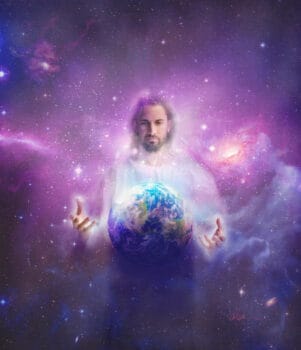
Image © Lars Justinen at Goodsalt.com
David, though the youngest of eight sons, is anointed king (1 Samuel 16:10-13), and through the psalmist God said, “I will make him My firstborn, the highest of the kings of the earth” (Psalms 89:27, NKJV). He also tells Moses, “Israel is my firstborn son” (Exodus 4:22, ESV). In this sense, then, the term connotes first in terms of preeminence.
Read Colossians 1:15-17. What reasons does Paul give for Jesus being called “the firstborn over all creation” (NKJV)?
Clearly, Paul does not mean to suggest that Jesus was the first being created. In fact, he categorically excludes that possibility. Twice, in two different ways, he says Jesus created all things. They were created by Him and for Him (Colossians 1:16). In both cases, Jesus is indicated as the personal agent through whom God carried out the process of Creation (see also Ephesians 3:9, John 1:1-3, Revelation 4:11).
Paul’s statement is as comprehensive as possible. All means all—spatially (heaven and earth), ontologically (visible and invisible), and functionally (thrones, dominions, principalities, powers). The latter terms normally refer to angelic beings (see Ephesians 3:10, Ephesians 6:12). As if to make sure he cannot be misunderstood, Paul also indicates that Jesus existed “before all things” (Colossians 1:17). The Greek expression can mean precedence in rank as well as in time, but in every other instance in Paul’s writings, it refers to time (see, for example, 1 Corinthians 2:7, Galatians 1:17, Ephesians 1:4).
Another reason Paul gives for Jesus’ preeminence is that “all things are held together in him” (Colossians 1:17, NET). The Greek word (synistēmi) literally means “bring together” or “unite.” Jesus is the unifying factor of the universe, not only because of His role as Creator but also because He is the Redeemer.
|
God, the Creator, died for us. What could our works add to that? Why is the idea that our works could add to what Christ has done already for us blasphemous? |

In a world where spiritual relativism is increasingly resounding louder and louder, the absolute supremacy of Jesus Christ is offensive. Paul boldly declaring Jesus as “the Firstborn over all creation”, (Colossian 1:15), was simply proclaiming the absoluteness of Jesus Christ. In the following two verses (Colossians 1:16-7), the cosmic sovereignty of Jesus Christ is spectacularly displayed.
• All things were created by Him
• All things were created through Him
• All things were created for Him
• He is before all things
• In Him all things hold together
Yes, the entire Bible is fully inspired by God (2 Timothy 3:16), yet some passages touch my spiritual sensitivity is a very remarkable way. This passage reminds me that Jesus is ALL SUFFICIENT for me. Jesus is not another truth but the absolute truth. It is this Jesus who has carried me as on the eagle’s wings countless times. It is this Jesus who hear my cries in times of desperation. It is this same Jesus who all hold all things together in my life when they seem to fall apart. I have come to know fully that my life is safe under His wings regardless of the many turbulences in this life. I can definitely join Paul in declaring Jesus Christ is the absolute Supreme above ALL things.
“Salvation is found in no one else, for there is no other name under heaven given to mankind by which we must be saved.” (Acts 4:12)
The nature of Christ has been one of the most divisive topics in the history of Christianity. Even a cursory study reveals a curious mix of theology and politics that is at the root of the great Christian schisms. The Seventh-day Adventist Church has not been immune to this. I was a child in the 1950s and still remember the intensity of the conflict even in our little local Church in the outer reaches of civilisation in New Zealand.
The seeds of the conflict were present among the Colossians and interestingly, Paul does not argue the points of the various theologies (or Christologies, if you want to be pedantic). He upholds the centrality and supremacy of Jesus.
I could provide you with a history of the church councils and the great schisms. They make fascinating reading. I could also tell you about some of the conflicts in the Seventh-day Adventist church in the 1890s and early 1900s (I am currently reading about the Kellogg conflict), the 1950s and the “Questions on Doctrines” issues, and the 1980s conflicts. The big issue for me is that none of those conflicts has really resolved the issues about our perception of the nature of Christ’s divinity. Folk have lost their faith over the issues, and the apparent winners have claimed they have been led by the Holy Spirit. It only takes a small trigger, and we have the conflict flaring up again.
I am reminded of the great debate about light. Isaac Newton was a towering figure in science and rather dismissive of those who disagreed with him. He thought that light was made up of particles. When he died the theory of light swung, based on experimental data, towards wave theory. More recently our understanding about light increased and we combined the two ideas into quantum theory. And even now, we are still finding there is a lot we still do not know about light. In the meantime, the sun comes up every day, and even those who have no inkling of light theory benefit from the light that shines around us. You do not need to know the physics of light to appreciate its value.
And that is essentially what Paul is saying in the book of Colossians. The primacy and supremacy of Jesus is the central theme of the Gospel. When we lose that focus we start arguing with one another about who has the best theory of Christ’s divinity. When we lose that focus we lose sight of God.
Well said Maurice. Thanks.
I love it. I stopped theoretical arguments on certain things to focus on what impacts my daily walk with Christ.
This is so well stated. Thank you.
In our world today first born children are treated with dignity, valued more than the other children, given privileges and preferences in education, in inheritance and other things. They are often regarded as pacesetters for the other siblings and are carried in high dignity and respect. In some cases they fell below expectations a big disappointment to everyone.
In Christ’s case, He is the first born of many responsibilities, the Bible confirms that He created all things, sustains all things He created and when humanity fell into sin and lost direct contact with his Creator, and about to be doomed forever, Jesus Christ took up the responsibility to redeem man from eternal damnation. According to the Spirit of Prophecy, Christ in order to redeem man relinquished His original form and took the form of man not for a certain period of time but for all eternity. His nail pierced hands will remain evident as witness to His overwhelming sacrifice for the redemption of man for all eternity, all because “He is not ashamed to call us Brethren and sisters”. I appreciate how Paul explained profoundly the sacrifice Christ made for mankind and the benefits for us.
Hebrews 2:11-18
11. For both He who sanctifies and those who are being sanctified are all of one, for which reason He is not ashamed to call them brethren,
12. saying:
“I will declare Your name to My brethren; In the midst of the assembly I will sing praise to You.”
13. And again: “I will put My trust in Him.” And again: “Here am I and the children whom God has given Me.”
14. Inasmuch then as the children have partaken of flesh and blood, He Himself likewise shared in the same, that through death He might destroy him who had the power of death, that is, the devil,
15. and release those who through fear of death were all their lifetime subject to bondage.
16. For indeed He does not give aid to angels, but He does give aid to the seed of Abraham.
17. Therefore, in all things He had to be made like His brethren, that He might be a merciful and faithful High Priest in things pertaining to God, to make propitiation for the sins of the people.
18. For in that He Himself has suffered, being tempted, He is able to aid those who are tempted.
Christ as the first born of all things did not disappoint the Father, may we being His brethren and sisters never disappoint Him and lose all benefits. Amen
Hmmm this is powerful 👏
Firstborns have a special place in families. They are unique, and God designed them to carry special blessings. In the Old Testament, they received a double portion, so their birthright was unique and blessed. Firstborns are usually assertive and confident and often carry a strong sense of responsibility. In many families, they act as a deputy parent; they are protective of younger siblings and display nurturing behavior. Just as siblings in families are meant to be united by love, with firstborns taking a leading role, in God’s family the firstborn is Jesus.
As it is written, “He is the firstborn among many brothers and sisters” (Romans 8:29). He chose to die to protect His Christian siblings, and through His sacrifice we are truly united in God. By redemption, we are restored, for we were beyond repair without redemption through Jesus. During creation, God designed and fashioned each of us in His image with unique qualities for the main purpose of bringing joy to His heart. God gave us special abilities, gifts, and personalities that together contribute to the glory of His great name. This was marred by sin. However, our first born who is ever protective has changed this equation by comibg and restoring us to creation settings through His death on the cross.
Christ is the firstborn of God because of two reasons:
✓ All things were created through Him,
✓ He holds all things together.
He reflects good work for us.
God’s work ofredemption is sufficient and adequate. Our additions to His work is distrust and lack of faith in His sacrifice of us.