
Wednesday: Examples of Faith

Daily Lesson for Wednesday 20th of May 2026
Spend some time today studying Hebrews 11:1-40, the great faith chapter. Read it aloud first, without stopping. Then read it a second time, and write down your thoughts to the following questions:
• Reread verse 1. What do you hope for today that you cannot yet see? (Think of immediate needs and eternal dreams.)
• What role does faith play in your personal testimony and in your conversion?
• Read verse 3 again, about God and Creation. Why, in many ways, should the existence of the Creator God be the easiest thing to accept on faith?
• Read verse 6 and write the message of this verse in your own words.
• Verses 7–40 unpack the lives of various biblical personages. Why is faith the central factor that defines the strength of these people’s relationship with God?
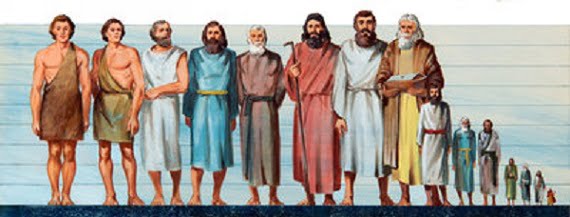
Image © Review & Herald Publishing at Goodsalt.com
Knowing God and having a living, strong relationship with Him requires faith. How can you strengthen your faith or encourage someone whose faith is wavering? Here are just a few ideas:
A tiny faith (like a mustard seed) is powerful and is all you need in order to grow a relationship with God (Matthew 17:20). As long as you’re willing to work with Him, God will help your faith grow.
Faith comes from hearing God speak to us in His Word, the Bible (Romans 10:17). Commit to daily Bible study and prayer.
Ask God to increase your faith (Luke 17:5). As did the father who came to Jesus with a possessed child and who “cried out and said with tears, ‘Lord, I believe; help my unbelief!’ ” (Mark 9:24, NKJV), we can recognize our unbelief and ask for God to increase our faith.
Faith and doubt can exist together (Mark 9:24). Don’t walk away from God simply because you have questions. In fact, it’s important to work out your salvation with fear and trembling (Philippians 2:12-16) and to “own” your faith rather than borrow it from another, as five of the virgins tried to do (Matthew 25:8).
Respond to the Holy Spirit and ask for more of Him in your life.
Exercise your faith. Remember that faith is not a feeling but a decision to believe. Remember that even in darkness, when you can’t see Him, God is there (2 Corinthians 5:7).
As a personal prayer of thanks to God for His faithfulness, consider the words from the hymn “Great Is Thy Faithfulness.”

As a Christian and a scientist, I often find myself facing the dilemma of faith and reason. My whole scientific existence is based on observation and deduction, causal relationships between data, and so on. My spiritual life is based on faith. To deny either would be rip part of my existence away from me.
Sometimes we treat the issue simplistically with cute statements that sound good to us but do little to persuade anyone else.
There is of course, a huge literature on the issue with writers like Richard Dawkins who antagonistically attack faith, and C S Lewis, who persistently argues a reasonable basis for faith.
In a short comment, I cannot attempt to provide a total argument for faith. I will simply give a couple of pointers that I believe are helpful.
It helps to understand that faith and reason are not opposites. Reason is not a worldview. It is a tool that can and should be used in all our thinking. The debate between believers is not about the tool but about the axioms we start from. And if we are starting from different axioms, we are not going to convince anyone. We will simply talk past one another. The debate is not really about who is the most logical, but rather what we accept as a starting point.
It is important too to recognise that we Christians do not have all the answers. Life is not a catechism of questions and correct answers, but rather a dynamic of trial and error learning and development. We have not arrived at the top of the hill of understanding. If we can see that in ourselves, it helps when we interact with non-believers.
I come back to the point that I make often in these comments, that the most compelling argument we have for our faith is our love for one another. God used that argument with us when Jesus came to earth and died for us, and our lives should reflect that love in our dealings with others. Relationships are more important than logic.
If I understand it correctly, both Dawkins and Lewis are trying to use the tool of reason to make the case for their world view. While reason can be helpful, God apparantly does not want reason alone to be a foundation for our faith.
“For the preaching of the cross is to them that perish foolishness; but unto us which are saved it is the power of God.
[19] For it is written, I will destroy the wisdom of the wise, and will bring to nothing the understanding of the prudent. [20] Where is the wise? where is the scribe? where is the disputer of this world? hath not God made foolish the wisdom of this world?
[21] For after that in the wisdom of God the world by wisdom knew not God, it pleased God by the foolishness of preaching to save them that believe.”
1 Kings 1:18-21 KJV
Michael – I am glad you wrote out the Scripture verses as the noted reference does not correspond to the Scripture you quoted. The last verse states such an important aspect of the Wisdom of God:
”For after that in the wisdom of God the world by wisdom knew not God, it pleased God by the foolishness of preaching to save them that believe.”
I agree, debaters and apologists of God’s Word can still use the ‘way of reasoning’, not the way of God ‘through/by revelation’ in order to ‘believe’; arriving at an by intellect prompted knowledge of God. It is astonishing how difficult it is for the ego’s intellect to acknowledge that it ‘does not know anything’. Praise God for His Wisdom that reveals His Truth to those ‘humble at heart like little children’ – Matt.11:25-26.
Thank you Bridgett for the correction. The correct reference is:
1 Corinthians 1:18-21 KJV
And these verses continue the thought:
25-29:
“Because the foolishness of God is wiser than men; and the weakness of God is stronger than men.
[26] For ye see your calling, brethren, how that not many wise men after the flesh, not many mighty, not many noble, are called: [27] But God hath chosen the foolish things of the world to confound the wise; and God hath chosen the weak things of the world to confound the things which are mighty; [28] And base things of the world, and things which are despised, hath God chosen, yea, and things which are not, to bring to nought things that are:
[29] That no flesh should glory in his presence.”
1 Corinthians 1:25-29 KJV
Thank you for your comments however when I searched for this bible verse being new to bible study at this depth I found the text was in 1 Corinthians, just in case anyone else was wondering. Praise our Heavenly Father.
Faith is more than just crossing our fingers and hoping things would work out for the best when we have no reason to think otherwise. Epistle to the Hebrews 11:1-40 rather paints faith as resting upon the promises of God, and these promises are the bedrock for living the Christian faith. As Scripture declares, “Now faith is the assurance of things hoped for, the conviction of things not seen” (Hebrews 11:1). Likewise, “we walk by faith, not by sight” (2 Corinthians 5:7). So whereas many see faith as some internal aspect, biblical faith looks outside of ourselves. It looks beyond this world, and it rests on what God says is real and true and right. It looks forward to what God promises. This is actually a really important point because if faith is not looking in the right direction, if faith is not oriented towards what God promises, then our faith will ultimately be useless.
In our postmodern day and age, there is clearly a disconnect between faith and life, with many thinking faith is little more than positive thinking. Many even think that faith is a fallback when our carefully crafted plans fail or when things move outside of our control. However, faith is what sustains God’s people in both good and bad times. Faith is the means by which we persevere when the world tosses us about as the people of God. The greatest question is not whether we have faith, for everyone has faith. There are those who rationalize their faith, and in doing so they remove the possibility of having faith in God because they rely more on their intellectual ability. Others place their faith in their abilities, skills, connections, friends, family, and themselves. Thus, everyone has faith, but the question remains: where is our faith anchored? As Proverbs 3:5 reminds us, “Trust in the Lord with all your heart, and do not lean on your own understanding.”
It is God’s Word that has the power to comfort the weary and the broken, especially when we experience wounds at the hands of others. It is God’s Word that has the power to cut through crippling doubt. It is God’s Word that is the food that nourishes the soul and builds up our faith in our pilgrimage to the celestial city. “Man shall not live by bread alone, but by every word that comes from the mouth of God” (Matthew 4:4). Indeed, “faith comes from hearing, and hearing through the word of Christ” (Romans 10:17). Therefore, the believer’s confidence is not grounded in emotions, circumstances, or human wisdom, but in the unchanging promises of God, whose Word endures forever.
Now, this was a real challenge for me:
If there’s something I really struggled with until just some years back, it was “doubt” – even though I prayed. For all my years then, I knew that doubting or being rash with God was sure damnation. So, even when I wasn’t clear in my conversation with God, I would turn against myself and go into some kind of “penance” – what was wrong with me? Why was I having “so” little faith? I knew that being a good Christian would never allow me to have doubt, but I had not only doubts, I feared.
But then, I was one time tasked to study the life of Jacob for a Bible study afternoon, and man! Jacob’s life was full of doubts and even queries; he had serious pitfalls; he had fear, but then Hebrews 11 places him amongst the “Heroes of Faith” with all his doubts; fears; and shrewdness.
It’s then I realized that fear and doubt happen – and that’s when faith in God is needed most as a place of refuge, restoration, and to re-energize.
These excerpts from today’s lesson have taken me way back to then; and I have to agree with this, faith and doubt can exist together, so long as we continue to keep the faith of God, and slowly cut through the fear and doubt. And as you overcome the doubt, faith strengthens and reveals a closer walk with God. Maybe it’s time we stop condemning ourselves in doubt, and allow faith to build over the doubt.
When I examine the list of persons mentioned in Hebrews 11:1–40 as heroes of faith, there is one person whose inclusion in this list is rather “odd”. I am truly encouraged to see the name of Rahab. Why?
– She was a Gentile (not an Israelite)
– She lived in a pagan city that was already condemned for judgment
– She was a prostitute
– She did not have a good CV like Abraham, Moses, or David
– She was an outsider and hence very unlikely to be found in the list of giants of faith.
It is important to note how the Bible introduces Rahab.
“It was by faith that Rahab the prostitute was not destroyed with the people in her city who refused to obey God. For she had given a friendly welcome to the spies.” (Hebrews 11:13, NLT).
There were people with a better profession than Rahab, but who perished because of unbelief. On the other hand, a woman of compromised character and an outsider got saved because she believed in God. It is even more surprising to find Rahab as part of the earthly lineage of our Lord Jesus Christ (Matthew 1). This is grace at its purest form. Likely, most of the people in this list of giants of faith could have dismissed Rahab, but God sees faith, and humans see failures. Only God can qualify a person. It is fair to say that Hebrews 11 is not a “museum” of perfect human beings. It is a testimony of imperfect people trusting in God and God’s grace manifested.
Key lessons:
1. God is not limited by our past failures
2. Genuine faith produces courage. Faith without action is powerless.
3. Faith is available to all people, including sinners. Faith does not discriminate by nationality, colour, gender, history, class, etc.
4. God not only forgive sin, but He also restores the lost identity and dignity.
5. Humility opens the door for God’s grace.
“The tax collectors and the prostitutes are entering the kingdom of God ahead of you.”(Matthew 21:3
To read character sketches of faithful individuals mentioned in the faith hall of fame of Hebrews 11, encourages me and builds my faith. We can learn a lot from those that came before us. These things weren’t written for our entertainment but for our edification.
There is a great variety in the list of persons found in Hebrews 11. Some were wealthy, others poor. Most were Jewish, although Rahab was a Gentile. Men and women are both mentioned.And yet, faith is the common bond that ties all these people together in one list. They all had faith, and they all were commended by God for their faith.
This is such an important principle for us to grasp. Faith and love are what matter most to God. Other people in the world may judge you on the basis of your job, your clothes, your home or your car, but none of those things will last past this lifetime.
Hebrews 11 not only presents heroes of faith, but also shows how genuine faith is expressed through action:endurance, sacrifice, obedience, and moral conviction (e.g.Rahab). Each exemplifies virtues that flow from authentic faith.
Faith kept the patriarchs pro-active. God, please provide our needs (both spiritual, physical, and emotional) to strengthen our faith.
I like Maurice’s thoughts, especially today. “Life is not a list of questions and correct answers, rather it is dynamic of trial and error, and learning and development.” Put that with his statement; “The most compelling argument we have for our faith is that we love one another.”
My deduction is that you can build and share your faith by living your faith, as I am sure most of you already realize. And yes, tis the most salient of faith.
I also appreciate the lesson giving many pointers on a solid faith.
1. I please God by having faith in Him. Hebrews 11:6.
2. Don’t be dismayed with a little faith, hang onto it, faith grows.
3. Faith comes from reading, praying with, and meditating on God’s word.
4. Ask God to grow your faith. Matthew 7:7.
5. Keep a firm grip on faith through thick and through thin. Ask God for doubt to be dissolved completely. 2 Timothy 1:13-14.
6. Ask for more of the Holy Spirit in your life and respond to Him. John 16:23.
7. Exercise your faith. The decision to ask for faith, believing He gives you faith is exercising faith. But don’t stop there. Faith will grow from there. Faith is not a feeling it is a decision to trust in the Lord, acting on your belief, or if you prefer letting Christ live out His life with in us, letting us be the transparent body of which His love is displayed. Have faith even when the boss or associate says your crazy. Thank-you Melvin Pascall for that last testimony and thought(Monday’s posts).
I am fascinated at how we generally approach a discussion about Faith. To my way of thinking, faith, trust, belief are an essential part of our every day lives.
For example I went to the pharmacy yesterday, which is located within a well-known chain of stores in my island country. I approached the pharmacist , a perfect stranger and handed her my perscription. She informed me that she did not have what was perscribed, but she had a “generic brand” { the very same item under a different brand name}. I trusted her (had faith in her) and took the medication.
My actions were not a leap in the dark. My observations concerning that chain of stores provided me with enough credible evidence that enabled me to both purchase and utilize the medication.
My faith in God is not a leap in the dark. It is an intelligent and well considered response to a significant body of evidence. Whilst the particular situation would most likely have enough ambit to allow a fairly intelligent argument against my choice. My choice has been made on “the weight” of evidence, my past experiences with God and above and beyond all: the truthfulness of His Word- the Bible.
Thank you for this, Steve. I see it as you do, “To my way of thinking, faith, trust, belief are an essential part of our every day lives.” And your analogy is right on.
In Tuesday’s lesson, there was a significant statement:
When I read some statements involving faith, even on this blog, it seems to me that some people see faith as a “thing” – something that is mysteriously bestowed and has supernatural powers.
Indeed. “Faith is not a thing.” When I read the Bible stories and think of my own experience, faith is the same as perfect trust. It is developed just like trust is: Trust is based on past experience. Faith is a gift of God insofar as God initiates the relationship that builds faith, and He confirms our response of faith in various ways – such as giving us insight as we read His Word, answering prayers, giving us peace in the storm, etc.
When we say we are saved by grace through faith, it is the same as saying we are saved by trusting Jesus implicitly with our salvation. Faith is not something magically bestowed. It is developed by a daily relationship, involving prayer, Bible study and obedience.
I think we would do well to use the word “trust” more than faith when sharing our faith. People understand “trust.” It doesn’t have all the religious baggage that the word “faith” has in a spiritual context.
Luke 22:44 And being in agony He was praying very fervently; and His sweat became like drops of blood, falling down upon the ground.
Thank God He didn’t listen to His feelings nor filter His faith through His feelings. It would have been detrimental had Jesus waited to get His feelings under wrap before continuing in faith. Jesus Himself who was always perfectly faithful was emotionally distraught to the point of death. Yet He kept entrusting Himself to God despite those feelings.
Phi 2:8 Being found in appearance as a man, He humbled Himself by becoming obedient to the point of death, even death on a cross.
1 Peter 2:23 and while being reviled, He did not revile in return; while suffering, He uttered no threats, but kept entrusting Himself to Him who judges righteously;
Even with Christ His faith operated even when His feelings were not in alignment. So by this we can conclude two things. One, faith is not a feeling. Two, faith can operate despite the worst of feelings. This is the definition of being courageous.
Jesus is taking God at His Word despite His feelings (John 5:19, 5:30, 8:28, 12:49) which we know from the garden that even with Jesus when He was in the flesh, His feelings were not always in alignment with His faith and we can conclude that His faith then was not a feeling nor was it rested on His feelings which we often mistakenly do. This was the same mistake Peter made.
Matthew 14:28-31 Peter said to Him, “Lord, if it is You, command me to come to You on the water.” 29 And He said, “Come!” And Peter got out of the boat, and walked on the water and came toward Jesus. 30 But seeing the wind, he became frightened, and beginning to sink, he cried out, “Lord, save me!” 31 Immediately Jesus stretched out His hand and took hold of him, and *said to him, “You of little faith, why did you doubt?”
When Peter heard the command of God “Come!” He took Him at His word and walked on water. But when Peter lost focus of that and his feelings took over, it was only after he became frightened that he began to sink. Peter in a moment of taking God at His word walked on water, but in the next moment of calculating his circumstances no longer took God at His word but listened to the circumstances and became frightened. Notice what Jesus says thereafter “…why did you doubt?”. Jesus was addressing Peter’s faith. Peter knew the command was valid, after all, he did walk on water (fact) but despite knowing the validity of God’s word Peter allowed his circumstances and his feelings to get the better of him. On that note, notice the compassion of God “Immediately Jesus stretched out His hand and took hold of him…” Even when we’re being corrected we’re in the arms of God.
God is always faithful. When I fail, He rescues me with His love and kindness. All I need to do is continue to search Him with all my heart, and He will always back me up.
Human reason has its place, but it also has its limits. Creation itself points to intelligence, order, and design, making it difficult to honestly conclude that everything came from nothing by mere chance. As Scripture says, “The heavens declare the glory of God” (Psalm 19:1). Nature gives evidence that there is a Creator.
Yet reason alone cannot fully explain or comprehend God. The finite mind cannot completely grasp the Infinite. The Bible reminds us, “Canst thou by searching find out God?” (Job 11:7), and “My thoughts are not your thoughts, neither are your ways my ways” (Isaiah 55:8). Logic may lead a person to recognize that God exists, but faith is what brings us into relationship with Him.
Christianity is therefore not blind faith without evidence, nor is it mere intellectual reasoning without trust in the supernatural. It is a harmony of evidence, revelation, and faith. Reason can bring us to the door, but faith in God’s Word allows us to enter.
is this a typo?
“Faith and doubt can exist together”?
Having Faith, “the substance of things hoped for,” takes claiming God’s promises. It involves dwelling in God’s word and transmitting His will through Spirit-driven works.
My son, Ryan, appreciates well the reference to his favorite bread-making skill:
In making Sour Dough Bread we need a “starter.” Are we, today, making good use of God’s starter words, His law and His covenant promises?
Is the “starter” that we share, with those seeking Jesus’ example through us, the best possible one we can share?
The world awaits the sharing/propagation of our proven faith in Jesus. (Isaiah 26: 3, 4, 7; Hebrews 11; Rev. 14:12)