
Wednesday: The True Joshua, the Antitype

Daily Lesson for Wednesday 3rd of December 2025
The story of Joshua must be seen through the prism of typology. The wars Joshua conducted are historical events, constituting an essential segment of Israel’s history. The goal of these wars is to settle the Israelites in the Promised Land, where they can enjoy their allotted inheritance in peace and establish a new society based on the principles of God’s law.
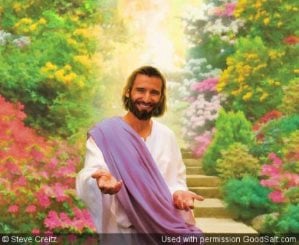
Image © Steve Creitz from GoodSalt.com
Later, Old Testament authors, such as Isaiah, present the work of the Messiah as also consisting of allotting the “desolate inheritances [to His people]” (Isaiah 49:8, NIV), using the same terminology that is so frequent in the book of Joshua. As the task of Joshua had been to apportion the land to the Israelites, so the Messiah, portrayed as the new Joshua, assigns the spiritual inheritance to a new Israel.
Read Hebrews 3:7-19; Hebrews 4:1-11. How does the New Testament confirm that Joshua, the new Moses, is himself a type of Jesus Christ?
The authors of the New Testament presented many aspects of the ministry of Jesus Christ in terms of Joshua’s work. As Joshua stepped into Canaan after 40 years in the wilderness, so the “antitypical Joshua,” Jesus, entered His earthly ministry after 40 days in the wilderness (Matthew 4:1-11, Luke 4:1-13) and His heavenly ministry after 40 days in the wilderness of this earth (Acts 1:3,9-11; Hebrews 1:2).
After Jesus’ baptism in the river Jordan (His “crossing of the Jordan” [Matthew 3:13-17, Mark 1:9-11]), the gospel writers quote from Psalms 2:7 and Isaiah 42:1, from a Messianic psalm and from a song about the Suffering Servant of Yahweh (Matthew 3:17, Mark 1:11, Luke 3:22). Consequently, through His baptism, Jesus is presented as the Divine Warrior who will—through a life of faithful obedience, even unto death—wage the wars of Yahweh against the evil forces. His life and death on the cross brought about the casting out of Satan, led the conquest over our spiritual enemies, offered spiritual rest to His people, and allotted an inheritance for the redeemed (Ephesians 4:8, Hebrews 1:4, Hebrews 9:15).
|
What does it mean to be able to “rest” in what Christ has done for us? That is, how can we have assurance that Jesus has defeated Satan in our behalf? |

Joshua was only foreshadowing. He was a signpost pinpointing to the real substance. Only Christ fulfils what Joshua could only foreshadow. Joshua only led Israel to a physical land, conquered physical enemies, and distributed earthly inheritance. But only Jesus leads mankind into eternal life. Only Jesus conquered sin, death, and Satan. Only Jesus provides an everlasting inheritance in God’s kingdom.
Now, we have been commanded by the Word of God to shift our focus from types to antitype (Christ). We should see through the types to Jesus Christ. “Fix your thoughts on Jesus.” (Hebrews 3:1). Joshua only provided partial and temporary rest, but Jesus gives complete, eternal rest for the troubled human souls.
Jesus’ baptism in the Jordan is a fulfillment of Joshua’s type, symbolizing the start of His ministry, His authority as Son of God, divinely chosen saviour and empowered and His role in leading God’s people into their true spiritual Promised Land.His baptism marks the beginning of His ministry to secure salvation and eternal inheritance for all who trust Him.
The main focus of today’s lesson is the passage in Hebrews 3:7 – 4:11 which in a nutshell says that the Israelites wandered in the wilderness for 40 years because of their refusal to follow God’s leading. The author of Hebrews is essentially pointing out that the early Christian church is in danger of doing the same. It was Joshua who led them through the Jordan, where they ultimately settled (rested). The parallel is that Jesus has led the early Christian Church into his promised land (salvation in him).
The typology for this passage is less about the person Joshua and more about the event and circumstance. The emphasis is on not hardening your hearts and persisting, because God’s promise of rest still stands. If we want to spell out the typological parallel; Joshua led the Israelites into the promised land, and Jesus leads the intended readership of Hebrews into the promised land of his rest.
There is of course a lesson for modern Christians in all of this, but it looks like we have to wait for that till tomorrow. That is the problem with chopping lessons up into day-sized pieces.
I would make the point that the above passage in Hebrews makes a lot of sense if you read it in a modern translation. (That’s your homework!)
Israel needed more than a leader who could simply instruct the priests to carry the Ark of the Covenant and step into the Jordan River. They needed one who would enter the waters with the very Spirit and presence of God to fulfill all righteousness (Matt. 3:15–17). Israel needed more than a leader who could defeat earthly enemies, they needed One who would ultimately defeat Satan, the father of lies (John 12:31). Israel needed more than a leader who could select twelve representatives to inherit the land and set up memorial stones; they needed One who would appoint more than twelve emissaries to carry His vision and spread the truth to the ends of the earth (Matt. 10:1–15; 28:16–20). Thus, Joshua set the stage for Jesus Christ to come in the fullness of time (Gal. 4:4).
After defeating the enemies in Canaan, Joshua ensured that God’s people the Israelites,had relative peace and rest in the Promised Land but Christ after defeating the devil endure Ultimate Orace and Rest. Thus Joshua storyline is just but a foretaste of the true rest that Jesus Christ, a better Joshua, would one day offer (Heb. 4:8–10). A greater “Joshua,” Jesus gives rest and peace that the world can neither give nor take away from us. When He declared “It is finished” on the cross, and when the empty tomb was discovered on Sunday morning, the true meaning of rest from sin was revealed in a way no human can fully explain. Jesus continues to invite all to partake in the peace and rest He provides inviting the weary and burdened by sin to find everlasting rest and relief in His righteousness.
I have no other choice but to cling to Jesus as my Savior. My character defects are apparent when I contemplate His, should that make me feel miserable? No, otherwise He offers me rest, because he has done everything to save me from myself. I have to trust His LOVE for me, and for every other soul in the Universe.
“What does it mean to be able to “rest” in what Christ has done for us? That is, how can we have assurance that Jesus has defeated Satan in our behalf?” John 19:30. Luke 24:6.
God said it, I believe it, and that’s good enough for me. So what do I do? I put my trust in God, and out of love for the One who 1st loved me I obey His commandments. The light of Christ that burns in me cannot be hid.
To “rest” in what Christ has done for us means to stop striving to earn God’s favor and instead rely fully on the completed work of Jesus for our salvation. Our relationship with God is secure—not because of our imperfect performance, but because of Christ’s perfect sacrifice.
We can have full assurance that Jesus has already defeated Satan on our behalf through His death and resurrection.
To rest in Christ is to recognize that the decisive battle has already been won. Our confidence is not in our own strength, but in His finished victory. In Him we are forgiven, declared righteous, and made victorious.
Yet this assurance is never a license for disobedience. Justification is our foundation for living a faithful life. God’s grace does not excuse sin; it transforms our hearts and empowers obedience. The more we rest in Christ’s victory, the more we desire—and are enabled—to walk in His ways.
The lesson says, “The goal of these wars (conducted by Joshua) is to settle the Israelites in the Promised Land, where they can enjoy their allotted inheritance in peace and establish a new society based on the principles of God’s law.” I’ve highlighted the word “settle” because that pops out for me as a warning. To me “settled” can have flavors of indulgence and ease, which can easily lead to a sense of entitlement and nationalism. “God gave this land to us for us to prosper here, so let’s kick back and enjoy and don’t let anyone or anything harm our status quo. We’re chosen, we’re home free.” In other words, prosperity can knit our hearts to materialism and the mindset of the world to idolize comfort and increasing in goods… if we are just resting…and not resting “in Jesus”.
The world’s resting is stressing because it is defensive and enough is never enough when it comes to a comfortable life. Whereas, resting in Jesus is not defensive and not working for my own ease, but it is also not inactivity…not at all, and also it’s not particularly comfortable. There’s a cross to carry. And there is a commission “in you all the nations/families of the world will be blessed” (Gen. 12:3). That’s not kicking back under some grape arbors sipping juice and eating olives. God talks about His kind of rest in Isaiah 58. God’s idea of rest is full of service… going out to mingle with the purpose of sharing Jesus and hosting those who are coming to the brightness of Christ rising in hearts, our homes, and our communities that are based on the principles of God’s law (Isaiah 60:3).
Honestly, this level of responsibility feels intimidating to me and I’d rather nap in the green pasture Jesus has led me to (Ps. 23:2). But with Jesus as my Shepherd, He’s drawing other sheep into the same pasture He has led me to… and truly I want to be a part of His work and tremendous joy in bringing them, against all odds, out of Satan’s kingdom of havoc and confusion into this internally restful place. Actually, can I even really rest when my dear unbelieving friends, family, acquaintances are not sharing this rest? With Jesus’ heart in me, no I cannot. Jesus in me doesn’t head straight home to relax, but lingers where kingdom conversations are taking place or ripe to take place, saying, “I must be about My Father’s business (not my own)” (Luke 2:49).
I agree with today’s lessons. Reflecting on Hebrews 3:7-4:11, because Joshua took over the leadership from Moses and continues to perform the same miracles God performed through Moses, it would be appropriate to infer that Joshua continues Moses’s works in the same spirit. However, to draw a parallel between Joshua and Jesus Christ based on the readings in Hebrews 3:7-4:11, while Joshua paves the way for the Israelites to cross the River Jordan (Joshua 3), John the Baptist baptizes Jesus Christ in the same river. While Joshua and the Israelites wandered in the wilderness for 40 years (Joshua 5:6), Jesus Christ fasted for 40 days and 40 nights in the wilderness (Matthew 4:1-2). While God used the 40 years under Joshua as a Divine discipline to test the Israelites before preparing the faithful ones to cross the River Jordan into the promised land (Joshua 5), Jesus Christ fasted for 40 days and 40 nights to be strong in the spirit to overcome the devil’s temptation (Matthew 4:1-11).
Because Jesus Christ overcame the devil’s temptation to strengthen Himself within the spirit, He fought the spiritual battle to accomplish His mission, and His victory would assure us if we adopt His doctrines to overcome a similar temptation. In other words, if a Christian overcomes a temptation, Jesus Christ will remember the person’s faith and allow the individual to be part of His kingdom.
I guess this week’s lesson has not convinced me too much. In broad strokes, I do see Joshua as a type of Jesus. However, many of the verses are being used rather recklessly in my opinion. Forty is a significant number in many places in the Old Testament so to connect it to Joshua I guess is somewhat debatable. I see Moses’ 40 years of preparation in Midian to parallel Jesus’ temptations. The 40 years of wandering were certainly not ordained by God – they were because of unbelief, so neither they were required.
Is Jesus baptism a parallel to crossing the Jordan? Maybe, but it’s sure a loose parallel. When we work so hard to make things fit, maybe we should look again.
Certainly we should see glimpses of Jesus throughout the Old Testament and the many stories. But I am starting to wonder if focusing on the type is actually potentially distracting from the reality of Jesus. After all Hebrews emphasizes that Jesus is better than all the types.
I also disagree that the story of Joshua must be seen through the prism of typology. If it is indeed a historical book, it certainly has meaning beyond typology. In all my years of reading it, I’ve never noticed many of these supposed “parallels” but I think I have learned many things from the book. It is history, not prophecy. That doesn’t mean there aren’t applications to the future, but I feel we must be careful.
Many in the church feel otherwise – I know a number of people who look for symbolism and types in everything. But when we make the Bible a code to be cracked, is that the best?
I agree to some extent that the book of Joshua is more a Historical book than prophecy, but our aim is to expose Jesus as the Centre of the bible from Genesis to Revelation in the plan of redemption,