
Thursday: A Lifestyle That Reflects the Cross

Daily Lesson for Thursday 16th of July 2026
The fact that we should not form cliques, especially around human leaders, does not mean we should not support our leaders. We are supposed to appreciate and help those who lead out in church work. God commissions people to do His ministry on earth. Church leaders who display a lifestyle that reflects the submissions represented by the Cross are worthy of being heard and followed.
And this is so because only the Cross has the power to reverse any manipulative form of control in favor of submission to God’s Word. Christlike leaders attribute the success of their ministry to God alone. In His earthly ministry, even Jesus as a human assigned glory to God (John 17:4).
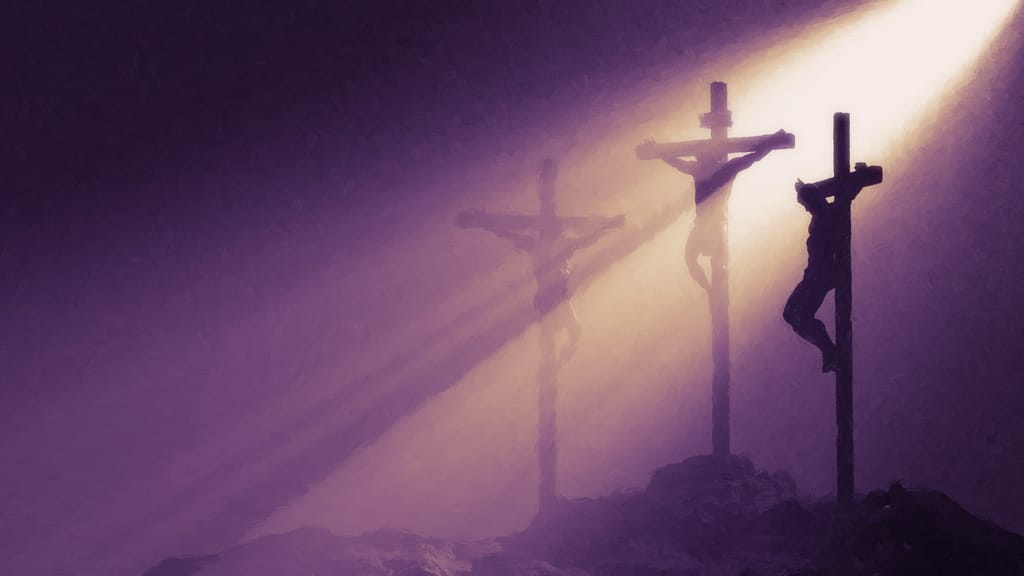
Image © Steve Creitz at Goodsalt.com
According to Paul, faithful Christian ministry must be grounded upon what we can call a theology of the Cross. The Cross is God’s revelation of His wisdom and power to save. At the same time, it also displays human wisdom as foolishness. In 1 Corinthians 4:1-13, Paul makes it clear what such a theology of the Cross looks like. First, he indicates that it is God who sets the standard for Christian leadership (1 Corinthians 4:1-5). Second, he points to the fact that suffering is the trademark of true Christian ministry (1 Corinthians 4:9,11-13). This second point deserves to be further developed.
Read 2 Corinthians 11:23-28 and Colossians 1:24. What does this teach us about what it means to suffer for Christ’s sake?
Christian leaders follow the footprints of Jesus by being willing to suffer for their fellow brothers and sisters, and even if need be die for the sake of their ministry. Paul refers to himself and Apollos as “men condemned to death” (1 Corinthians 4:9, NKJV). They are portrayed as facing a lack of food and water, as well as being “poorly clothed, and beaten, and homeless” (1 Corinthians 4:11, NKJV). In addition, they were also reviled, persecuted, defamed, and “made as the filth of the world, the offscouring of all things until now” (1 Corinthians 4:12-13, NKJV). Furthermore, by referring ironically to the Corinthians as rich, kings, wise, and distinguished (1 Corinthians 4:8,10), Paul demonstrates that pride must have no place in true Christian leadership, for it is the root of division in the church (1 Corinthians 4:6).
|
How much have you suffered for Christ’s sake, whatever your role in the church? What lessons might be found in your answer? |

I did a quick survey of some of the megachurches that have failed in the last 20 years. Here are some of the most well-known ones:
On top of that we have had several major enquires into institutional sexual abuse of minors – mostly with religious organisations – and the results were devastatingly bad.
The media thrives on controversy, and its reporting of the failings of Christian churches and institutions has been relentless (and financially rewarding). The smell of hypocrisy sells media products like nothing else.
It is a stark reminder of what happens when we take our eyes of Jesus and follow men. Churches should never be about who is greatest, but rather about how best can we serve God by our willingness to help and serve others.
I know I am jumping ahead a bit but this is what Paul said:
If we put our faith in religiosity, it will ultimately end. The self sacrificing love of Jesus shared with others keeps our spiritual existence alive.
Without diverting from your main point and just to clarify the obvious. The media thrives on “selective controversy”. There are some sacred cows that remain either unscrutinised or gently dealt with. In my experience, Christianity is usually always misrepresented.
Yet we still need a belief in Jesus Christ which is religiosity in Christ, is it not? Which is making another point rather than taking away from your main point I do believe. We agape love you Maurice. And keep you in our prayers.
The crucifixion and resurrection of Jesus Christ were far more than a mere moment in history—they were the triumphant turning point of all eternity. No collection of words can fully express the transformation brought about through this one event. At the cross, sin was atoned for and forgiven, the power of sin was broken, death lost its sting, hope was secured, heaven was opened, intimacy with God was restored, and life through the indwelling Holy Spirit became available to all who believe. As Paul declares, “He himself bore our sins in his body on the tree, that we might die to sin and live to righteousness” (1 Peter 2:24). Likewise, “Death has been swallowed up in victory… thanks be to God! He gives us the victory through our Lord Jesus Christ” (1 Corinthians 15:54–57). Although the cross was a historical event, its message and pattern of sacrificial love continue to shape the life of every believer today.
Throughout His earthly ministry, Jesus consistently lived for the good of others. His times of prayer in solitude were never an escape from people but preparation to serve them more effectively. Everything He did flowed from deep communion with the Father into compassionate ministry. Jesus never lived from a place of self-preservation or self-interest. Instead, He humbled Himself by washing His disciples’ feet, healing the broken, feeding the hungry, and ultimately bleeding, suffering, and dying to meet humanity’s greatest need. As Jesus Himself said, “For even the Son of Man came not to be served but to serve, and to give his life as a ransom for many” (Mark 10:45). His example calls us to embrace the same attitude: “Do nothing from selfish ambition or conceit, but in humility count others more significant than yourselves” (Philippians 2:3–8).
This teaches me that life in Christ is not meant to be lived for my own pleasure, nor in my own strength or ability. Rather, I now live for the glorious purpose of the One who died and rose again so that the Holy Spirit might dwell within me. What took place at the cross now determines my daily lifestyle. I no longer live independently but by the power and enabling of the Spirit of God. As Paul writes, “I have been crucified with Christ and I no longer live, but Christ lives in me” (Galatians 2:20). Therefore, I desire to live each day in obedience to the Spirit, fulfilling God’s purposes rather than my own, for “those who live should no longer live for themselves but for him who died for them and was raised again” (2 Corinthians 5:15).
If there is one thing Adventist church members need to do earnestly, it is to pray for our church leadership and the general structure of church governance. We believe that we are the remnant church, and this claim comes with a huge responsibility. How can we, as a church, execute this global responsibility? We have been entrusted with the responsibility of proclaiming the everlasting gospel to the world. As members, we have a solemn responsibility to pray continually for our leaders (1 Timothy 2:1–2), asking God to grant them wisdom, humility, courage, and a deep dependence on the Holy Spirit. Leadership in God’s church should never become merely an organisational exercise but should remain a sacred calling guided by prayer and Scripture. At the same time, each of us must engage in personal self-reflection, ensuring that we do not conform to the values of the world but are transformed by Christ. Our greatest need today is not criticism but revival, reformation, and unity under the lordship of Jesus Christ, so that the church’s witness remains faithful to its divine mission.
“How much have you suffered for Christ’s sake…” Compared with the suffering of Jesus, or even the early church, there is no comparison. However, I would like to know why ask the question in the first place?
Unfortunately, this type of question can turn the focus back to self and as such, I think it is the wrong question. I think the right question is, “How well do I know God?” suffering aside.
We live in a different age which means we need to consider the underlying principles of what suffering for Christ means. While it can include the type of situations mentioned by Paul, for most Christians in Western civilization, it does not. I like how Ellen White puts it in Steps to Christ:
To some extent, most Christians would understand that statement. Interestingly, the greatest struggle for most western Christians is distraction (or if you prefer self-distraction).
It turns out crucifying self is a difficult thing to do – impossible without God.
Amen!! That is the big one that the whole world is struggling with, and if things were not already bad, social media has been added and the devil is using it to his advantage to keep people even more distracted and the attention taken away from The Lord, our Savior. 🙏🙏
So very glad your thoughts on the question at hand are similar to mine, Randall. It stumped me, and I do have more to say about it a little later.
I tend to agree. I don’t like the question as the situation we’re in influences how much we suffer. In the West us native-borns have likely never ever really suffered for our faith. Have we sometimes been made fun of? Sure? Not been able to pursue a job or athletic pursuits because of the Sabbath or other moral principles? Some of us have. But these are a far cry from anything Paul suffered.
The implied message of the question seems to be that if you haven’t suffered, your faith is probably not genuine. That does cause us to focus on ourselves which I don’t think is healthy.
However, if we look at the whole Bible, faithful people are not suffering all the time. Job was quite prosperous before Satan went after him. Others like Abraham were also wealthy as were the righteous kings. Even the early church had periods of peace.
More important is our willingness to suffer and we don’t know when that might come. Rather than look for suffering, we should focus on keeping our relationship with God strong.
And just a comment on dying to self. It can be a hard battle, especially in some areas that we really struggle in. But I actually question whether it should be called suffering. In Romans 6, we see that we are slaves to either sin or righteousness. Once we became slaves of righteousness, we gradually grow more in harmony with its principles and it actually becomes more natural to obey than to disobey. This doesn’t happen over night, of course, but if someone is finding the Christian walk a horrible slog, maybe they are doing it wrong. Remember, Christ’s burden is light (Matthew 11:30).
I agree with your statement.
More important is our willingness to suffer and we don’t know when that might come. Rather than look for suffering, we should focus on keeping our relationship with God strong.
A faithful relationship with Jesus will require of us some sacrifices for His cause.
Are we touching on last week’s lesson, yes with a different aspect? A principle and thought, mind you, of unity. Yes when it comes to unity in Christ, praying for our leadership is good and praying for fellow members. How many members in your local church can you pray for by name? Yes, it depends on the size of your church, yet you should be able to pray for 7 by name that is the number of friends in the church you need to help maintain the membership of our church. Thus is one avenue to keep our attention diverted towards the Saviour. God bless us as we go into Friday’s lesson soon, keeping the unity that Christ would approve of.
One point that stood out to me in today’s lesson is Paul’s description of Christian leadership. Too often today, ministry can be viewed through the lens of its privileges—the title, influence, salary, or recognition. Yet Paul presents a very different picture. True Christian leadership is marked not by perks, but by sacrifice.
Those whom God calls into ministry should enter it with a clear understanding that it is first and foremost a life of service and self-denial. The blessings of ministry are real, but they should never overshadow its sacrificial nature. The theology of the Cross reminds us that true greatness in God’s kingdom is measured not by status or privilege, but by humble, Christlike service.
There was a line in today’s lesson that left me with many questions: “Church leaders who display a lifestyle that reflects the submissions represented by the Cross are worthy of being heard and followed.”
First, is there any leader on earth who fully displays this? None of us are fully there.
Second, how do we even know this? True, some people’s actions can show this submission, but much of submission goes on inside. There are a lot of things about leaders we cannot easily know. I Corinthians 4:5 which tells us to judge nothing before the proper time probably indicates we shouldn’t try to make these judgments.
Finally, should we therefore not follow flawed leaders? Probably some leaders do need to be removed, but we do have the example of David who would not topple Saul, the Lord’s annointed. I think we need to do our best to respect our leaders, flawed as they are.
Adventist Churches here in the Cities of Papua New Guinea tend to treat people according to their status quo,wealth, their title in the Churches, etc. Most of those who worship in the village feel out of place when visiting city Churches. These lesson is timely for us to change and take on Christ Like character and maintain these unity.
I cannot say anything about others, but my life in the church has been pretty shaken. I had to make decisions that would seem crazy for most members of the Christian community. But one thing may give me the impression that I’m in the right direction: peace! Thank God, I am at peace with my Lord! To Him, all the glory!