
Tuesday: Knowledge and Experience: Part 2

Read Luke 6:20-49. In what ways are both knowledge and experience revealed in these texts? That is, how are they blended here in a way that shows why both are needed, not only in our own walk with the Lord but in disciple-making, as well?
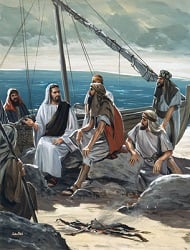
Image © Pacific Press from GoodSalt.com
Spiritual knowledge is indispensable for spiritual transformation. Christ Himself was regarded as the Master Teacher. In open classrooms bordered by seashores, mountains, and God’s created wonders, Christ disseminated transformative knowledge. The Holy Spirit awakened previously seared consciences to accept these truths. Disciple-making is incomplete without experience, but experience must be directed by knowledge.
Twenty-first-century disciple-makers must thoroughly acquaint themselves with Scripture, the source of authentic spiritual information. Likewise, they should disseminate doctrine and teachings without regard to popularity or convenience. God expects seasoned believers to withhold nothing, patiently guiding infant converts into an ever-expanding understanding and appreciation for the wonderful, life-changing truths of Christianity-especially the present truth of the three angels’ messages.
In the context of making disciples, what does Jesus say in Luke 6:39 that everyone who seeks to make disciples must keep in mind? How can we be sure that we are not like that which Jesus is warning about here?
In the end, a combination of knowledge and experience that produces unselfish love will be the most potent force for any disciple-maker to possess.

All experience and no knowledge makes for a pooly rounded leader. Take greek for instence, now you must have it to finish your theology major. To get your doctor of devinity you must have a theology major, and so forth. True wisdom comes from God and does not totally rely on knowledge. To sit in the court of Saloman as a judge you need God given wisdom, knowledge, and experience, then your decisions totally rely on wisdom from God. Hey, Christ was so knowledgable, He blue away the teachers at the age of 12. I do beleive His relience on wisdom from His Father, augmented His presentation. He then went on to gain experience for another 18 years from His heavenly Father and His earthly father. You know the Bibical account.
Jesus’ teachings on the Beatitudes were revolutionary, it goes against our natural human nature. Jesus taught, ”love your enemies”, this is not natural nor normal. But by experiencing Jesus’ love for souls, ”we can” by obedience follow Jesus’ example. On the cross, He gave us that great lesson. Also, ”how do you turn the other cheek” what is really meant, ”is perseverance in doing evangelism”. You might be mistreated, struck down in rejection, then move to the next person. We have to gain a ”spiritual” experience that will take us into heaven. Finally, following the “Golden rule”, ”treat others in the same way, you would want them to treat you”. God bless.
Christ chose 11 plus one disciples to form 12 for his mission as an inner circle. Why did they had to be 12? Has it any resemblance to 12 tribes of Israel? or 12 elders in Rev. 4:4? Whats special with the number 12 as also amplified in Rev. 7, and also Rev. 21 with 12 gates, 12 foundations? Etc?
I love the way Christ used experience as a major element in His teaching. What humans can’t identify with, often they can’t understand, and definitely can’t or don’t apply. The knowledge Jesus drew from was a combination of scripture and daily living. He didn’t try to shock or astound His listeners with His superior wisdom even though it was obvious that He had it. His object was to attract them to the knowledge of God, which was within their reach. Then support them in applying the knowledge gained into the daily life.