
Sabbath: A Heavenly Citizenship

Daily Lesson for Sabbath 7th of February 2026
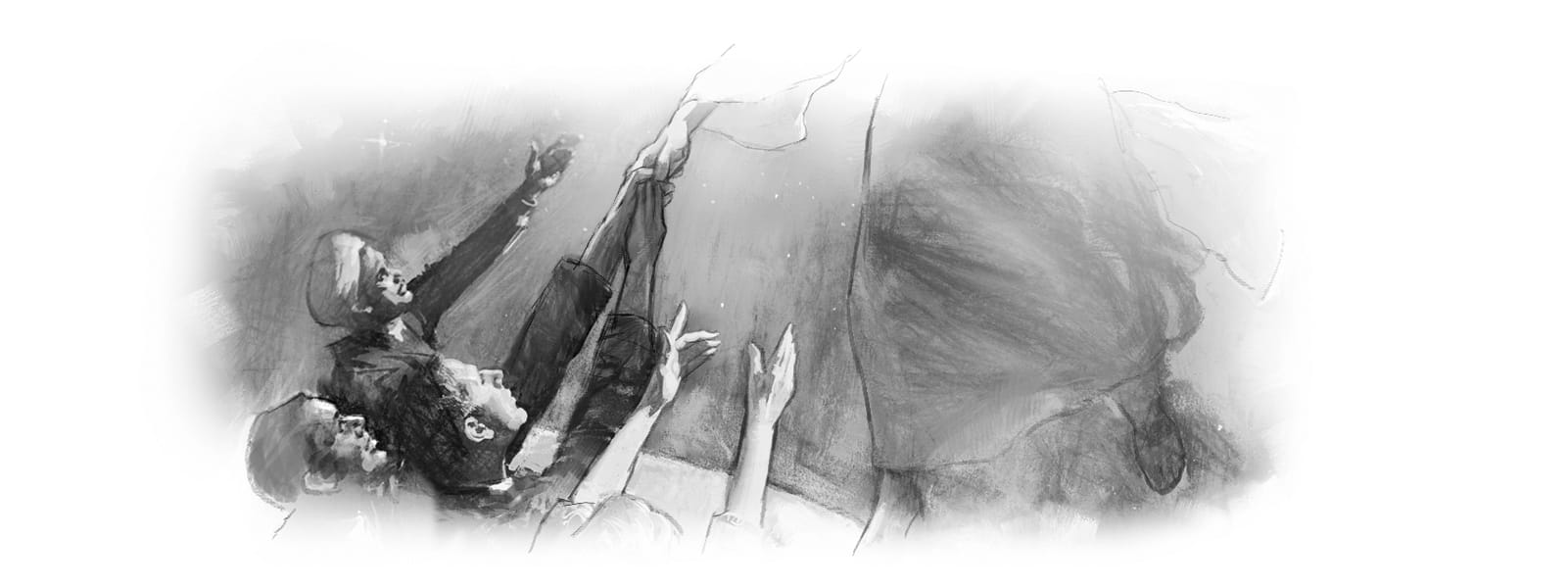
Image © Pacific Press
Read for This Week’s Study
Philippians 3:17-21; Philippians 4:1-23, 1 Corinthians 15:42-44, John 14:27, Psalms 119:165, Job 1:21, 1 Timothy 6:7.
Memory Text: “Be anxious for nothing, but in everything by prayer and supplication, with thanksgiving, let your requests be made known to God” (Philippians 4:6, NKJV).
This week’s lesson concludes our study of Philippians, and it is packed with valuable lessons and maxims for daily living. It seems that many of the high moral values that guided the apostle Paul’s life are found in the closing verses of the epistle. Similar to the teachings of Jesus, which focus on the inner person, what Paul shares with us are secrets to living a joyful Christian life.
Even when things don’t go the way we would like, which happens more often than we would like, we don’t need to be worried or anxious or discouraged. Instead, there are principles that will help us find inner strength to face the challenges that life brings, and thus we can experience a settled and lasting peace that only God can give. The present and the future are in His hands, and He will supply everything we need.
Most important, we need not place our hopes in earthly systems of government, which regularly disappoint us. As Christians, we are citizens of God’s heavenly kingdom. And with that citizenship comes privileges, wonderful privileges. And responsibilities, too.
*Study this week’s lesson to prepare for Sabbath, February 14.

I don’t like to be in the company of some Christians because all they seen to talk about is sin. You go to their meetings, and you hear all about pride, gossip, watching TV, listening to pop music, eating icecream and secret unconfessed sins. It is enough to put you off Christianity. There is a lot of sin to think about. Sometimes I think our biggest sin is that we spend too much time thinking about it, and too little time thinking about the good things. Paul had that idea too. Read Philippians 4.
Many years ago, we lived on the Lilydale Adventist Academy campus in an old farmhouse. It was surrounded with rampant Russian Comfrey which is supposed to be good for you, but tasted like furry spinach. I asked the Academy gardener, an old Polish gentleman, if he wanted some of the Comfrey plants. His answer was straight to the point. “God has given us lots of plants that are not only good for you, but they also taste good too. I’m not going to eat the ones that taste terrible!”
God has given us so many things that are good to fill our minds with, why do we need to dwell on sin?
Spiritual maturity is not measured by how much we analyze sin, but by how fully our minds are shaped by what is good and life-giving.Philippians 4:8 (MSG)“Summing it all up, friends, I’d say you’ll do best by filling your minds and meditating on things true, noble, reputable, authentic, compelling, gracious—the best, not the worst; the beautiful, not the ugly; things to praise, not things to curse.”
When our conversation centers mainly on faults, forbidden activities, and hidden failures, it can make faith feel heavy and unattractive. This is not the tone of the gospel.Romans 14:17(MSG)
“God’s kingdom isn’t a matter of what you put in your stomach. It’s what God does with your life as He sets it right, puts it together, and completes it with joy.”
A faith without joy has lost something essential.
Scripture teaches that our thoughts shape our spiritual lives.Proverbs 23:7(MSG)“Watch your step when dealing with a stingy man. For he thinks to himself, ‘It’s all in the bag—I’ve got it made.’ He may smile to your face, but inwardly he is not with you.”
I have to agree with this, when Christians are obsessed with sin it takes the joy out of just being. If sanctification is the work of a lifetime then we should be constantly growing by trial and error, it’s not always a linear process. Ghandi said “I would be Christian if it weren’t for the Christians” the brand isn’t always attractive but I think that being like Christ in words and actions should make people want to follow suit.
Comfrey leaves are also one of the best natural fertilizers so is clover, yet with a different mechanism of action.
Yes your right, God loves us so much He provides us with all our needs. Oh my father had us eat comfrey leaves before we went away to academy at age 15 also.
What is Christian life without heaven? What does the Bible say about this matter?
“And if our hope in Christ is only for this life, we are more to be pitied than anyone in the world” (1 Corinthians 15:19, NLT).
The Bible is explicitly clear that heaven is a tangible place where we shall experience life at its fullest measure (John 10:10). Jesus came from heaven to make this reality possible. Life as we know it now simply evaporates into nothingness without heaven being our final destination. Yes, God can bless in this life. Yes, God can give us peace, joy and happiness in this life, but all will simply be a taste of what is yet to come (1 Corinthians 2:9). This reality is what made Abraham to live the life of a pilgrim in the Promised Land. This is what made Job to declare, “Though He slay me, yet will I trust Him” (Job 13:15, NKJV). On this blessed hope of eternal life heaven, all our suffering here on earthly simply amount to nothing when we visualize the splendid of heaven.
“Yet what we suffer now is nothing compared to the glory he will reveal to us later” (Romans 8:18, NLT).
We need to encourage and comfort one another with this assurance not to give up but remain faithful because He who has promised is faithful.
“Let us hold tightly without wavering to the hope we affirm, for God can be trusted to keep his promise” (Hebrews 10:23, NLT).
People rarely stop to think about citizenship, but those who have lived in another country as foreigners are often forced to reflect on what citizenship truly means. I have had the opportunity to live and work in different countries, and through these experiences I have witnessed how costly and demanding it can be to obtain citizenship. It surprises me when people take citizenship for granted. One of our family friends was blessed with a baby while living abroad, unaware that the child required a resident permit as a foreign national. By the time they realized this, they were required to pay nearly USD 2,000 in fines and daily penalties, as the baby had been born and had lived in a foreign country for 52 days without proper documentation. This experience is a sobering reminder that citizenship carries privileges and rights that are often overlooked.
The letter to the Philippian church delivered by Epaphroditus, was written and stained with Paul’s tears. Paul was broken-hearted for he wept for those who claimed to be citizens of heaven yet were preoccupied with the things of this world. This painful contradiction moved him deeply, for it is sorrowful to see people profess heavenly citizenship while living like the world and abusing the privileges that come with belonging to Christ. Paul was not only grieving for the lost, but also for those who had once committed themselves to Christ and had chosen to forsake their heavenly identity. As he writes, “For many live as enemies of the cross of Chris….Their mind is set on earthly things” (Philippians 3:18–19).
It is no wonder, then, that Paul used such strong language. He described these individuals as people whose god was their stomach, worshiping their own appetites and flesh rather than Christ. Their pursuit of selfish interests called into question their understanding of true citizenship, a condition Paul described as shameful. In contrast, he reminds believers of their true allegiance: “But our citizenship is in heaven, and we eagerly await a Savior from there, the Lord Jesus Christ” (Philippians 3:20). Heavenly citizenship is not merely a claim—it is a calling that demands a transformed life.
Third paragraph of today’s lesson is right down my alley. I had a public health teacher at Pacific Union College, that taught us that driving a car was a privilege. I have never forgotten that. Then I heard the contrary that driving is an inalienable right. I would have to go with my public health teacher. Driving a car or any other mode of transportation on our streets is to be taken seriously. I’m a citizen of the United States of America. Paul announcing the fact that he was a Roman citizen gave him the right to a fair trial and protection under the custody of Roman soldiers.
As a Citizen of the United States of America. I have privileges, and accountability. Makes it easier to understand why as a citizen of the heavenly Kingdom I have not only responsibility, accountability, I have the desire also to honor, adore, cherish, praise, hallow and glorify Our God Trio.
If there was no reward or promises given us. Would we still love God. Yes, absolutely. What do I mean by that? Is it okay to say I love God because He first loveth me? 1 John 4:19.
Uniting heaven and earth means children of God live on earth while also having access to heaven. Let us tap into that privilege of our heavenly citizenship and confidently “make our requests known to God”
What a great lesson! It is incredible how God uses these messages written a while ago and how they match what we are all going through!
The best way to actively practice a mindful exercise is to learn to trust this tremendous force, God. He is the Creator of us all and knows exactly how our brains work. Let us be open to His renewal every day!
Let’s have the mind of Christ, not things of this world and the things of the flesh.
We dont trust governments but should fight 2 keep free speech and freedom of religion so we can declare the gospel. It is why we started a religious liberty section of the church.