
Tuesday: Jesus Teaches Us How to Pray

Daily Lesson for Tuesday 12th of May 2026
In the time of Jesus, prayers that were long and carefully crafted like a performance—using complex words and often memorized—were highly esteemed. Jesus had nothing good to say about these kinds of prayers (see Matthew 6:5-8). He revealed them to be what they were: ostentatious shows of “piety.”
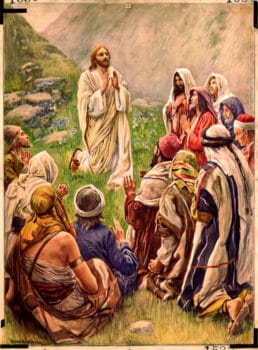
Image © Providence Collection at Goodsalt.com
The disciples saw Jesus pray, and they knew that prayer was a vital part of His life (see Luke 5:16, Luke 6:12, Luke 9:18, Luke 22:41, Luke 24:30, Mark 1:35, Mark 6:46). As they watched Jesus, they saw a contrast from the religious leaders and realized that there was so much more to prayer than they had ever considered. So, the disciples came to Jesus, asking, “ ‘Lord, teach us to pray’ ” (Luke 11:1).
Jesus modeled to His disciples (and to us) that we can pray simply in everyday language. He showed us that our prayers should be sincere and from our hearts.
Read Luke 11:2-4 and Matthew 6:5-15 and notice the following aspects of the prayer Jesus taught:
• Our Father in heaven: acknowledging your personal relationship with the Father of all.
• Hallowed be Your name: recognizing God’s holiness makes us come in reverence and respect.
• Your kingdom come: longing for God’s return and an indwelling of the Holy Spirit until He does so.
• Your will be done on earth as it is in heaven: surrendering and praying for God’s will to be done in our lives, trusting that He knows best, rather than merely praying for what we want.
• Give us this day our daily bread: asking for what we need to live, both physically (food and water) and spiritually (Jesus and His living Word).
• Forgive our trespasses as we forgive those who trespass against us: repenting, seeking forgiveness, and remembering to pardon those who have hurt us as freely as God forgives us.
• Lead us not into temptation, but deliver us from evil: asking for protection and shelter from the evil in this world (Psalms 91:1-16).
• For Thine is the kingdom, the power, and the glory forever. Amen: acknowledging that all we are, all we have, and all we do belongs to God. He alone deserves our glory and praise_ (1 Chronicles 29:11)_.
|
Why not pray more and turn your face to God each morning to talk to the One who loves you more than any other? What is stopping you from doing this as you know you should? Pray right now, as Jesus has invited us to. |

Throughout Church history, the greatest people that accomplished the most for God are men and women who took time to pray; they were men and women of prayer. The greatest testimony is that people who did the most for God spent the most time in prayer. Jesus Christ was a person of profound prayer. He frequently withdrew to “a deserted place to pray” (Luke 5:16). Sometimes, He spent the entire night in prayer (Luke 6:12; Luke 9:18). Before embarking on His ministry, Jesus spent 40 days in the wilderness fasting and praying to align Himself with God’s Spirit. “Pray without ceasing” (1 Thessalonians 5:17). “The effectual fervent prayer of a righteous man availeth much” (James 5:16).
Before calling His disciples, Jesus prayed. Before feeding the five thousand, He prayed. Before preaching the Sermon on the Mount, He prayed. On the night before He died, Jesus prayed at the Last Supper. Before being arrested in the garden, He prayed, and while hanging upon the cross, Jesus prayed, not once, but several times. It is prayer that gave Jesus energy, strength, and mission clarity. That’s why the disciples asked Him, “Lord, teach us how to pray.” They knew that prayer gave Jesus wisdom to teach, compassion to heal, power to perform miracles, and the ability to lead and reconcile. “Men ought always to pray, and not to faint” (Luke 18:1). “Continue in prayer, and watch in the same with thanksgiving” (Colossians 4:2). Clearly the lesson we pick from Jesus life and mission is that prayer is not optional.
Jesus was a prayer warrior. Even right now, He is interceding for us in the heavenly sanctuary (Hebrews 7:5). One day, “Jesus was praying in a certain place.” (Luke 11:1). Habitually, Jesus withdrew to quiet places to pray. His disciples must have observed his prayer life. They must have heard the intensity, genuineness, and closeness of his prayers with His Father. They must have desired to pray like Him. The request, “Lord, teach us to pray, just as John taught his disciples.” was not an ordinary request for a prayer, but a request to equip them with power to pray always. They must have discovered that Jesus’ authority to perform miracles, teach and be strong in times of hardship was due to his close communication with God the Father. This was a request on how to be connected to God, the source of all power and spiritual victories.
There are indeed powerful lessons to learn from the request, “Lord, teach us to pray, just as John taught his disciples”.
1. The disciples understood that prayer is something to be learned. Prayer is not simply speaking spiritual words to God. We must learn to trust God. We must learn to listen to God. We must learn to be reverent before God. We must learn to depend on God. We must learn to pray without ceasing. We must learn to be persistent in our prayers. We must learn to align our will with God’s will.
2. Jesus’ prayer life must have inspired His disciples. Our spiritual life should also inspire others. Our spiritual life should be an open testimony to witness to others.
3. Good spiritual habits need to be taught. Imitating good spiritual habits is very sound theologically. “Follow my example, as I follow the example of Christ.” )1 Corinthians 11:1). Quite often, good habits and character are shaped by association. “I am reminded of your sincere faith, which first lived in your grandmother Lois and in your mother Eunice…” (2 Timothy 1:15)
4. The disciples were humble enough to request Jesus to teach them how to pray. Pride is a spiritual killer. We must admit that we are not all-knowing and seek spiritual help when we are in need.
5. Jesus’ prayer is deeply relational, “Our Father…..”. Prayer should not be ritualistic and mechanical. It is possible for Jesus to have used any of God’s titles (Almighty Creator, Supreme Judge, Sovereign God, etc), but He chose, “Our Father”. Jesus was teaching His disciples to approach God not with fear but as One who lovingly cares to listen to their pleas. When we pray, we should believe that God feels and understands our prayers. This is not an individual God but One who answers “our” prayers.
“It is possible for Jesus to have used any of God’s titles (Almighty Creator, Supreme Judge, Sovereign God, etc), but He chose, “Our Father”. Jesus was teaching His disciples to approach God not with fear but as One who lovingly cares to listen to their pleas.”
That hit home. Thank you, Omwenga. How wonderful that the Creator of the universe calls us his children and seeks to have such an intimate relationship with us.
Did you mean to write Hebrews 7:25 as the supporting text about Jesus as our intercessor? Also can you comment on this very important part of the prayer, “lead us not into temptation” I await your response.
Dear Paulette,
Thanks, that is the text I meant (Hebrews 7:25), not verse 5. Regarding the part of Jesus’ prayer, “lead us not into temptation”, what I know is that God cannot be tempted with evil, and He cannot tempt anyone to do evil.
“God cannot be tempted with evil, and he himself tempts no one” (James 1:13).
I am not sure what the original language meant; however, what I understand of the text is that Jesus was pleading with His Father not to allow his disciples to be overcome with evil. Jesus was requesting His Father to keep the disciples from situations that would lead them to do evil. In other words, Jesus was asking His Father to shield His disciples from evil situations. The New Living Translation (NLT) Bible version provides a more straightforward meaning, I suppose.
“And don’t let us yield to temptation, but rescue us from the evil one” (Matthew 6:13, NLT).
I also want to add that God may allow us to go through tests or trials for spiritual growth to refine our characters. God always protects from evil, and that is why He sent His Son Jesus Christ to come to planet earth to set us fre from evil.
I don’t really think this has stopped in modern times, and there is still a lot to unlearn:
Nowadays, it becomes so easy to distinguish between prayers from the aristocracy—an “elite” prayer—and that of the lowest society. I used to have a lot of contention with the phrase “prayer warriors,” as it was often made to imply an elitist prayer force within the church—suggesting that the prayers of such a team would overshadow all others who pray in church (James 5:16).
But early on Sabbath mornings, there is a silent group of humble members—even troubled souls—who, when you carefully observe them, pray quietly yet intensely. Without hearing a word, the environment itself seems to respond (1 Samuel 1:12–13; Psalm 34:17). Prayers such as Jacob’s before meeting Esau (Genesis 32:9–12); Samson’s final plea (Judges 16:28); Elijah’s on Mount Carmel (1 Kings 18:36–37); Peter’s brief cry, “Lord, save me!” (Matthew 14:30)—may have been short or not eloquently worded, yet their substance and intent were understood. Simple, straight, and direct from the heart—this is what prayer should be (Psalm 51:17).
Once again, today’s study is a school for me. The relationship with God that we seek is deeply heart-to-heart, and Jesus structures the Lord’s Prayer so comprehensively—to allow anyone to pray it with a contrite heart (Matthew 6:9–13). Then God responds (Jeremiah 29:12–13), and across all ages, this prayer has remained relevant and powerful.
Amen, Stanley!
I have had “concern” with my prayer life when hearing of prayer warriors. It’s bothersome to me because I guess I feel inadequate, but your post laid it out so clearly. I do not have to have an elite prayer to offer God; clearly, nothing we have compares to Him anyway, and as His child all He desires is to hear from me, to know that I depend on Him.
Dear Stanley, thanks again for your inspiring words. What God wants is a contrite heart. He wants individuals who are hungering and thirsting after righteousness. People who want to grow closer and closer to Christ in character. People who want the Holy Spirit to change their carnal nature to a spiritual nature. People who want the Holy Spirit to live inside of them (as his temple) so that they could develop the mind of Christ. This is what Paul in Ephesians 6:18 meant when he said that we must pray “in the Spirit….” and our prayers must be supplications (begging) with perseverance. This is what Jacob was doing when he wrestled with God. Our prayers should be wrestlings with God. “Lord, why are you taking so long to fix me?” “Lord, I am not sleeping tonight before you cleanse my heart from sin and take away my desire for X, Y, Z.” Somebody knows what this means.
Thank you for your comment, Stanley. I am not comfortable with the term “prayer warriors” myself. I see no real biblical basis for it. Rather, I see men and women of God talking to Him as both Lord and friend.
I believe God wants us to trust and confide in Him as a small child would trust and confide in a loving parent.
Long ago, I did knew that memorised and lengthy prayers was what mattered during a prayer, only for a short, clear, precise, direct, eloquent prayer was what God needed from us. Peter’s cry ( Lord, save me, Matthew 14:30)
Thanks Stanley for your submission, have gained a lot from practical prayer lesson.
Lord teach me how to pray, increase my Faith and let me abide in you. Amen 🙏
By recognizing our Heavenly Father as Creator GOD and Lord of our life, we are denying satan the devil of his false authority over us and of this world. For this reason we are always under attack, as Jesus was on earth. The more reason for us to be always in prayer, building our relationship with our Savior and soon coming King.
The Lord’s Prayer says it all; it teaches us how simple a prayer can be: to open the heart as to a friend. Thank you, Lord, for the invitation to a dialogue! What a great opportunity: to have the Owner of the Universe talking to us as a friend!
The effectual fervent prayer of the righteous availeth much” James 5:16 (KJV)
It is as we avail ourselves to be emptied of sin and take on His character that our prayers will be full of power to defeat the enemy!!!!
A saying goes “More prayer,more power, less prayer,less power, and no prayer, no power”.
My father God, please don’t continue to remain silent to my petition.Open my heart and my eyes to find and understand your goodness to me and my family.
Amen.
Growing up in the Catholic tradition of faith I learned that prayer was recitation of memorized text. It was also often used as a means of penance after time in the confessional. I distinctly remember thinking that I had to recite the proscribed number of repetitions of the “Lord’s prayer” and the “Hail Mary” if I wanted forgiveness for my sins. I think that it hindered my prayer life rather than encouraged it.
In the passing decades since my childhood I have learned and am still learning that prayer is like conversing with a friend or loved one. It doesn’t need to be practiced or polished but genuine and from the heart. Sometimes we can make prayer into a formula, or equation to somehow hope that we can manipulate God to hear and respond favorably. You know like we sometimes try to do with family or friends.
True prayer is opening the heart as to a friend. Now where did I hear that before? 🤔😉😊
It is evident that Jesus spent most of His time praying alone, in a quiet place, in solitude, in the morning and in nature. (Luke chapter 5,6,9,22, and 24; also Mark 1 and 6). This tells me that sincere alone time with God is vital for growth in our prayer life. Alone time with God also assists tremendously in our spiritual growth and relationship with God.
When we pray alone, we need to spend quality time. Jesus prayed all night on the mountain. (Luke 5:16)
When I was a new Christian in my late 20’s, I was teaching a class of 7-9 year olds. Afterwards all the classes gathered for prayer. One time they asked me to pray. My mind went blank and I struggled to pray and ended up with a childish prayer without any eloquence.
I was a little embarrassed at first, but my Father let me know that He was pleased with my prayer because He saw I was praying to Him and not for the benefit of those around me.
One of my students came to me afterwards about my prayer. I mentioned to her that prayer doesn’t have to be fancy or eloquent but simple, sincere and heart felt.
Now I have been given the ability to go to the Holy of Holies when I desired to pray; and there I can see and feel Him and He helps me to pray. As I see Him in my spirit, I am always inclined to praise and worship Him before any request for others or my own needs.
Thanks to everyone who posted.
I just want to add that once you accepted Jesus Christ as your personal saviour. You become a warrior in the army of God. And one of the weapons that God has given us is the tool of prayer. Every soldier or warrior of Christ can use this weapon if prayer to consult our general who will give us the faith to overcome our enemy. We are all warriors oin the army of God.So let us continue by the power of the Holy Spirit to put on the whole armour of God.