
Sabbath: New Testament Prophets

Daily Lesson for Sabbath 17th of October 2026
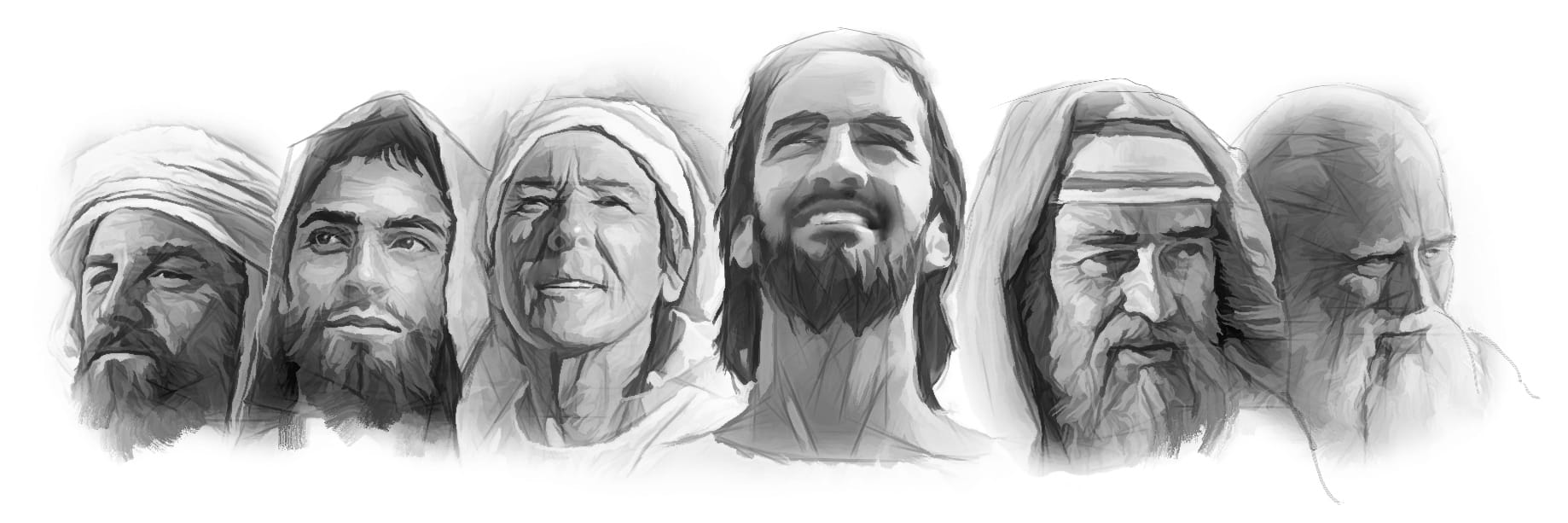
Image © Pacific Press
Read for This Week’s Study
Matthew 16:13-16, Ephesians 2:20, Revelation 22:6, Luke 2:36-38, Acts 21:9, Ephesians 6:10-18.
Memory Text:
“There are diversities of gifts, but the same Spirit. There are differences of ministries, but the same Lord. And there are diversities of activities, but it is the same God who works all in all” (1 Corinthians 12:4-6, NKJV).
As a father was driving, his son scanned the cars passing by in order to spot those that were the same as his dad’s. The father then pointed to a car and exclaimed, “Son, that was the same as my first car!” When they got home, the father pulled out the owner’s manual to his first car, along with the manual to the current car. He carefully showed his son the features of each vehicle, highlighting things that were alike and what had been changed. However, when the father compared the two engines, everything was identical. Much had changed, but not the engine.
God spoke through prophets in the Old and New Testaments, and the continuity and harmony in their messages is because the Holy Spirit—the Source, or “Engine,” of divine inspiration—has remained the same. The Holy Spirit always empowers true prophets through the gift of prophecy. He also places Christ at the center of the prophets’ messages, as Hebrews makes clear (Hebrews 1:1-3).
This week we will examine the gift of prophecy in the New Testament, looking at who functioned as prophets, what prophets did, how prophets compared to apostles, and the danger of false prophets, as well.

In the days when I attended software engineering conferences in the United States, Carmel and I would typically take an extra week and hire a car to do some sightseeing. We got used to sitting on the wrong side of the car and driving on the wrong side of the road but one of the issues was driving to locations we had never seen, and driving back again. We would book ourselves into a motel and drive off to some well sign posted site, but then we would have to find our way back to the motel, This was in the days before GPSs and cell phones – they were still being invented. Going away from the motel in the morning looked completely different when returning to the motel in the evening. Same location but different perspective.
The really big difference in the Old and New Testament prophets was their perspective. The Old Testament Prophets were looking forward to the cross, while the New Testament prophets are looking back to the cross. Same event, seen from different perspectives.
I like the ballad sung by Slim Dusty, an Australian country and western singer. Here are a couple of verses:
It wasn’t written as a Gospel song, but it is good to remember this theme as we visit the New Testament prophets.
What an apropos, relatable, and memorable analogy, Maurice. Keep them coming!
Sister Ellen White’s writings and prophetic claims have been placed under microscopic scrutiny in the recent years. The Bible rightly say that we must not accept any prophecy without careful scrutiny.
“Do not stifle the Holy Spirit. Do not scoff at prophecies but test everything that is said. Hold on to what is good. Stay away from every kind of evil” (1 Thessalonians 5:19-21, NLT).
What are some of the objective and biblically accepted ways of securitising prophetic claims? What are some of the sternest warnings given in the Bible to those who ignore or ridicule true prophets?
Before we listen, what Paul says about this subject of identifying a true prophet, it is essential to remind ourselves that true prophecy has divine origin and therefore to discern it requires divine enablement. We cannot accept or reject prophecy simply on human whims.
1. Last we examined the “The Call of a Prophet”, and was clearly established that true prophets are called by God and enabled by the Holy Spirit in their functioning. This tells that whenever we want to assess prophetic claim, we must call upon the Holy Sprit to give us the spirit of discernment. Understanding prophecy is not a matter of personal judgment, it is not a matter of our academic qualification, but it requires divine understanding and revelation. Therefore, we are encouraged to undertake a genuine and careful study of Ellen White’s writings and prophetic claims by invoking the guidance of the Holy Spirit who will lead us into every truth (John 16:13).
2.This quarter by God’s grace we need to revisit prophecy (biblical) including Ellen White’s writings and prophetic claims with a revitalised optimism by intensive reading and making biblical comparisons. True prophets call people back to God (Isaiah 8:20). True prophets call people to accept the gospel of Jesus Christ (Galatians 1:8–9). It is another chance that God is giving us to go back to Scripture to compare scripture upon scripture. God wants us to know the truth, for sure He will give us understanding and revelation.
As we make some efforts to listen to what God is speaking to us through His prophets, it is equally important to remember the stern warning given by Jesus to us if well refuse to listen to true prophets.
“What sorrow awaits you teachers of religious law and you Pharisees. Hypocrites! For you build tombs for the prophets your ancestors killed, and you decorate the monuments of the godly people your ancestors destroyed. Then you say, ‘If we had lived in the days of our ancestors, we would never have joined them in killing the prophets.’ “But in saying that, you testify against yourselves that you are indeed the descendants of those who murdered the prophets. Go ahead and finish what your ancestors started. Snakes! Sons of vipers! How will you escape the judgment of hell? (Matthew 23:29-36,NLT)
In the New Testament, prophecy is not merely about predicting the future but proclaiming God’s truth and revealing His work in the world. On the Day of Pentecost, Peter explained the fulfilment of Joel’s prophecy: “Your sons and your daughters shall prophesy” (Acts 2:17–18). Through the Holy Spirit, prophets proclaim God’s message, expose spiritual realities, and point people to His saving purpose. New Testament prophets also strengthened the church, encouraged believers, and called people to faithfulness. Paul explains that “the one who prophesies speaks to people for their strengthening, encouraging and comfort” (1 Corinthians 14:3). Similarly, Agabus demonstrated that prophecy could reveal future events (Acts 11:27–28), showing that biblical prophecy includes both proclaiming God’s truth and, when God wills, revealing what is yet to come.
Some see the prophets as divine soothsayers, fortune tellers, or psychics. They were none of these things although they were gifted with visions and dreams they were always used by God to further his Kingdom and deliver a pertinent message, not to entertain or wow the people.
Yes, while predictive prophecy was at times part of their messages, most of the time they delivered messages of correction, rebuke, encouragement, and admonition. Even within the book of Revelation we see the gamut of styles, yet in spite of it’s cryptic images and messages it remains, “the revelation of Jesus Christ.” Ultimately this is the role of the prophetic calling. To reveal the true nature of Jesus Christ and further his Kingdom. May we take their words to heart for the testimony of Jesus is the gift of prophecy. (Rev. 19:10) May their writings give us a clearer vision of God. (2 Chron. 20:20)
Tim – you quoted Rev.19:10 – “So I fell at his feet to worship him, but he told me, “Do not do that! I am a fellow servant with you and your brothers who rely on the testimony of Jesus. Worship God! For the testimony of Jesus is the Spirit of Prophecy.””
Because the Spirit of Prophecy is the author of the Gospel of Jesus Christ – His ‘Message’ -, as well as His existence/life, it is prophetic at its core and needs to be understood as such. We are the beneficiaries of our heavenly Father having moved heaven to give us His Son to establish and show us the Way leading us back into His Father’s kingdom.
I agree with you that, ultimately, “this is the role of the prophetic calling”, and I suggest to see Jesus’ testimony in its entirety as prophetic. We deprive ourself of understanding when compartmentalizing Jesus’ message into separate components, seeing His Message as separate actions – ‘acts’, ‘thoughts’, ‘words’, or ‘conduct’, because, at their core, they are all revelations given by the Holy Spirit. “Jesus Christ Himself is the one perfect manifestation in history of the Holy Spirit’s work in man.” [The work of the Holy Spirit in Jesus Christ, R.A.Torrey]
From Jesus’ conception to His resurrection, His life and ministry was ordained, infused, and guided by the Holy Spirit – Isaiah 11:1-16.
The Holy Spirit is the person of the Trinity of God who was promised by Jesus to stay with his disciples and all who decide to follow Jesus. The Holy Spirit is a super gift to us; we must follow His lead.
Prophecy, contrary to popular Adventist opinion, isn’t about predicting the future. It’s about proclaiming God’s message, which is _sometimes_ about the future. It’s important to keep this in mind.