
Sunday: The Example of Jesus

Daily Lesson for Sunday 6th of September 2026
The context of 2 Corinthians 8:1-24 and 9 has to do with Paul’s encouraging members in Corinth to complete a fundraiser for the impoverished churches in Judea. Apparently, they had already committed to doing that (2 Corinthians 8:10-11; 2 Corinthians 9:5; see also 1 Corinthians 16:1-4), but relationship issues between them and Paul had complicated things. After dealing with these issues (2 Corinthians 1:1-24; 2 Corinthians 2:1-17; 2 Corinthians 3:1-18; 2 Corinthians 4:1-18; 2 Corinthians 5:1-21; 2 Corinthians 6:1-18; 2 Corinthians 7:1-16), Paul now turns to the conclusion of that task (2 Corinthians 8:1-24; 2 Corinthians 9:1-15).
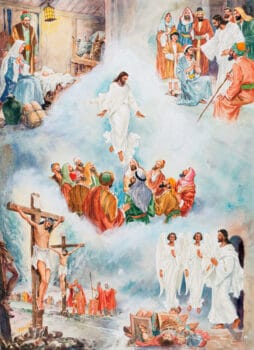
Image © Review & Herald Publishing at Goodsalt.com
Initially, Paul appeals to the example of the Macedonians (2 Corinthians 8:1-7), whose extreme poverty did not prevent them from overflowing “in a wealth of generosity” (2 Corinthians 8:2, ESV). Yes, poverty and generosity can walk together. However, this admirable generosity of the Macedonians is but a replication of Jesus’ generosity in giving Himself for us (2 Corinthians 8:8-15).
Read 2 Corinthians 8:9. What does this passage tell us about the example of Jesus?
Paul’s statement in 2 Corinthians 8:9 is one of the most astonishing, powerful, and profound passages in the whole Bible. Paul tells the story of Jesus’ mission but with an incredible economy of words. There is so much theology here. This is the story of redemption but in only one verse.
Even more impressive is that this story is told through financial language. Yes, Jesus was rich. His richness refers to His pre-existence in heaven (John 17:5). He decided to become poor by giving up the heavenly glory and coming to this world of sorrows. He became literally poor (Luke 9:58). Although He was equal with God, He “emptied Himself by taking the form of a bond-servant and being born in the likeness of men” (Philippians 2:7, NASB). “And being found in human form, he humbled himself by becoming obedient to the point of death, even death on a cross” (Philippians 2:8, ESV).
Jesus gave His own life so that we might live forever with Him. His offering had a purpose: our salvation. Stewardship and mission go together. 2 Corinthians 8:1-24; 2 Corinthians 9:1-15 tells the story of a particular money offering, but this story is based upon Jesus. During this week, we will see theological principles related to the practice of offering gifts that are based on Christ’s offering of Himself.
|
Dwell on the birth, life, death, and resurrection of Jesus. When you realize that all this was done for you so that you can have hope of something beyond this miserable existence here, what should your reaction be? |

The issue of giving and sharing material possessions that Paul is addressing in 2 Corinthians 8 and 9 is more than just giving more money. The gist of the matter is the human tendency to take what God has given us to be stewards as “ours”. Paul is simply reminding us through these two chapters who the true owner is of all that we claim to be “ours”.
Humans not wanting to share and give freely (greed and selfishness) what God has given freely can be traced far back to the first human family. Adam and Eve coveted to have something more than God had given them. God had generously given them an entire garden: “Of every tree of the garden thou mayest freely eat.” (Genesis 2:16). There was complete abundance in the garden with the exception of one tree. As we know, the devil made them desire to possess what was not allowed to them. “God doth know that in the day ye eat thereof, then your eyes shall be opened…” (Genesis 3:5). This was the genesis of human possessiveness. The spirit of possessiveness is very destructive and self-worshipping (idolatry).
1. Cain demonstrated how quickly possessiveness can be destructive – he killed his brother.
2. The antediluvian people desired self-exaltation, self-security and self-glory. “Let us build us a city and a tower…and let us make us a name.” (Genesis 11:4 ). This is a typical spirit of possessiveness.
Contrary to the spirit of possessiveness, God want us to share what He has blessed us with. God’s blessing is not something to keep but something to bless others with.
“I will make you into a great nation. I will bless you and make you famous, and you will be a blessing to others.” (Genesis 12:2, NLT).
God is literally telling Abraham that I am blessing you so that you can be a blessing to others. This is what God is telling me right now. As I am writing my contribution, a WhatsApp text has just popped up from one of my cousins requesting some financial assistance.
I am right now reflecting on whether God is sending me some kind of test. I will pray about it and respond by tomorrow morning.
I am encouraged by so many readers responding to my suggestion last week that we share more personal experiences in our Sabbath School Net discussions. This week we are discussing stewardship and giving. I know that most of us can recite the examples of Jesus giving and give a rationale for selfless giving of tithe, offerings and time. But citing case studies is not what the lesson is all about. We don’t have to pass an examination on what we know about the theology of giving. And despite what some of the lesson implies, it is not just about giving more tithes and offerings to the church. How do we give? Who do we give to? What are some of the issues we need to consider?
I have seen Avondale students involved in StormCo projects where they go out into struggling towns and communities in country Australia to provide vacation activities for the kids, and also work to repair local playgrounds and facilities. Not only does this provide support for the local communities, it gives students a sense of pride and purpose. Many of these students share what they have been involved with on social media, and they deserve our support.
Seventh-day Adventists are often very generous in their communities and while I don’t think we should boast about it, we need to share with one another what is being done so we can confidently provide support and encouragement. Even a “Thumbs-up” on a Facebook page helps.
As a church we bought a grand piano and made pledges. Within 3 months pastor said the piano is paid off. GIFTS of love.
Hi people.
Resurrection of Jesus… ascension by john Donne.
Salute the last and everlasting day….
Joy at the uprising of this sun, and son..
Ye whose tears and tribulation
Have purely washed or burnt your drossy clay
Behold the highest parting hence away
Lightens the dark clouds which he treads upon
Not doth he by ascending show alone
But first he,and he first enters the way
O strong ram which has battered heaven for me
Mild lamb,which with thy blood,has marked the path
Bright torch which shinest,that I may see,
O with thine own blood quench thy own just wrath,
And if thy holy spirit,my muse did raise,
Deign at my hands,this crown of prayer and praise.
Reneanne Anderson
We are witnessing unprecedented bitterness in our societies, as shown in the hateful way people are treating each other. There is increased unwillingness to forgive—regardless. While there is more to the attitude than that, it shows how broken and DARK the world has become. However, there is no greater example in mission and humility than Jesus. He was in heaven; however, He didn’t consider it robbery to be equal with God (He was), but He left heaven and became flesh, not to live as royalty, but as a common man, without sin. He died for us on the cross. Philippians 2:6–8 reminds us that, though He was in the form of God, He humbled Himself, took the form of a servant, and became obedient to the point of death—even death on the cross. This was the heart of His mission: He left the glory of heaven, humbled Himself, became flesh, and gave Himself for us. His mission, therefore, was not only something He accomplished for us; it also became the example He left for us to follow. No wonder, then, we are expected to follow His example.
For Jesus did influence many and wishes to continue influencing many in our dark world, where His light shines because of His humble disposition. Ephesians 5:1–2 asks us to walk in love, as Christ also has loved us and given Himself for us, which was mission-oriented and focused. As those who have received His love, we are called to imitate the One who loved us: to walk as Christ did, serve as Christ did, and love as Christ did. Paul challenges us to be imitators of God by following His example and to walk in love. We are to walk AS Christ did and love like He did, for there is no greater example of true love than that of Jesus. John 15:12–13 called His disciples to love one another, even as He loved them, and by extension us—John 13:34–35.
Through ages, christ has been an outstanding figure in our lives, in ways we both see and cant see. therefore as humans we need to live a life like that of Jesus for he has been an example to us, giving is a sign of love and its not expecting something in return. i implore each and everyone here to have a soft heart to a dying soul.
Our former California church (we live in Georgia now), Corona SDA Church, started/continue going on mission trips for over 25 years. These trips are usually coordinated with Maranatha and they build a church, a school building or chapel, The church raises the money for the cost of the project and everyone pays their own way to go. One trip stands out to me for the community impact that happened spontaneously in the neighborhood (Chilean middle class) where we stayed each night; which was miles from the community where the church was built. Our praise and worship sevice was done outside every evening under a covered patio not to boast or draw attention but because it was the only space large enough for the 40+ people on the trip. At the end of the week, the local community came around and began asking questions. They asked who we were, why are we here? When they got the answers to theses questions the theme of the comments from them were consistant. They asked why we did not just pay people to build the church? They could not believe a bunch of wealthy Americans (in their eyes) would come all this way, buy the materials and get their hands dirty constructing the church. There is now an Adventist community in that neigborhood in addition to the aera we built the church.
I believe that people who are let’s say, less fortunate than others, and they learn of the love of Jesus; those people tend to be more generous because they know they have something so valuable that they “want” to share. Whereas us who have been in the faith tend to be complacent. We have the knowledge we have the relationship and most of us have gone through trials and thankfully come out the other side of it. I was just asking myself this morning, why am I not more joyous of the love Jesus has for me? Why am I not “making noise” about it? Why are my actions not reflecting enough of the love Jesus has for me and I for Him? I need to do something about that today!
If we were really aware of what Jesus did for us, we would not waste a single second and would live every moment in gratitude for His sacrifice.
True giving comes from first giving your heart to God, it is done willingly according to what you have, its purpose is to create equality so no one lacks, and it must be handled honestly.
In our conference, every December is meant for various church groups going out for mission (AMM/WM/PF).Sometimes they have to go to non entered areas like Turkana and the interior parts of west pokot Kenya. Church members have to support them by giving food items because mission and giving are inseparable. In the Bible,
Paul was encouraging the Corinth church to finish the money they had promised for the poor believers in Judea. First he showed them the Macedonians – even though they were very poor and suffering, they gave generously with joy because they had first given their hearts to God.
But the Macedonians were just copying Jesus. 2 Corinthians 8:9 says Jesus was rich in heaven, but He became poor on earth – He left His glory, lived as a poor man, and died on the cross – so that through His poverty we could become rich with salvation and eternal life.
So true giving is not just about money. God gave Himself to save us, and when we understand that, our natural response is to also give willingly to help His mission.