
Tuesday: Oral Messages

Daily Lesson for Tuesday 27th of October 2026
Read 2 Peter 1:18-21. What assurance do we have that the oral messages delivered by God’s prophets were as inspired and reliable as the written ones?
God spoke to Adam and Eve before the Fall (Genesis 2:16-17) and after (Genesis 3:9-19). In both cases, they perfectly understood His words. His voice was heard in clear terms also at Sinai (Exodus 20:1-20), as well as at the baptism and the transfiguration of Jesus (Matthew 3:17, Matthew 17:5). We might misinterpret when other people talk to us. But, surely, when God talks to anyone, there will be no miscommunication or deception.
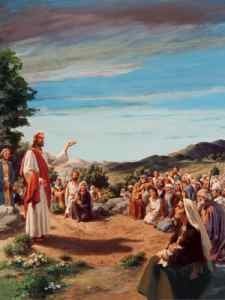
Image © Review & Herald Publishing from GoodSalt.com
The Bible affirms that “God spoke to Moses and said to him: ‘I am the Lord’ ” (Exodus 6:2, NKJV). Many Bible writers acknowledged hearing the voice of God as He spoke to them. This was the case, for example, with Isaiah (Isaiah 8:1,11), Jeremiah (Jeremiah 1:4,9,11), and Ezekiel (Ezekiel 3:16, Ezekiel 6:1). Any attempt to deny these and other similar claims ends up questioning the honesty of the prophets and the reliability of the Bible itself.
As God spoke to the prophets in an intelligible human language, so did the prophets to their respective audiences. For instance, Noah was a true prophet of God and a faithful “preacher of righteousness” (2 Peter 2:5). He did not write any portion of the Bible, but he delivered God’s message orally to his contemporaries, and his message was no less inspired than the writings of the canonical prophets.
Several other prophets, including Nathan, Elijah, Elisha, and John the Baptist, never wrote any portion of the Bible; instead, they delivered their message orally.
And what about Jesus Christ Himself? The Gospel record mentions that, during His earthly ministry, He “wrote on the ground with His finger” (John 8:6, NKJV). That’s it. We have no record of Jesus’ writing anything else. But He taught and preached orally “as one having authority” (Matthew 7:29, NKJV). Some of His listeners even confessed, “No man ever spoke like this Man” (John 7:40,46, NKJV). Jesus was primarily an oral communicator of God’s messages. His messages were no less authoritative or binding simply because He Himself did not write any books of the Bible.
|
How fascinating that God has prophets who had no writings in the Bible. Why do these noncanonical prophets also carry authority? |

We are so familiar with the Gospels we sometimes forget that Jesus did not write any of them. All his sermons were essentially written from oral history. Jesus’ ministry lasted for about three and a half years and during that time he preached sermons, taught parables and held private council. The inspiration comes when his hearers wrote some of his teachings down for posterity. My guess is that most of this happened after his ascension.
I am not going into the detail of how this happened, but it is important to note that there is sufficient similarity in the Gospels to corroborate both the story and the teaching. There is also sufficient difference, particularly between the Synoptic Gospels and John’s Gospel to know that real people were involved and saw the events from different perspectives. Importantly, inspiration does not mean we all see things the same way. Together they form a surprisingly cohesive role from a human perspective. The fact there are four Gospels and not just one is a remarkable insight into the workings of inspiration.
God is the ultimate Communicator, whose oral Word shaped creation and has guided humanity throughout history. In Genesis 1, God repeatedly spoke, and creation responded to His command: “And God said, Let there be light: and there was light” (Genesis 1:3). This reveals that God’s Word is not merely information; it carries divine power, purpose, and life. Throughout Scripture, God communicated through spoken messages, visions, symbols, songs, and human messengers, ensuring that His truth reached people in ways they could understand and remember. As Hebrews 1:1–2 explains, God spoke to the fathers through the prophets in various ways and has ultimately spoken to us through His Son, Jesus Christ. The oral communication of God’s Word reminds us that revelation began not simply as written text but as a living message shared from one person to another. Those who received God’s messages were entrusted with the responsibility of communicating His truth faithfully so that succeeding generations could know His character, understand His will, and experience His love.
As we reflect on the revelation that comes from his word it is important to note that God created us in His image (Genesis 1:26–27), giving us the capacity to communicate, relate, and share meaning with others. Just as God spoke with Adam and Eve, instructed Noah, called Abraham, and commissioned Moses, He continues to use human voices to communicate His truth and reveal His heart to the world. Deuteronomy 6:6–7 instructs God’s people to keep His words in their hearts and teach them diligently to their children, while Romans 10:17 declares, “So then faith cometh by hearing, and hearing by the word of God.” These passages demonstrate that communicating God’s Word is both a privilege and a sacred responsibility. Whether through preaching, personal testimony, conversation, songs, or written Scripture, our purpose is not merely to transmit correct information but to help others encounter the living God. Ultimately, true communication of revelation leads people beyond hearing about God to knowing Him personally, understanding His character, and being transformed by His love.
In secular life, “faith” means trusting that something will happen or that someone can be depended on.
In spiritual life, “faith” is specifically trust in God to the degree that we will do as He says. We develop this trust the same way we develop trust in a person.
I believe that when we approach Bible reading or study with prayer, we spend time with God, time that transforms us.
(Other ways of spending time with God are to pray and to work with Him in His mission on this planet.)
God is not limited by a medium of communication. His communication can occur through speech (oral), writing, prophetic action, vision, dreams and nature. If a prophet genuinely delivered a message given by God, the fact that the message was spoken rather than written would not make it less divine in origin. Its oral form would not, by itself, diminish its authority for the people to whom God addressed it. The form of communication does not give the message its authority, but the source of the information who is God. The emphasis is on the source and faithfulness of the message, not on its format. We should not assume that the messages omitted from Scripture were unimportant, false, or uninspired.
“I will raise up a prophet like you from among their fellow Israelites. I will put my words in his mouth, and he will tell the people everything I command him. I will personally deal with anyone who will not listen to the messages the prophet proclaims on my behalf.” (Deuteronomy 18:18-19, NLT).
God is calling us to respond to His messages and if we fail, He will hold into account. In our time, we must discern the spoken messages we hear all the time. A spoken message may be powerful and persuasive, but spiritual authority must not be inferred simply from confidence, eloquence, signs, or a claim of divine inspiration. At all times we must seeks the guidance of the Holy Spirit to guide us is discerning God’s messages because they are divinely originated. Once we have discerned, are obligated to be faithful to the message. If we fail to be faithful, accountability will held upon us.
“So we must listen very carefully to the truth we have heard, or we may drift away from it. For the message God delivered through angels has always stood firm, and every violation of the law and every act of disobedience was punished. So what makes us think we can escape if we ignore this great salvation that was first announced by the Lord Jesus himself and then delivered to us by those who heard him speak?” (Hebrews 2:1-), NLT).
Every Sabbath we listen to the spoken word in divine service.
God still speaks to his people today…
Are we attuned to Him sufficiently to listen, understand and apply or has it become just a routine for us every week??
Hello Wayne.
If we are tuned to the Bible’s correct frequency, we don’t get QRMary and QRNancy(amateur radio acronyms , man-made interference, and static).
A side track on illumination.
“As Seventh-day Adventists we also believe that God spoke through the life and ministry of Ellen White. God also illuminates or enlightens people through the Holy Spirit to help them understand His Word. Thus, while God’s revelation and inspiration help His servants accurately deliver His messages, illumination helps the recipients of God’s messages understand and apply His messages to their lives. Illumination is important because it is the work of the Holy Spirit (1 Corinthians 2:14), but it should not be misunderstood or equated with either revelation or inspiration.” This message is from Dr. Anna Galeniece’s companion book, A Gift of Prophecy, page 45.3
This clarifies for me that revelation or inspiration given to the prophet is separate from the illumination by the Holy Spirit of the prophet’s writings to the reader. I had in the past just stated that Ellen White’s Writings illuminated the Bible without knowing how.
The Bible clearly tells us of genuine prophets of God whose writings were never included in the biblical canon. This raises an important question: If their writings were not canonical, why did their messages still carry authority? The answer seems quite simple: their authority came from God, not from inclusion in the canon.
This helps us distinguish between canonicity and inspiration. The Bible is the inspired and authoritative written standard by which doctrine and every claimed revelation must be tested (Isaiah 8:20; 2 Timothy 3:16–17). Yet Scripture itself shows that not everything God revealed through His prophets became part of the biblical canon.
This becomes especially significant when we come to the New Testament. Scripture does not tell us that the prophetic gift would cease once the biblical books were completed. Instead, believers are instructed: “Despise not prophesyings. Prove all things; hold fast that which is good” (1 Thessalonians 5:20–21). The instruction is not to reject subsequent claims to the prophetic gift, but to test them by Scripture.
For Seventh-day Adventists, this provides an important framework for understanding the ministry of Ellen White. We do not need to make her writings another Bible in order to take her prophetic ministry seriously. If the biblical tests demonstrate that God genuinely exercised the gift of prophecy through her, then her messages carry authority because of their divine Source, while the Bible remains the supreme standard by which her ministry—and every other prophetic claim—is tested.
The existence of noncanonical prophets in Scripture should therefore cause us to think carefully before assuming that “noncanonical” means “non-authoritative.” The Bible itself makes no such equation.
Oral information is as authoritative/ Carries similar value as the written messages/ scripture.
What matters most is the source “God” not the form.
Read 2 Peter 1:18-21. What assurance do we have that the oral messages delivered by God’s prophets were as inspired and reliable as the written ones?
Paul: “Therefore, brethren, stand fast, and hold the traditions which ye have been taught, whether by word, or our epistle” (2 Thessalonians 2:15). The spoken and written are placed on the same level.
How fascinating that God has prophets who had no writings in the Bible. Why do these noncanonical prophets also carry authority?
Canon shows preservation, not elevation. Elisha, Elijah, Samuel, etc were prophets with no books. Were they less of a prophet? No, authority comes because of the source, not because one was written down and another not.
Respectfully, how important is it to address the mechanics of the delivery of the Word of God? Is it important to focus on whether His Truth is conveyed in written or oral form? What is really happening when God’s Truth is being communicated? Is it not true that a super-natural event takes place when God’s Word enters the heart and mind of man regardless of the form it reaches us?
I hold that every Truth of God’s Word is a form of prophecy. Is it important to focus on the method God chooses to confey His Word? Maybe I am missing the point these current lessons are meant to establish. To me, every Truth is a sacred gift from God to man. Why would it be important to focus on the form of the delivery since it does not hold any value in and of itself? Are we still establishing the validity of His Word?
We cannot discern the inspirational efficacy of God’s Word by the form of its delivery using our own ‘reasoning’ powers. It takes the Holy Spirit to reveal all truth to us. 2 Peter 1:18-21 clearly qualifies it as ”… a Light that shines in a dark place; our heart and mind is this dark place. Again, respectfully, God’s Word – conveyed orally or in written form – needs to reach the heart and mind to become a testament to the Glory of God.
The method God uses to communicate to humans through His prophets in times of old and through Jesus Christ and the Holy Spirit today, is very important.
Why is it important? It is important because as God’s children, we are to know our God as much as He has revealed to us humans. It is also very important to know how God has chosen to speak or reveal Himself and His purposes or plans for our lives because of FALSE TEACHERS and FALSE PROPHETS. Stemming from from false prophets is the fact that God warned us not to go to any medium or witches or wizards for they also communicate with spirits (fallen angels) and reveal spirit-backed messages.
If we do not know how or the process of how our God communicates, as Christians, we are going to find it difficult to teach others who find it difficult to accept that it is God who communicates to humans through the Bible/Scripture. These days, some unbelievers strongly question the origin of the Bible and that the Bible is a true collection of God’s communications to humans.
Moses wrote Genesis, the first book of the Bible, about 2,500-2,700 years after creation week. If Job was written by an earlier patriarch than Moses, say in Abraham’s time, it may have been written about 2,000 years after the creation of humankind. Point being, for at least the first 2,000 years of Earth’s history, all of God’s messages and conversations with humans, and all testimonies of His Work in lives, and all stories pointing to the gospel promise of a child who would crush the serpent’s head, were passed along orally.
Before the Flood people lived for hundreds of years, and therefore many oral accounts relayed firsthand experiences and eyewitness stories. Adam lived 930 years. Imagine all of the grandchildren to whom he would have been able to tell the Garden of Eden story. Can you imagine storytime with Grandpa Adam? When Adam died, Methuselah and his son Lamech, Noah’s dad, was still alive. So all the way until the Flood, people could have heard firsthand or secondhand the accounts of the creation of the world and what life was like before and after the fall!
Names were even a way of passing down prophecy; for instance, Methuselah’s name meant “death sent” and every time someone said his name it was a reminder that when he died God would bring judgment to Earth (Jude 14-15). (It is interesting to note that Methuselah is recorded as the longest-living human being at 969 years, showing that God held off judgement for as long as possible.)
So why did God inspire humankind to begin writing down His messages about 2,000 – 2,700 years into Earth’s history? Perhaps in the first thousands of years, man had photographic memory, or at least excellent memory, and “fine print” was not lost. Whereas after the Flood, when lifespans were shortened to 120 years on average and sin was having more impact on human memory, God decided that important details may be lost. When God wrote on stone with His own finger, “Remember the Sabbath day to keep it holy”, it could be that many of God’s people had forgotten it over the hundreds of years in Egypt.
Also, perhaps God introduced written Scripture because as the population of Earth grew and spread, written accounts could travel further and be translated easier from language to language and outlast cultural differences and changing times.
Another thought, it could be for the benefit of the authors themselves to begin to record the holy messages and stories given throughout time. I’ve always thought Deut. 34:7 is an interesting verse that notes that Moses had excellent eyesight and physical vitality right up until his death. Seeing God face-to-face and writing His Word I’m sure kept his vision from dimming and brought him health. Just as John the apostle, seer of heavenly visions and author of Revelation, lived a long life. And many Bible commentaries estimate that Daniel also was alert into old age, probably being around 85 years old at the time of his last vision. Prov. 3:1-2 says, “My son, forget not thou my Law, but let thine heart keep my commandments. For they shall increase the length of thy days and the years of life, and thy prosperity.” (See also Prov. 4:20-22) Jesus said that the words He spoke are life (John 6:63) and that man lives not on bread alone but on every word from the mouth of God (Matt. 4:4).
Thanks for this reminder of the ancient custom of reciting and passing stories on from generation to generation. Even thousands of years later in Europe, storytellers would travel from village to village, and they had better not make a mistake in telling the stories, because the elders would correct them.
I think that closer to creation, people had even better memories. It seems to me that Moses was the first prophet to collect these stories and write them down. He probably learned them from his pious parents, and the Holy Spirit inspired him as he wrote.
The Holy Spirit did not dictate the books, and he did not necessarily give visions or direct information. When you read the gospel of Luke, you can see that he gathered up the stories from various people and compiled them into the gospel of Luke to send them to “most excellent Theophilus.”
The desert years were not wasted on Moses, bringing benefits besides character development:
Thanks for sharing this, Inge! Led me to look for a passage about the influence of Moses’ mother:
Thanks, Esther. And to think Jochebed had only twelve years or so to prepare her son to withstand the onslaught of influences in the Pharaoh’s palace!!
I think we underestimate what children can learn at a young age.
Oral messages! All God’s messages whether in a vision still small voice, or through the cloud veiling His consuming presence, or speaking through the bright light that blinded Paul, God used Oral communication, even giving the ten commandments. However, since they only heard thunder to make them tremble, God broke His oral message protocol and wrote down the Ten commandments with His own finger. One other time was writing His message to Belshazzar. He also wrote His love into sky and nature. And wrote His love by writing His law in or on our hearts. Tomorrow we will discuss God’s written message. Mmmmmm, I suppose I am kinda covering both days today.
When God gives someone authority, they will naturally deliver a message with authority. This message will speak deeply to someone’s heart, and those who hear it will recognize it.
Oral prophetic messages are certainly inspired. That is not in doubt. But somehow the lesson seems to miss the fact that even if Noah, Elijah, John the Baptist and even Jesus did not write books of the Bible, someone else wrote down their words and actions. If that did not happen, we would not know what they were. Yes, traditions can be passed down, but over hundreds and thousands of years, oral tradition can definitely be altered. For this reason, written accounts are generally more trustworthy.
God determined some prophetic messages would be written down and become Scripture. Others would not. Only God knows exactly why this is. I have to believe that the messages of Scripture have more universal importance. Other prophets spoke a message that was more localized and centered in a particular time and place. It was certainly inspired, but for whatever reason, God did not see fit to have it spread widely.
And lets face it, if all prophecies over the years had been written down and become Scripture, our Bible would be so big no one would be able to read it in a lifetime. Even Ellen White’s writings are many times bigger than the Bible (My regular Bible is under 1500 pages and Ellen White wrote over 100,000 pages). It seems clear to me that the messages with the most importance and broadest relevance to the world became Scripture. Others did not. They are still inspired, but yes, I put them lower on the hierarchy than the Bible. And really, aside from Ellen White’s writings, I don’t know about any of them anyway since they were not written down.
The lesson Quarterly author wrote and I quote: “How fascinating that God has prophets who had no writings in the Bible. Why do these noncanonical prophets also carry authority?”
These noncanonical prophets carry authority because they were chosen by God to relay some messages from God or do certain things based on God’s commands. The Words they communicated were inspired by the same God of the written Word (Scriptures/Bible).
And anyone who contradicts or conflicted with these noncanonical prophets often meets with God’s anger/displeasure and retribution. For instance the Bible says of Abraham: “I will bless those who bless you,And I will curse him who curses you; And in you all the families of the earth shall be blessed.” Genesis 12:3.
Thank you, Henry, for your comment and sharing a Biblical example along with textto support your answer.