
Monday: Harmony With the Bible

Daily Lesson for Monday 23rd of November 2026
Though we humans often contradict ourselves and are deceitful, God does not lie (see Numbers 23:19). The prophetic messages He gives through the prophets will also reveal this consistency. His unchangeable truthfulness will be seen in the prophetic messages that He gives.
Read Isaiah 8:20. What crucial point is He making?
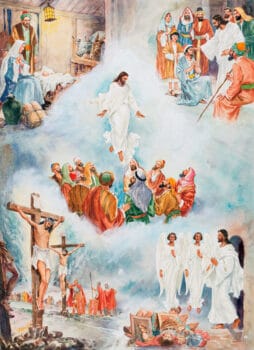
Image © Review & Herald Publishing at Goodsalt.com
The Bible is always the final standard of any claim to inspiration. Prophets must be tested by comparing what they say with what the Bible says. A true prophet will never contradict, minimize, or draw attention away from biblical truth. That is why a knowledge of the Scriptures is so crucial for those who want to follow the Lord and not be deceived by false teachers or false prophets.
In the Old and New Testaments, successive prophets often highlighted and pointed back to previous prophetic writings as the standard for their own prophetic ministry. Later biblical prophets reveal additional insights into God’s plans and the way of salvation, but they never contradict basic principles and concepts already given by God.
What do 2 Peter 1:19-21, Romans 15:4, and James 1:17 teach us about God and the prophetic messages that He has given over the centuries?
The Old Testament foundation for understanding the plan of salvation was set in the first prophecy that God Himself gave, in Genesis 3:15. The sacrificial system exemplified this plan, but the details of how God’s Lamb, Jesus Christ, would come, live, and die for humanity were clarified step by step in later prophecies. The biblical record shows that God unfolds truth when His people are able to understand it. This allows the understanding of truth to deepen with each new generation. This is what is meant by the idea of “unfolding truth” or “progressive truth.” That is, a later generation will often have a deeper understanding of God’s truth than did an earlier one.
There is, however, a crucial point that cannot be overemphasized: new revelations of truth will never contradict the truth that God earlier had given.

My bird photography lens in a 150 – 600mm zoom lens. For those who don’t understand camera jargon, that means that I can vary the focal length from a wide telephoto to a very narrow extreme telephoto lens. At the wide end, I can fit a whole tree in the frame and it may be difficult to see a bird sitting on one of the branches. On the other extreme, at 600mm, I may see the bird clearly at the expense of seeing the tree. The point is that in both the wide and telephoto views I am looking at the same object even though the views are different. Both views are correct but serve different purposes. Importantly even though the views are different, they are consistent. The little brown dot above a branch in the wide photo turns out to be a White-faced honeyeater in the telephoto view. While both the wide view and the telephoto view are consistent, the use of one may change our perception of what we see in the other.
In recent years, we have developed new lenses for viewing the Universe. The Hubble, James Webb, and Vera C Rubin telescopes and observatories have given new, exciting and challenging views of our universe. The universe has not changed, but our new views have challenged long held perceptions. (I admit to enjoying the beautiful images that these instruments provide.)
Prophecy is like a lens, providing views both general and specific on human behaviour, and God’s interaction with man. The views we receive may appear to be different because prophecy may change our perception of what we read in the Bible and vice-versa.
Ellen White makes this clear:
When I hear strongly worded arguments in Church circles about perceived truth, I often think about which side needs to change their perception. Maybe both!
I think that I hear you Maurice. Whilst it is correct, that the Scriptures will never contradict itself.The Scriptures will contradict our inaccurate, immature and even “naive” understanding of truth. Each generation of Seventh Day Adventists is given the divine mandate to reassess for themselves our cherished 28 Fundamental Beliefs. [And I know this may shock some of you.] The divine mandate in the light of progressive truth – to add to them or take away.
Maurice – respectfully – may I point out that a ‘lens’ is part of the ‘hardware’ used when attempting to ‘see clearly – 150 to 600 mm zoom’. It is mechanical and cannot reveal or interpret what we see; especially not spiritual Truth. It is with our heart and mind that we interpret WHAT we see regarding God’s Truth.
Is it more important to have the right ‘hardware/lens’, or is it more important to have the correct understanding of what is involved in order to ‘see’? Who provides this ‘correct’ understanding for us to know what we ‘see’? It is not necessarily the quality or sophistication of the ‘lens’, but rather the willingness to allow and accept the Holy Spirit’s ability to discern for us what the Truth is when He reveals it to us when we ‘see’ it.
It is an illustration to make a point, Brigitte. I appreciate what you are saying, but my illustration was not meant to be an explanation.
One of the most amazing aspects of Scripture is its internal harmony. Written by more than forty human authors over roughly 1,500 years, in different cultures, languages, and circumstances, the Bible presents one coherent message about God, humanity, sin, redemption, and God’s eternal kingdom. The Old and the New Testaments are uniquely unitary and complementary in purpose. The consistency of the message amplifies the fact that the Bible has one source, that is God. This God does not change, He is sovereign and He controls all human affairs and the entire universe. He is a perfect and holy, He never contradicts Himself.
The Word of God can be trusted 100%. The remarkable agreement among the biblical books strengthens our confidence that the Word of God is truly a lamp to our feet and light to our path and can guide us to safety (Psalm 119:105). This study is a solemn reminder that our lives should be harmonious with the Word of God. Of what use is it to glorify the Word of God and being eternal and yet we live contrary to its teachings? If our lives cannot reflect the teachings of the Bible, simply we are false prophets through our actions and behaviours.
“To the law and to the testimony: if they speak not according to this word, it is because there is no light in them” (Isaiah 8:20, KJV).
It is now time that we believers should test our lives whether we are in complete harmony with the Word of God.
Harmony is more than forced uniformity, where each prophet uses identical words, expressions or illustrations. Rather, it is alignment around one divine message centre on what God says. 𝗝𝘂𝘀𝘁 𝗮𝘀 𝗱𝗶𝗳𝗳𝗲𝗿𝗲𝗻𝘁 𝗺𝘂𝘀𝗶𝗰𝗮𝗹 𝗻𝗼𝘁𝗲𝘀 𝗿𝗲𝘁𝗮𝗶𝗻 𝘁𝗵𝗲𝗶𝗿 𝗱𝗶𝘀𝘁𝗶𝗻𝗰𝘁 𝘀𝗼𝘂𝗻𝗱𝘀 𝘆𝗲𝘁 𝗯𝗹𝗲𝗻𝗱 𝗵𝗮𝗿𝗺𝗼𝗻𝗶𝗼𝘂𝘀𝗹𝘆 𝘂𝗻𝗱𝗲𝗿 𝗼𝗻𝗲 𝗸𝗲𝘆, 𝗴𝗲𝗻𝘂𝗶𝗻𝗲 𝗽𝗿𝗼𝗽𝗵𝗲𝘁𝗶𝗰 𝗺𝗲𝘀𝘀𝗮𝗴𝗲𝘀 𝗺𝗮𝘆 𝗱𝗶𝗳𝗳𝗲𝗿 𝗶𝗻 𝘁𝗵𝗲𝗶𝗿 𝗽𝗿𝗲𝘀𝗲𝗻𝘁𝗮𝘁𝗶𝗼𝗻, 𝗲𝗺𝗽𝗵𝗮𝘀𝗶𝘀 𝗮𝗻𝗱 𝗵𝗶𝘀𝘁𝗼𝗿𝗶𝗰𝗮𝗹 𝘀𝗲𝘁𝘁𝗶𝗻𝗴 𝗯𝘂𝘁 𝗺𝘂𝘀𝘁 𝗿𝗲𝗺𝗮𝗶𝗻 𝗰𝗼𝗻𝘀𝗶𝘀𝘁𝗲𝗻𝘁 𝘄𝗶𝘁𝗵 𝘁𝗵𝗲 𝘁𝗿𝘂𝘁𝗵 𝗼𝗳 𝗦𝗰𝗿𝗶𝗽𝘁𝘂𝗿𝗲. A prophecy cannot contradict God’s character, undermine His commandments or introduce teachings that oppose what He has already revealed. Prophet Isaiah declared, “To the law and to the testimony: if they speak not according to this word, it is because there is no light in them” (Isaiah 8:20). John cautions believers not to believe every spirit but to test the spirits to determine whether they are from God (1 John 4:1). This means that harmony becomes an important principle in distinguishing genuine prophecy from deception.
From Genesis to Revelation, there is one unified redemptive story that is centred on the salvation of humanity through Jesus Christ. As much as the bible contains different literary forms, historical settings and human writers, its divine message remains consistent. Jesus Himself explained that the Scriptures testify about Him (John 5:39) and demonstrated how the Law, the Prophets and the Psalms pointed to His redemptive mission (Luke 24:27, 44). Paul notes that all Scripture is inspired by God and is useful for teaching, rebuking, correcting and training in righteousness (2 Timothy 3:16–17). This means that no prophetic message should stand independent or claim authority above, the written Word of God. Genuine prophecy must be in harmony with the word of the Lord by directing us to God’s truth rather than drawing us away.
…to the law and to the testimony… What would Isaiah have been referring to by “the testimony”? Today we have the testimony of the apostles who new Jesus personally. Whose testimony did OT people have?
Recently we studied Jeremiahs incounter with Jehoiakim. Jeremiah 36. The Lord told Jereamiah to write down on a scroll what I tell you, used by Jeremiah. Also, the testimony of the prophets. Jeremiah was instructed by the Lord to go down to the potters house and see what I can for My people who have wandered far from me. As the Potter can take a clay vessel that was spoiled in his hand and remake it into a vessel that he was pleased with. God told Jeremiah to tell or testify if you prefer to Israel tha I can do the same for you as the Potter can do. Jeremiah 18:4,6.
Indeed He can and will if we choose. Psalm 51:10-13, Isaiah 1:18. Christ remolded Paul. Galatians 2:20. He became a vessel that the Lord was pleased with, after the road to Damascus experience.
I am sure you understand now that the testimony is the word of the Lord, the Bible written down, and with some prophets spoken, such as Elijah and Elisha and others.
God bless you Robert.
Testimony comes from the Hebrew word teh-oo-daw’ meaning attestation, that is, a precept, usage: – testimony.
Some Bible version translate it as “written instructions”. I believe “testimony everything we find in scripture.
I am thinking it would be the prophets following Moses. It seems to fit with Jesus talking about the law and the prophets. But I am not an expert.
If we use Isaiah’s system of checking the prophets, being sure to be insync with the Bible, we are not judging. What is the difference in judging and checking the prophets? You should know. I can give you several examples, rather I will stick with you should know.
The modern example of deviating from the Bible, is the prophet who says the Lord has spoken to me and He is coming the second time, Jananuary first, or the end of this year. Yes he was correct about the way Christ will come. He will come in the air and resurece saints, and those who are living caught up with those who were resurrected to meet Christ in the air as our King of kings, wisking us with our heavenly angel off this earth, light years away for one-thousand years. The Biblical error is the prophet setting a time.
1. Biblical prophecy ended in 1844.
2. Christ said no one knows the day or the hour not even Me, rather only My Father. Matthew 24:36,42. Marks writing on the matter is more emphatic or straight forward if you prefer. Mark 13:33. We know not the time(period). There are other contradictions to the Bible out there. And yes more important to our salvation. So study to show thyself aproved by God.
Romans 12:2.
2 Timothy 2:15.
Hebrews 4:11,12,13.
https://egwwritings.org/read?panels=p108.355&index=0
“later generation will often have a deeper understanding of God’s truth than did an earlier one.”
I am finding it hard to agree with that statement as stated in today’s lesson. I don’t know what percentage of Christians worldwide agree that ” God’s Ten Commandments” are still needed to observe though under Grace but with reference to my country, Seventh Day Adventist Church ( the least populated)only agree and the remaining Christians find them unnecessarily to uphold because ” we are under Grace”.
Although scripture states that there shall be an increase in knowledge in later days, I don’t agree with the fact that the increase in knowledge shall be/ is in relation to discarding God’s Law.
My quote would be instead” The later generations tend to have a shallower understanding of scripture than the former/ earlier”, due to infiltration by other teachings/ understandings like what we are facing today ,with most of the Christians saying no need for Sabbath day observance ” mostly” .
I remember when I was little girl growing up in the church in the 1970 and 1980s, that the elders were staunch believers in works-oriented salvation. Being an Adventist meant you had to perform certain rules to be seen as a “good Christian.” Praise God that many SDA Christians today realize that we cannot work our way into heaven, and that salvation only comes through accepting, knowing, and having a personal relationship with Christ; and that it is through this relationship and His Holy Spirit that true transformation takes place in our lives. Like a child who desires to please his parents, when we recognize the love that Christ has for us, and the sacrifice He has made for us, then we want nothing more than to please Him.
I believe my experience is one example of what the lesson meant when it states: “Later generations will often have a deeper understanding of God’s truth than the earlier one.”
And guess what? We’re still learning.
I think the statement is referring to believers who have been faithful to God’s Word. It would not necessarily refer to all Christianity. Much of Christianity has gotten away from pure commitment to the Word, hence why the Seventh-day Adventist church has a special mission to call them back to truth.
Once we have personally accepted Ellen G. White as a true prophet of God, we cannot selectively reject the light revealed through her ministry simply because it challenges a more recent interpretation of Scripture. This principle applies to established Adventist teachings concerning the Investigative Judgment, America’s role in end-time events, the identity of the papacy in Bible prophecy, the mark of the beast, and the seal of God. We must remember that new light does not contradict previously established truth; rather, it builds upon, clarifies, and deepens our understanding of it.
Beverley, I would refer you to Ellen White’s statement quoted by Maurice above. The Adventist pioneers did change their views on some issues. I am not saying that we should move away from any of the teachings you mentioned, but I am fully in support of deepening understanding. We don’t always get everything right the first time.
Also, Ellen White never intended to be the final word on the interpretation of Scripture. She grew in certain areas and she would encourage continual study in the same way.
Christina, I agree that our understanding of Scripture should continue to deepen and that we should never regard our present understanding as beyond examination. However, I believe we need to make an important distinction between Ellen White’s personal understanding of a biblical subject, which could develop with further study, and what she specifically identified as having been revealed to her by God.
There is a difference between acknowledging that she grew in her understanding and suggesting that revealed light was simply subject to changing opinions. She never claimed to be the final authority on biblical interpretation, and she consistently directed people to Scripture. At the same time, she understood her prophetic calling to involve conveying messages and instruction entrusted to her by God.
The pioneers could, and did, revise positions as their study of Scripture progressed. But I believe we must be careful not to use that historical fact to suggest that prophetic revelations themselves were merely evolving human opinions. Continued study should deepen our understanding of the light already given, not become a reason to dismiss or contradict it.
Hi Christina,
I see that Beverly specifically narrowed his focus to
These teachings were not originated by Ellen White but grew out of the intense, prayerful, biblically focused study of the early pioneers. Ellen White identified these teachings as foundational pillars of our faith that could not be moved without collapsing the whole structure.
That principle still applies: If we allow foundational teachings to evolve, we will soon no longer be the people who give the Three Angels’ messages to the world.
Inge, I am not saying we should get rid of any of these teachings. What I was trying to say is that sometimes we need to grow in understanding on some of these issues. For example, I feel we have a healthy understanding of the Investigative Judgment today than we did some years ago. I am uncomfortable with people who say “What we knew about X in 1872 or whatever” is absolute truth.
This is an important issue because some of EG White’s comments are “extra-Biblical” (content that one does not find in the Bible): Christ’s childhood in Nazareth (Desire of Ages), sinful relationship of Mary and Simon (DA), expanded narrative about Moses resurrection (PP), the beautiful flying serpent in Eden (PP), and several other commentaries. Where do these comments fit within the prophetic role’s continuity with the Bible and how should we treat these “insights”?
Personally, I would say that we can gain insight from these ideas. I believe there is likely truth in most of them. I say most, because Ellen White could have been influenced by Christian traditions that we might not know about. I don’t know that ever detail she wrote in her Biblical accounts came straight down from Heaven.
That being said, I don’t think we should promote these details when doing evangelism or in sermons. It does make it look like we have an extra-Biblical authoriy. I also don’t think these details are crucial – if they were, they would be in the Bible. We can understand the passages without them, but they can deepen our perspectives.
I believe God gave us the “gift of prophecy” in the person of Ellen White. I survived a serious onslaught on her character and writings in the mid 1990’s on an Adventist discussion list. It caused me to study and research. I found that many criticisms were distortions of what Ellen actually wrote and did.
As for the extrabiblical details, I thank God for them, because they help me fill out the outlines that God provided through previous prophets.
When it comes down to it, we either accept that Ellen White was supernaturally guided in her writings, or we don’t. If we accept that she was guided, then these “extra-biblical details” are what God was pleased to reveal to us. That some other writers wrote about similar details does not lessen Ellen White’s inspiration. She claimed that she was guided in what she accepted and rejected in the writings of others when she put what she “saw” into words.
Nowadays it is popular to see Ellen White as a “devotional writer,” because the effect of her writings on the lives of those who take her seriously is undeniable. But accepting her as a mere devotional writer is rejecting her ministry as a “messenger of the Lord.” Furthermore, it makes her dishonest or deluded.
She cannot merely be a good “devotional writer,” because we wouldn’t accept a dishonest or delusional person as a devotional writer. So she is either dishonest/delusional, or she is the “messenger of God to this endtime church,” which she claimed to be.
For me, the proof is in this:
1) The many details on the topic of health in which she was 100 years or more ahead of her time. Science is still verifying the accuracy of what she wrote in the 1860’s.
2) The effect on my own relationship with Christ
3) What I see in the world around me as a fulfillment of her writings on the last days.
Inge, I actually think the all or nothing approach we take to Ellen White’s writings actually does more harm than good. I don’t mean that she was “partially inspired”. But anytime we act like one error means we throw everything out, we actually set ourselves up for attacks by critics. Yes, some of them are just trouble makers, but many do have genuine questions that cannot be easily dismissed. And it only takes one error to prove her a false prophet by that standard.
I am not of the impression that everything Ellen White wrote was directly revealed to her and I especially believe that because some of what she wrote was revised. For example, the Great Controversy was revised for historical details. I think it would therefore be unwise to suggest God guided Ellen White to the right historical resources the first time. She probably used what was available to her and when made aware of better resources, she used them.
Now yes, extrabiblical details in say the Conflict of the Ages series are a little different. But even then I feel we should not be dogmatic if someone is uncomfortable with something. One example that comes to my mind is how many Adventists very strongly support the earth being 6,000 years old because Ellen White made many statements that included 6,000 (albeit with qualifying words like “about” or “nearly”). Now did God reveal to Ellen White that number? He may have, but it’s possible she, being familar with Bishop Usher’s chronology just took the 6,000 years as truth. I feel that those who are open to a longer period (for example, 8,000 or 10,000 years) could be right regardless of Ellen White’s statements. Or maybe it is 6,000 years. It doesn’t really matter, but I would hope we would have the freedom in the church to have a different perspective on such things.
I still stand by what I said – extrabiblical details can certainly help and benefit us, but they are not “crucial” or they would be in the Bible.
Things are constantly changing, and it is frustrating trying to keep up. As we study God’s attributes, we might be tempted to ask, “Can God change? Is it possible that God can change in his promises or in his character? Can the laws that God has set down be changed? Can we be assured that God will never change?” The short answer is that there is no change in God. An immutable object is an object whose state cannot be modified. This is in contrast to a mutable object which can be modified. One of the attributes of God is that he will never change. He is immutable.
God words never change, human interpretations differs and in every generations words evolved with additional meaning thus their are words Symantics Reflected on a scripture which states “be ye perfect as your heavenly father is perfect.” This has been misunderstood so much that one maybe discourage in living a christ-like life, yet it is belief that men like Noe, Enoc, Job, who walked perfect before God never sinned. Brother Cornelius a devout man feared God with all his household gave help to people and prayed continually to God, God appeared to him, telling him his prayers and your alms have ascended as a memorial before God.
Be ye perfect yes is taken out of context many times. even for Noah, Enoch, Job, Nathaniel, and yes, Cornelius, and other Bible charactor’s, and King David is also one to consider of being perfect, because he put his trust in God. God is a forgiving God and when we couple Matthew 5:48 with Romans 3:21,22,23,& 24. we have a better understanding of the truth of God.
Tim I like your illistration.
The Bible clearly records that Noah sinned. It shows no such record for Enoch and Job, but that does not mean they “never sinned.”
Only Jesus Christ “never sinned.”
The context of Matt. 5:48 demonstrates that God wants His children to be “perfect” (that is, “mature”) as He is perfect in love. In other words, God wants us to love as He loves.
The biblical word translated as “perfect” in this verse is more accurately translated as “mature” or “complete.” Love makes us “complete.” And it is a growing process.
If you have ever heard an orchestra or even a marching band tuning up or prepping for a performance then you know what a cacophony of sound and out of harmony everything sounds.
The same is true with the Bible if it isn’t properly studied in context. There are no real discrepancies, only imagined. The only explanation that the Bible is in perfect harmony is that it was directed by the Holy Spirit.
A truth is always a truth. It cannot be cultural or gender-based, temporal, or geographically determined. The Bible as a whole is truth — it cannot be partial!
As expected, it is a challenge to accept progressive revelation with all of its implications. It is inevitable that as more truth is given the older statements will have something somewhere that is out of sync with the new. Jesus taught this with his cloth and wine skins teaching. It is a function of both God speaking to people who cannot bear the full detail and the imperfect expressions of the prophetic messenger. There is a beauty in growth. There is a beauty in the temporary discordance that leads to a key change. A failure to move with the Great Musician will lead to people out of harmony with where God is leading.