
Tuesday: Functions of Prophets

Daily Lesson for Tuesday 13th of October 2026
Read 1 Samuel 8:4-22 and Leviticus 8:10-13. How did prophets function in relation to kings and priests?
Prophets interacted with kings in both pleasant and unpleasant situations. When the Israelites demanded a king (1 Samuel 8:4-22), they said we want “a king to judge us like all the nations” (1 Samuel 8:5). What a sad but powerful example of the danger that God’s people have faced in every age: the desire to be like those around them. In this case, they had no idea what this request would bring, even though they were forewarned (1 Samuel 8:11-18) by God through His prophet. Based on their desires, and despite his warning to them, Samuel soon anointed Israel’s first king, known in biblical history as King Saul.
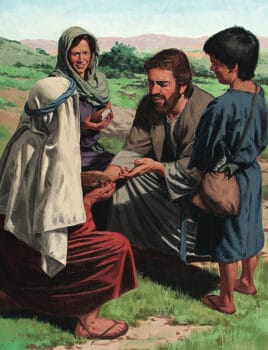
Image © Lifeway Collection at Goodsalt.com
The Old Testament books of 1 and 2 Kings and 1 and 2 Chronicles record the kind and quality of rulership exhibited by the kings of Israel and Judah. Sacred history shows that the kings who did evil far outnumbered those who did good in the sight of God. One of the core functions of the prophets was to help lead unfaithful kings back to obedience to God’s law. As a result, these prophets faced threats, with some even harmed and killed by kings who led God’s people away from Him (1 Kings 18:4-19, 2 Chronicles 24:20-22).
Prophets also interacted with priests. Moses, a prophet of God, anointed Aaron and his sons as the first Israelite priests (Leviticus 8:10-13). There were times priests received words of rebuke from God through the prophets (Hosea 6:9, Malachi 2:1-3). One striking example of this is the entire household of Eli, who were confronted for their corrupt practices (1 Samuel 2:27-36). These were some very strong rebukes against rampant corruption among people given special privileges.
Prophets were teachers of the people (2 Chronicles 34:1-33). They presented messages from God to the priests, kings, and the nation (Jeremiah 5:31, Ezekiel 22:26). Prophets also spoke to surrounding nations outlining God’s plan for them, a theme repeated several times in the messages of the Old Testament prophets (Isaiah 60:1-3; Isaiah 62:1-2). Prophets were expected not only to pass on faithfully the messages God gave them but were sometimes instructed to write them down and preserve them (2 Chronicles 13:22). Again, no matter how human the prophets were (and with all the attending frailties that go with that), they were men and women of prayer, the Word, and service to God and His people (Jeremiah 42:4; 2 Kings 22:15-17).

I did a quick search this morning to find our how many prophets were associated with the kingly courts of Judah and Israel. There are over thirty. That number is not surprising given that the historical books of the Old Testament are essentially records of what happened at the head of government. Nobody wrote about the shepherds and and village potters.
My search revealed the fact that many of these court prophets delivered messages of condemnation to the kings. Our lesson today mentions a few of them, but to fill out the discussion here are a few more:
And there are many more. Most of them had to delivered messages of rebuke to hostile courts, which accounts for their unpopularity.
In summary it is notable that most of these prophets were speaking out against apostacy and injustice. Their main prediction was that if the kingdoms followed this line of action, it would ultimately lead to the destruction of their kingdoms. We tend to focus on the spiritual apostacy and apply that side of it to our church experience today. But, the spiritual apostacy led to a devaluation of the needs of the common people outside the courts of the kings. Often the prophets warned that the the widows and orphans were being ignored. Kingdoms may be rotten at the core, but they often fray around the edges and that is where they are most vulnerable.
Time hasn’t changed;men’s heart are despeately wicked.
“The greatest want of the world is the want of men—men who will not be bought or sold, men who in their inmost souls are true and honest, men who do not fear to call sin by its right name, men whose conscience is as true to duty as the needle to the pole, men who will stand for the right though the heavens fall.”Ed 57:3
How did prophets function in relation to kings and priests?
They were messengers of God who was King of Israel before the Israelites demanded a king from their own. 1 Samuel 8:7. They were judges to the people before, and after the people demanded a king they were conveyers of the word of the Lord to kings and priests, relaying the guidance of the Lord. 1 Kings 22:14.
If the Old Testament prophets were to appear in the world today, what would be their functions and to whom?
1.Government and political leaders – They would confront corrupt governments, injustice, abuse of power and corrupt leaders
2. Church leaders – They would correct spiritual abuse, false teaching and religious hypocrisy
3. Society at large – Call people to true worship, call people to repentance, and call people moral uprightness.
4. Families and communities – They would call for honour and respect to marriage vows, reconciliation and forgiveness
5. Individuals – They would warn, encourage, and reminds us for the soon return of Jesus Christ.
6. Children – They would remind the children to obey their parents
7. Parents – They would challenge the parents to set good examples to their children.
“He has shown you, O mortal, what is good. And what does the Lord require of you? To act justly and to love mercy and to walk humbly with your God.” (Micah 6:8, NIV)
The function of prophets was not merely to predict future events but to serve as a teachers and messengers of God’s truth. God told Moses, “I will put my words in his mouth; and he shall speak unto them all that I shall command him” (Deuteronomy 18:18). Moses faithfully taught God’s commandments and guided Israel in maintaining their covenant relationship with Him (Deuteronomy 6:1–2).
For the case of prophet Samuel who served as God’s messenger, he learnt at young age to listen to God and he faithfully communicated God’s Word and called Israel to repentance and obedience. From childhood, he learned to declare the Lord message to the people (1 Samuel 3:10, 19–21). Both Moses and Samuel are prophets who underscore the function of prophets as God entrusts them to teach divine truth, correct error, and guide God’s people towards faithfulness. Similarly, preachers today who are mordern clearly the mordern prophets must learn to expound and apply God’s revealed Word to nurture spiritual growth across generations.
In the Old Testament system of Israel, God established 3 offices- King,Prophet and Priest. Kings ruled the people, but their weaknesses were power(oppression,greed and leading their people into idolatry and apostasy)
. Priests represented people to God but had weaknesses of becoming formalistic, corrupt and ignoring sin to please kings.
. Prophets were representing God to people(including Kings and Priests). They were the conscience, the watchdogs, the covenant prosecutors. Simply put, prophets did not inherit their offices, God directly calls them for a purpose!
“When Samuel grew old, he appointed his sons as Israel’s leaders. ….But his sons did not follow his ways. 1 Samuel 8:1,3 NIV.”So all the elders of Israel gathered together and came to Samuel at Ramah. They said to him, ” You are old, and your sons do not follow your ways; now appoint a king to lead us, such as all the other nations have.” 1 Samuel 8:4-5 NIV
Here we see the genesis of Israel’s troubles. A dad who, though a Spirtual leader of Israel, was found wanting in the spiritual leadership of his own home.
In reality, not unlike the nation of Israel , the Church is really a collection of individual homes and families. The nitty gritty of our personal relationships with God and even with each other are shaped within it the walls of our individual homes. Who really is Steve Cole? Even at this age I am a personality in transition, as I sit before the Potter and His tools; the Bible, the Sabbath School Quarterly and my time of prayer.
In fact we are all personalities in transition. Either we are coming closer to Jesus or moving further away. In Samuel’s home, a prophet who was close to God, had children who were moving further away from Him. And whose conduct influenced an entire nation to do likewise.
1 Samuel 8 contains an important lesson about legitimate concerns and wrong conclusions. Israel had a factual reason for concern: Samuel’s sons were corrupt and did not follow his ways. Yet their legitimate complaint became the justification for a request that revealed a deeper spiritual problem: “Now appoint a king to lead us, such as all the other nations have.” (1 Samuel 8:5).
God did not deny the problem with Samuel’s sons, but He identified the deeper issue: “They have not rejected you, but they have rejected me as their king.” (verse 7).
Sometimes a legitimate problem can be used to justify a spiritually wrong solution. We can rightly identify weaknesses or failures among God’s people, yet still draw the wrong conclusion about what should replace or correct them. Israel’s problem was real, but their desire to become “like all the other nations” revealed that the real issue was not merely Samuel’s sons—it was a desire to conform to the surrounding nations rather than remain distinct as God’s people.
A valid criticism does not automatically make the proposed remedy valid.
When Israel demanded a king so that they could be “like all the nations,” their desire for conformity revealed a deeper rejection of God’s distinctive government and leading. Likewise, when Adventists dismiss Ellen White’s prophetic ministry—not because they have honestly examined her writings and found a biblical contradiction, but because they want Adventism to resemble mainstream Protestantism—they risk repeating the same spirit of conformity. The issue is not that Ellen White is equal to Scripture; she is not. The issue is whether we are willing to accept the distinctive prophetic guidance God has given His remnant people, even when that guidance makes us different from the religious world around us.
Again, today’s lesson reinforced the profile of a prophet: they were people of prayer and instructed by God’s Word, not priests. Thus, common people like you and me can become prophets.
The lesson seems to be suggesting that prophets were the greatest people in the Old Testament. That may be true, depending on how you define prophets, but I think it’s worth noting that priests also received messages from God (through the urim and the thummin) and they also rebuked kings (see Uzziah in II Chronicles 26). Priests and Levites were also teachers (ie. Ezra). I’m not sure there was ever meant to be a hierarchy in Israel. God did speak through the prophets, but He did speak to others also.
What are the differences between pastors and priests
In the Hebrew sanctuary services services, people needed a priest to help with their offerings, including the sin offerings, which symbolized Christ’s death for their sins. The priest transferred their sins to the sanctuary through the blood of the sacrifices, which represented Jesus. They could not do this themselves. They could not even enter the sanctuary. But because Jesus is our heavenly High Priest, we need no earthly intercessors, no priests. We can offer our prayer directly to God in the Most Holy Place of the heavenly sanctuary. (Heb. 4:14-16)
Only a certain apostate church claims to do the work of Christ on earth, including forgiving sins through a priesthood. She is represented by an immoral, blasphemous woman in the book of Revelation.
Pastors are not mediators between people and God. They are supposed to encourage and teach their congregation to look to Jesus for salvation. They are also supposed to evangelize the community – that is, give Bible studies, etc. They are NOT priests.