
Thursday: False Prophets

Daily Lesson for Thursday 15th of October 2026
No matter what God does, Satan has his counterfeits. It’s the same with prophets. Israel faced true and false prophets. The key was to know the difference.
Read Jeremiah 14:1-15. What was happening here, and how did the Lord regard those who spoke falsely as “prophets” in His name?
In Jeremiah 14:1-22, God gave Jeremiah a message of judgment for Judah, a judgment that would come in the form of a sword (war), famine, and pestilence. False prophets at the time contradicted Jeremiah’s message. Jeremiah describes them in very clear terms: “And the Lord said to me, ‘The prophets prophesy lies in My name. I have not sent them, commanded them, nor spoken to them; they prophesy to you a false vision, divination, a worthless thing, and the deceit of their heart’ ” (Jeremiah 14:14, NKJV).
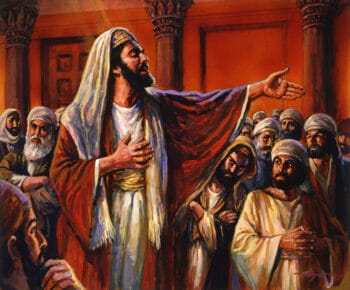
Image © Lifeway Collection at Goodsalt.com
False prophets are corrupt because their source of prophetic claims is often the false “gods” whom they worship (Jeremiah 23:13-14). God warns, “ ‘I have not sent them, commanded them, nor spoken to them’ ” (Jeremiah 14:14, NKJV). They are “ ‘prophets of the deceit of their own heart’ ” (Jeremiah 23:26, NKJV). Ezekiel was instructed to prophesy against “ ‘the prophets . . . who prophesy out of their own heart’ ” (Ezekiel 13:2, NKJV).
False prophets often follow popular views. This was the case in 1 Kings 22:1-53, when a group of 400 “prophets” gathered at the command of King Ahab (1 Kings 22:6). With one voice they advised the king to fight against Ramoth-Gilead. Ahab counseled with Jehoshaphat, king of Judah, after they heard the prophetic counsel from the prophets of Asherah. Jehoshaphat urged Ahab to consult the prophet Micaiah as to whether they should go to battle or not. “Then the messenger who had gone to call Micaiah spoke to him, saying, ‘Now listen, the words of the prophets with one accord encourage the king. Please, let your word be like the word of one of them, and speak encouragement’ ” (1 Kings 22:13, NKJV).
The pressure Micaiah experienced to lie was likely the same pressure felt by the false prophets of Asherah, but Micaiah did not follow this popular view; instead, he waited for God to tell him what to say (1 Kings 22:14).
|
Whether or not you are a prophet, it’s always easy to follow the popular thing. Considering how corrupt culture can be, why is this never a good idea? |

If you have not worked it out already, Artificial Intelligence, loves to tell you what you want to hear. I did some research on an invoice my great grandfather sent to Bossall Hall in England in 1901. AI came back with a glowing report of how skilled my great grandfather must have been to have secured the contract. The work done was a major renovation and had been done under the supervision of Penty and Penty an architectural firm in York. The conversation continued and involved both my grandfather and my father and the work they had done and it commented on them in glowing terms. Then the AI entity got personal and asked me what I had done, I told them about my work in computer science. AI’s response was glowing. I had carried on the fine tradition of the family etc etc.
The interesting thing was that most of the factual evidence was true but it was written in such a way to make me feel important and good about myself. In other words it was stroking my ego.
That is the problem with false prophets, They typically say what you want them to say. It is the algorithm they use to keep you coming back for more. Their skill lies not in telling the truth but in reinforcing the idea that you have got it right.
The courts of the kings in biblical times were filled with wisemen and soothsayers who stroked the egos of their monarchs. The prophets who were critical did nothing for their popularity, and as we noted a couple of days ago, many of them were killed as a result.
Ellen White in her role as messenger to a growing church coming to terms with itself delivered critical messages to church leaders. Here is an example:
There is a caveat to this. Being critical of the church does not make you a prophet, Just because a person has a critical message to the church and gathers thousands of viewers of their podcasts on YouTube, does not make them right. The true value of criticism comes when we work together hand in hand with the Holy Spirit towards a solution. That leaves no room for stroked egos.
I am just making a little observation. Can a pastor become spiritually dangerous (like false prophets), not only by teaching what is false, but also by withholding what is true? The scripture clearly says that those entrusted with the spiritual care of God’s people have a solemn responsibility not merely to comfort, encourage and inspire, but also to warn, correct, rebuke and teach even when the message causes some kind of uneasiness in the church. When spiritual leaders (pastors) knowingly withhold necessary truth to preserve popularity, protect personal interests or maintain an artificial sense of tranquillity, they participate in the role of a false prophet who prophesy peace when there is no peace.
“They offer superficial treatments for my people’s mortal wound. They give assurances of peace when there is no peace.” (Jeremiah 6:14, NLT).
In Jeremiah Chapter 6, God condemned false prophets who were proving false comfort to God’s people. The situation was grievous and yet they were providing false assurances and hence misleading God’s people. God appointed prophets as watchmen to warn the people so that they would come to repentance. But false prophets came about telling the people that they were spiritual fine and hence denied them an opportunity for repentance. Our spiritual leaders (pastors) are the watchmen of our time. Yes, let them preach about God’s blessings, favour, breakthrough, prosperity and love, but if they consistently avoid repentance, holiness, accountability, judgment and the consequences of persistent disobedience, they play an active role of a false prophet.
A spiritual leader who knows what should be said but deliberately withholds it may be committing a form of false prophecy because the resulting silence gives people false comfort and false hope.