
Monday: The Risen Christ, Our Only Hope!

Daily Lesson for Monday 17th of August 2026
In 1 Corinthians 15:9-19, Paul explains how severe and dreadful the consequences of denying the Resurrection are. Without the Resurrection, believers have no hope in the present, much less in the future.
Read 1 Corinthians 15:9-19. What do we lose if Christ has not been raised?
By and large, ancient pagans did not believe in resurrection, especially in the Greek world, with its belief in body-soul dualism (at death the soul soars off to wherever the souls of the dead supposedly go). Paul begins the paragraph in 1 Corinthians 15:12-19 with a rhetorical question that shows his deep bewilderment: “What? How can some of you say that there is no such thing as the resurrection of the dead?” (1 Corinthians 15:12, author’s translation). For Paul, disbelieving in the Resurrection is inconceivable, especially because there were so many eyewitnesses (1 Corinthians 15:5-8). But even worse, without the Resurrection, their hope is built on a lie, and they are still in their sins.
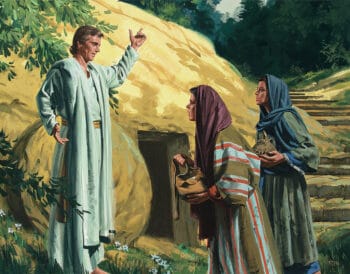
Image © Lifeway Collection at Goodsalt.com
He says, in fact, that if there is no resurrection of the dead, then (1) Christ has not been raised (1 Corinthians 15:13,16); (2) our preaching is empty (1 Corinthians 15:14); (3) our faith is also empty (1 Corinthians 15:14); (4) we are false witnesses (1 Corinthians 15:15); (5) our faith is futile (1 Corinthians 15:17); (6) we are still in our sins (1 Corinthians 15:17); and, obviously, (7) those who have died are no more (1 Corinthians 15:18).
Without the Resurrection, both preaching and faith are empty (1 Corinthians 15:14). The Greek term rendering the word “empty” is kenos. This is a good translation, but it is too broad. Interpreters debate whether kenos means “empty” in the sense of lacking truth (so, “untrue”) or lacking results (so, “without result or effect”) or lacking purpose (so, “without purpose,” “in vain”).
Whatever the specific meaning, in a scenario in which resurrection does not exist, faith is portrayed as futile, from the Greek mataios (1 Corinthians 15:17). Although mataios is not much different from kenos, the idea is that if Jesus is not alive, faith is fruitless, a delusion, because our sins have not been forgiven (1 Corinthians 15:17). We would be false witnesses, deceiving and being deceived (1 Corinthians 15:15).
|
How does one make sense of 1 Corinthians 15:1-58 if the dead soar off to heaven (or to hell) immediately? Why, then, is understanding that the dead sleep such an important teaching? |

Here is something to think about before we start saying how much better off we are than nonbelievers. I do not think that there are many Seventh-day Adventists who would deny the resurrection of Jesus in our heads, but consider this:
All too often we try to resurrect the old man of sin rather than live the new resurrected life in Jesus. Are we guilty of believing the resurrection by mental assent and denying it by our actions?
Well said, now I want to sing. “Christ is the victory, glorious victory that overcomes the world.”
Yes, baptism by the Holy Spirit and of the water, John 3:5, is the evidence to heaven and earth that we have elected to be drawn out of the love of darkness by Christ, then through His blood we are saved. 1 Peter 1:18-19.
James 1:2-4, 25. Yes, happiness comes also from being blessed. Be sure to read verse 25 also to get the full blessing.
Few weeks ago the power generating company supplying 80% of the city where I reside with energy had challenges with their gas supply, consequently that affected the energy supply which left the area totally without light, it was a terrible experience especially felt at night that I couldn’t even comment on Ssnet, it was terrible!
Hope!!!
I want to link my story to “hope” what it can achieve in the life of a believer and the situation of a believer when it’s lacking. Hope is the life-support energy of the believer enabling us to cope and persevere with our day to day challenges and continue to move on trusting God to see us through. Where hope is lacking life nomatter how fascinating and fun-filled is negative and without direction.
Jesus’ resurrection from the dead is the assurance of hope that we have to live and cope with our present realities whether good or bad and it also confirms to humanity that this world as programmed by God is heading towards the day of accountability, a day that decides the eternal destiny of all who threaded this world whether living or dead, a ‘dreadful day of the Lord.’
Christ’s resurrection has given us a hope to live by, so let’s be hope-filled!!!!
I am intrigued to understand whom Paul was addressing in 1 Corinthians 15:12–19, particularly those who did not believe in the resurrection.
“But tell me this—since we preach that Christ rose from the dead, why are some of you saying there will be no resurrection of the dead?” (1 Corinthians 15:12, NLT).
How possibly could these people accept the gospel of Jesus Christ but deny his resurrection? “But if there be no resurrection of the dead, then is Christ not risen.” (1 Corinthians 15:13). This was a very fundamental problem. It is not possible to separate the resurrection and the gospel of Jesus Christ. Christianity minus the resurrection has no meaning or purpose. This was catastrophic failure. You cannot have Jesus without His resurrection. What version of Christianity is this? It is no wonder Paul addressed these people as “spiritual babes” ( Corinthians 3:1). It is possible to be deeply involved in church, to value Jesus, to admire His teaching, and even to experience spiritual manifestations, while holding a distorted view of the gospel.
I want to challenge myself and perhaps someone like me. I believe in the resurrection of the dead, Am I ready should I go to sleep tomorrow? Is it well with my soul today? This lesson is not simply a reminder that Jesus died and rose to life again, but a warning to examine ourselves and make sure that all is well with God. If we know that resurrection is a spiritual reality and do nothing, it is as good as denying the resurrection of Jesus Christ. We are no better than the Corinthians.
The resurrection, let alone the incarnation was profoundly problematic for the culture of the early church. Understanding that material/physical reality was evil and then having someone insist that God entered that space would have generated some heated discussions. However, to then say that after escaping the evil physical body through death, this same Being would return in another physical body makes today’s political debates look trivial.
As Christians, to some extent we get the whole idea now, but it does raise an important question. Why did Jesus have to have a physical body at all, why not just remain spiritual?
I think this goes back to the original creation. The problem wasn’t with the physical (originally created good), the problem was with Sin and its devastating impact on both physical and spiritual realities. While Sin impacts the physical, it starts with the spiritual – it is a mind thing, and while the brain is physical, the mind/conscience is a little harder to physically define.
To deal with Sin meant that God entered where the problem existed and condemned the problem in that space (Romans 8:3).
We sometimes are led to believe that dealing with Sin is only about us – not true. It is the WHOLE creation (Romans 8:21,22; cf. Revelation 21:1) that is redeemed and it is a universal problem that has been isolated to our world. Universal problems need universal solutions, as such, the Cross (and everything that includes), is so much more than me and my salvation. Jesus remaining in a physical body is a remarkable and mind-bending covenantal manifestation of God’s commitment to Truth/Love/Us/Creation/Himself, etc., etc… Wow!
“To the angels and the unfallen worlds the cry, ‘It is finished,’ had a deep significance. It was for them as well as for us that the great work of redemption had been accomplished. They with us share the fruits of Christ’s victory.” (Desire of Ages 758)
Death remains a vicious, cold-hearted tyrant. Every culture and people have had lavish laments for the destruction brought about by death. “Sin reigned in death,” Death is a tyrannical emperor that has reigned. Death, even in the days of Christ, just like in our days, walked and has continued walking with cruel and bloody boots through the pages of human history, and not a single nation is exempt from death’s tyranny. It is for this reason there is no religion in the world for which history is so important as Christianity, for it is in Christianity where the proclamation of resurrection matters most. Paul says in 1 Corinthians 15:14, “If Christ has not been raised, our preaching is useless and so is your faith.” Without the proclamation of resurrection and, by extension, Christ rising from the dead, we could all be wasting our time in church. But we thank God because Christ has been raised, the first fruit from the dead.
It is important to note that the proclamation of Christ’s resurrection happened in an era when a testimony of women was not sought in any court of law. As a matter of fact, the disciples’ response was with incredulity about the women’s reports in Luke 24:9-11: “When they came back from the tomb, they told all these things to the Eleven and to all the others. It was Mary Magdalene, Joanna, Mary, the mother of James and the others with them who told this to the Apostles.” Luke 24:11, “But they did not believe the women because their words seemed to them like nonsense.” This particular information needed most likely to be entrusted with men as per the culture of the day. But God made it plain that he wanted women, along with men, testifying to the truth of the Gospel to the ends of time and to the ends of the earth.
Romans 6:23 says, “The wages of sin is death,” and only by the payment of a death penalty can we be forgiven and reconciled to a holy God. Just as death messed with people’s emotions on that first day of the week, Jesus had this to say to them: “‘How foolish you are, how slow of heart to believe all that the prophets have spoken. Did not the Christ have to suffer these things. And after that enter into his glory and beginning with Moses and the prophets, all the prophets.’” He changed their emotions by explaining to them what was said in all the Scriptures concerning himself. Later they said, “‘Were not our hearts burning within us when he opened the Scriptures to us.’” —Luke 24:25-27. Indeed, the proclamation of the resurrection changed everything forever!
It is interesting to note that Paul wrote 58 verses in 1 Corinthians 15. More than other chapters. Thus, just one evidence of the importance of the resurrection of Christ. Christ was born into our civilization to give us the chance to have eternal life if we chose to allow Him to work in us to do His will. Christ being born into humanity is not reincarnation. It is incarnation. The definition of incarnation is: “God the eternal Son became incarnate in Jesus Christ. Through Him, all things were created, the character of God is revealed, the salvation of humanity is accomplished, and the world is judged. Forever truly God, He became also truly human, Jesus the Christ. He was conceived of the Holy Spirit and born of the virgin Mary. He lived and experienced temptation as a human being but perfectly exemplified the righteousness and love of God. By His miracles, He manifested God’s power and was attested as God’s promised Messiah. He suffered and died voluntarily on the cross for our sins and in our place, was raised from the dead, and ascended to heaven to minister in the heavenly sanctuary on our behalf. He will come again in glory for the final deliverance of His people and the restoration of all things.” Ok, now Christ lived a humble life with His parents for 30 years. As a carpenter with His father, now we know He lived as we should live also in a relationship with His Heavenly Father, as we should do. You would agree that Christ is our exemplifier. We became aware of that when He said, “mom and dad, I must be about My Father’s business,” at 12 years of age. Then we don’t know much of Christ life until He was 30 years of age, entering the ministry. Today and this week we see Christ as He had laid down His life under 48 hours previous to His resurrection, He died for our sins. Remember He had us on His mind as He hung upon the Cross. Then to the excitement of the disciples, and his mother and other women who mourned His death, Christ did rise from the dead. As He predicted in the Old Testament and by Christ Himself in person at 30 some years of age. His resurrection was emphasized on It Is Written this this week by the author of this week’s lesson. You will find it on YouTube or itiswritten.com, where you can buy the companion book each quarter. I want to point out that His resurrection was on the third day, Friday, The Seventh-day, and Sunday, though less than 48 hours from His death, I am sure you remember the details. Now, the importance of the resurrection. The importance for one was to fulfill the prophecy of old. It is good to read 1 Corinthians 15:9-19. But for lack of space(memory), I will put just 1 Corinthians 15:14 right before your eyes. Have a good day. Remember, God loves you. My smartphone tried to substitute for love, God is interested in you, and that is true also . Just the same God loves you. From the Clear Word.1 Corinthians 15:14. “And if Christ is still dead, then all our preaching is nonsense and our faith worthless.” Sobering thought.
It is crucial that we embrace the understanding that the dead sleep or else there exists no need for a RESURRECTION.
To my mind even in nature and in our daily lives God has interwoven the concept of the resurrection. We go to bed at night, and some of us have slept so soundly, all we remember is that we went to bed, possibly closed our eyes, and our next moment of consciousness: it is morning.
The darkness of night has been “resurrected” to the growing brightness of morning.
The cold gloomy winter is “resurrected” to the invigoration of Spring which blossoms into the glory of Summer.
The seed buried in the earth , “dies” to be “resurrected” into a new plant.
How can we rationally deny the reality of “the RESURRECTION” ?
Many Christians understand Jesus’ words, “It is finished” (John 19:30), to mean that every aspect of the atonement was completed at the cross. Yet Paul presents a broader picture.
Paul wrote: “And if Christ be not raised, your faith is vain; ye are yet in your sins.” — 1 Corinthians 15:17
If everything concerning the atonement had been completed at Christ’s death, why would His resurrection be essential to our being delivered from sin?
The Bible distinguishes between Christ’s completed sacrifice and His continuing priestly ministry. At the cross, Christ offered Himself as the once-for-all sacrifice for sin. But He was then raised, ascended to heaven, and continues as our High Priest and Intercessor (Romans 4:25; Hebrews 8:1–2; Romans 8:34).
The cross completed Christ’s sacrificial offering, but the full work and results of redemption continue through His heavenly ministry and will reach their final completion when sin and death are forever destroyed.
I was wondering if anyone could shed some light on the make up of the resurrection body?
1 Corinthians 15:44 KJV
It is sown a natural body; it is raised a spiritual body. There is a natural body, and there is a spiritual body.
Luke 24:39 KJV
Behold my hands and my feet, that it is I myself: handle me, and see; for a spirit hath not flesh and bones, as ye see me have.
John 20:26 KJV
And after eight days again his disciples were within, and Thomas with them: then came Jesus, the doors being shut, and stood in the midst, and said, Peace be unto you.
In this verse Jesus apparently entered without the need of opening the door.
These verses seem to indicate that there are both physical and spiritual qualities to the resurrection body.
You just summarized all the available information. 😊
Why did God find it necessary to raise Jesus from death to life? Is it not because we do not understand that we are already dead because our body is still alive? God’s gift of His Son shows us that we are dead in spirit which leads to death in the flesh. Until we accept the purpose of the resurrection of Jesus to give man a new spirit, man does not see the need for coming full circle to meet God as he was at the time of his creation. Jesus’ resurrection provides the closing act for God’s reunification with man.
I find Maurice’s comment very important to help reflect on Rom.6:4,5 TLB. There should be no doubt about were, or with Whom, our new, born-again nature should be resting in. But what if it was not fully buried at baptism? What if the old nature tells us that we are ‘good enough’ as we are and do not need to be fully changed?
How often does the by ‘self’-perceived-as-righteous-man come before God to declare that he needs a Savior? At baptism, has the old nature, the old ‘self’, really accepted death? Has the new believer’s new nature risen with him from the water with the wholehearted commitment to humbly walk the path-of-life in and with Christ?
Unfortunately, I found from being among Christians of many different denominational backgrounds, that the believer’s old nature too often still claims the seat of ‘self-justification’; especially when ‘membership in the body of Christ’ is seen only from the perspective of an ‘inherited privilege’, and not from the need of the new, spiritual life in Christ.
Sadly, too many believers keep God in their head and do not allow Him to fully enter and fill their new nature’s heart with love. A Christian, considering himself ‘good enough’ at the beginning of his spiritual journey, can he expect to meet the Father in the fullness of the restored, spiritual fellowship man had at his Creation? Only in His Son Christ Jesus we can.
I’m so thankful that we can go to the Throne of Grace on a daily bases to confess our sins even though once Christ died for them that was it! And once we confess our sins, He is faithful and just to forgive our sins. Instantly, Totally, completely! But as it’s been said we want to bring them back up and re-live the sin all over again. That’s not the way God intended salvation for us. That’s what the enemy wants. That throne of grace is there to help keep away from sin not to remind us of it.
The resurrection is as important as the death. If there is no death, there cannot be resurrection. There cannot be resurrection without death. Christ could only be resurrected because He died. And He died for us. Could He have paid the price for all sins if He were not God? Or did He pay the price because He did not sin?