
Thursday: God’s Spokespeople

Daily Lesson for Thursday 1st of October 2026
What do the following texts reveal about how God has spoken to humanity after the entrance of sin? (Read Hebrews 1:1-2; Romans 1:19-20; Numbers 12:6; 2 Timothy 3:16-17; John 14:7-9; John 10:27-30.)
In spite of sin, God found many ways to communicate with fallen human beings. One way God reveals Himself to us is through creation. Nature is a powerful revelation of His wonderful acts. Scientists are amazed by the wonders of our universe and at the complexity of even the “simplest” life. Yet, nature also displays the consequences of the Fall, with the death of every living thing the most powerful example.
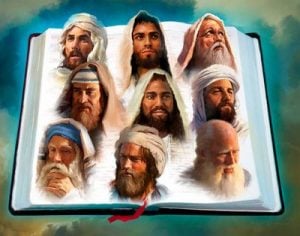
Image © Lars Justinen at Goodsalt.com
Another way in which God has spoken to humanity is through the prophets—individuals whom He has chosen as His spokespersons. For example, God spoke to Noah, Abraham, Moses, and Daniel, revealing His will for His people. At their core, God’s prophetic messages are a reminder that He has not forgotten His children and is still with them. And though some of the prophets wrote what has come to us as Scripture, others never wrote any books of the Bible.
However, many of the prophets’ words were communicated through Scripture (2 Timothy 3:16-17). The Bible is a revelation of God Himself. It is through His words that we learn who He is, see His relentless love, and discover His guidance for how we are to live.
Moreover, it is through the Bible that we understand who we are, where we came from, and where we are going. There we find God’s purpose for our lives.
But the most effective way in which God has spoken to us is through Jesus Christ, who, of course, is revealed to us in the Bible. As God sought Adam and Eve in the Garden of Eden, so Christ came to “seek and to save that which was lost” (Luke 19:10). “ ‘He who has seen Me has seen the Father,’ ” Jesus declared (John 14:9, NKJV). Through His life, death, and resurrection, Christ fulfilled the promise given to Adam and Eve in Eden. He came and died in our place so that we may have eternal life through Him.
After Jesus’ ascension to heaven, the Holy Spirit has continued to guide us “ ‘into all the truth’ ” and to speak to us of “ ‘what is yet to come’ ” (John 16:13, NIV).
How much comfort do you get from knowing that Jesus, His love, His character, and His self-sacrifice reveal to us what God the Father is really like?

I am not sure God is all that good at choosing people to be his spokespersons. In the short list given in today’s lesson we have, a person who got so drunk, he was an embarrassment to his family, a nomadic farmer with two wives and two concubines, a person with a privileged upbringing who thought he was above the law, and an academic. And if we look further, we find all sorts of weird men and women, who we call prophets. I mention this, not to sow seeds of distrust on prophets but to point out that God uses people we would probably trust the least to speak for him. His view of the bona fides of a person to carry his message is different to ours.
There is also another issue not mentioned in the lesson that is important to this discussion. Not all the prophets lived long lives of prophetic utterances. Some of them had only one message, and it wasn’t about foretelling the future.
We should consider that there is no stereotype for prophets. God speaks in different ways through different people. It is his choice, not ours.
There is another side to “the coin” Maurice ; prophets must be evaluated and continued to be evaluated (eg.Balaam).
Whilst they are not expected to be faultless, their lives must be distinctively Christian and their teachings must be aligned to the Scriptures.
Whilst not all prophets prophesy, because some can be classed as teaching prophets, those who do; their prophecies must be fulfilled, accurately as predicted.
The prophetic gift was not given to glorify self or a medium by which one can become wealthy. It was given as a guide to His church that it may be strenghtend, empowered and protected on its pilgrim journey.
Hebrews 1:1-2 says that, at different times in history, God spoke to mankind in different ways. Why did God have to change how He communicated with humanity? Did different generations need different ways to grasp God’s messages? Over the years, God developed ways of revealing Himself and the plan of salvation to humanity. God is in full control of human history, and He is the author and finisher of our salvation. Jesus is the climax of God’s revelation to mankind. The progressive revelation of God teaches us some valuable lessons:
1. Our spiritual growth is progressive. He who started good work in us will see it to completion (Philippians 1:6). All we need is to trust God with our lives.
2. In our generation, God will reveal all that He wants us to know. We should not try to impute meaning to what God has not revealed. We should not speculate about the Word of God.
3. God will never change, even though His methods of revelation change. “For I am the LORD, I change not…” (Malachi 3:6)
4. We should live our lives according to what God has revealed to us (Luke 12:48).
5. God’s timing is the best time. God owns the time, and we should not regret, “Why didn’t God reveal this earlier?” God is faithful all the time.
“Yet God has made everything beautiful for its own time. He has planted eternity in the human heart, but even so, people cannot see the whole scope of God’s work from beginning to end.” (Ecclesiastes 3:11, NLT)
Today, God communicates with us primarily through Scripture, the Holy Spirit, and the life and teaching of Jesus Christ revealed in His Word. The Bible remains the authoritative and reliable foundation through which God reveals His character, His will, His promises, His correction, and His guidance. The Holy Spirit helps believers understand and apply God’s Word, bringing conviction, wisdom, comfort, and direction (John 14:26; John 16:13). God may also use other people—pastors, teachers, mentors, family members, or fellow believers—to encourage, challenge, correct, or guide us, but their words must always be tested against Scripture (1 Thessalonians 5:20–21; 1 John 4:1).
God’s communication today, therefore, is not primarily about searching for mysterious signs or expecting a new revelation that contradicts Scripture. Rather, it is about learning to recognize His voice through what He has already revealed. Hebrews 1:1–2 reminds us that God has spoken ultimately and decisively through His Son. When God speaks through His people, circumstances, wisdom, or the prompting of the Holy Spirit, these should lead us toward the truth of Christ and remain consistent with Scripture. God still speaks because He still desires relationship—He wants His people to hear, understand, respond, and walk with Him.
1 Cor. 1:27 summarizes God strategies in choosing unlikely individuals to speak through. This is probably for at least a couple reasons. First, this way God gets the glory. Secondly it keeps the messenger from becoming the message.
The prophets weren’t perfect people but they wanted to lead others closer to God. Too often we set these people up on pedestals and can elevate them to the same level as Jesus. This is wrong. They were merely messengers of the Messiah. I guess that God chose flawed people because with the exception of Jesus, that is all that he had to choose from.
“Man looks at the outward appearance, but the Lord looks at the heart”. 1 Samuel 16:7
Could one consider all by the Holy Spirit inspired knowledge to be ‘prophetic’? Can, as a general rule regarding the spiritually revealed ‘knowledge and understanding’ – regardless whether it is an outright ‘prophecy’, a ‘declaration’, or an ‘instruction’ -, be considered ‘prophetic’?
If this is an acceptable understanding, then all writings of our Scriptures could be considered ‘prophetict’, not just outright ‘prophecies’. In our day and time, ‘revelations’ provided by the Holy Spirit to all who believe, could then, when considered in this light, be a continuation of the inspirationally provided messages conveying the Will of God to His People in the Old Testament times.
Maybe ‘prophets and prophecy’ is defined using a too narrow focus. Consider God’s last Covenant with man provides that all mankind has the capacity to be instructed in righteousness by the Spirit of Truth. Jesus being the Son of God and following His Message reveals more Truth! I hold this to be by the Holy Spirit of the Trinity. He reveals God’s Truth to all – a form of prophecy – to benefit the individual and others through us.
I understand that the Word of God, in its broadest application/sense, is given to individuals for the purpose of revealing God’s ‘Will and Way’. In a biblical sense, God’s Truth, Will, and Way as revealed by the Holy Spirit, is given for the individual’s benefit, and, when shared in word and deed, benefits all. The purpose of prophecy is to know God’s Will and Way. Therefore, all of God’s Word can be understood as ‘prophetic’ in the broadest sense of the ‘word’ – Acts 2:17-18; 2Tim.3:16-17.
Today, God rescued me through nature. What is the probability of a black bat falling right in front of you inside the house that you’ve lived in for 20 years and never witnessed that? Well, it happened to me this afternoon. And the message was clear: “Fear not, I am with you”! I grabbed a piece of cloth, grabbed the bat, and took it outside. When we meet God, fear becomes compassion, and love sprouts!
It seems like the lesson is urging us to believe that since sin God only speaks to us through prophets. It does depend on how generous our definition of prophet is, but just now I thought of a number of people who God spoke directly to that I wouldn’t consider prophets – Hagar, Gideon, Manoah and his wife, Rebekah. Yes, it was the Angel of the Lord who spoke to them but I think there’s a lot of evidence that the Angel of the Lord is the preincarnate Christ.
This does not take away from the ministry of the prophets, but it does leave me to believe that God does not “need” prophets to talk to us. It seems more likely that He uses prophets when we are unwilling to listen to Him. There’s some food for thought there.