
Wednesday: Female Prophets and Young Pastoral Associates

Daily Lesson for Wednesday 21st of October 2026
Read Luke 2:36-38 and Acts 21:9. What do these passages tell us about female prophets?
In Old Testament times, God called both men and women to be His messengers. In New Testament times, there is clear evidence of female prophets. Anna was the first one called a “prophetess” in the New Testament. She is someone who, in her full-time ministry, “served God with fastings and prayers night and day. And . . . she gave thanks to the Lord, and spoke of Him” (Luke 2:37-38, NKJV).
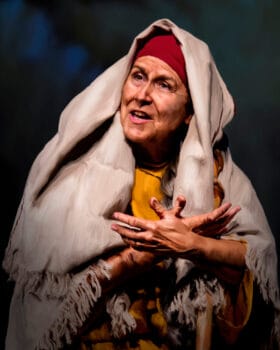
Image © Deb Minnard at Goodsalt.com
Acts 21:9 says that Philip had “four virgin daughters who prophesied” (NKJV). New Testament historians, such as Eusebius, have found later texts that mention where they possibly lived, and then were buried. Either way, what we do see are women, most likely young women, who have the prophetic gift. We don’t know exactly what they prophesied or the extent of their ministry. One thing, however, that we do know about these young women with the prophetic gift: none of their prophetic words made it into the canon, the Bible. That is, like many others, they were noncanonical prophets, true prophets whose words, writings, whatever, were not made into biblical books.
In addition to women prophets, young pastors worked in close association with apostles. Apostles mentored young leaders for ministry. Paul, for instance, addressed Timothy as “a true son in the faith” (1 Timothy 1:2, NKJV; see also 1 Timothy 4:12). Paul taught Timothy the basics of pastoral ministry. He states concerning his calling: “This charge I commit to you, son Timothy, according to the prophecies previously made concerning you, that by them you may wage the good warfare” (1 Timothy 1:18, NKJV).
In Titus 1:4, Paul introduced Titus as “a true son in our common faith” (NKJV). Paul gave Titus the task of appointing leaders for the believers in Crete, a challenging congregation. He offered young Titus spiritual counsel on how to approach this important responsibility, then concluded: “Speak these things, exhort, and rebuke with all authority. Let no one despise you” (Titus 2:15, NKJV).
|
Young, old, male, female—we all can have a role to play in God’s work. What is your role, and how can you do even more? |

One of the issues we face when we talk about prophets and prophecy is that we look at the canonical Biblical prophets and sometimes think their whole lives wer devoted to prophetic utterances. In fact, for some of them, their only prophetic action took only a moment in time.
The story of Simeon and Anna and their action in the temple is a case in point. Two old people, who some of us would have probably dismissed as babbling oldies, a bit past it, with the insight of the Holy Spirit, recognised Jesus. Here is the story as Luke recorded it:
Affirming Jesus was the only recorded prophetic event for Simeon and Anna. Here is the question for us: Have we recognised Jesus? Do we affirm his presence in out lives? It is not about getting a record in history; it is about recognising Jesus.
Maurice – thank you for presenting the entire Scripture passage for us to read; it brought tears to my eyes when seeing Simeon holding the baby saying: “Lord, now I can die content! For I have seen Him as you promised me I would. I have seen the Saviour you have given to the world.”
You pose a very valid and urgent question: “Have we recognized Jesus? ….” Yes, indeed, as Christians we desperately need to affirm His presence in our Life. Oh, how I wish for us to be as excited and moved as Simeon and others who testified to the Glory of God having come into their life through the power of the Holy Spirit; receiving His Light which brings Salvation.
I feel the same way as you do when we read the version brother Maurice shared with us. It thrills my heart that the Holy Spirit brought them all together at the right moment to praise the Lord for His precious Son.
The prophecy related there described His future sufferings by the hand of the religious leaders, but also described His joy that was set before Him. There was so much power in that moment. And it was just for a little, baby boy.
As a mother it encourages me to appreciate the little moments with my children. They are ages 11, 9, and 2. And they all need tender care and shepherding so they can grow in wisdom and stature just like Jesus.
The story of Anna the prophetess (Luke 2:36-38) in today’s lesson caught my attention. A few details are revealed about this woman:
– She was a prophetess
– She was a widow
– She was of advanced age
– She was a devoted worshipper
– She recognised Jesus when He came to the temple with His parents
From this Bible passage, a few lessons jump out in my reflection.
1. Anna’s story is a reminder to women believers that a life devoted to God is never wasted, that spiritual influence is not limited by age or social status, and that women have an important part to play in proclaiming God’s saving grace.
2. The story is an encouragement to women believers and men too. Whether you are widowed, divorced, single, childless or experiencing a difficult season, your circumstances do not determine the limits of your spiritual usefulness.
3. Another lesson that comes through the story of Anna, particularly for us men, is, “underestimate the spiritual power of a devoted woman.It a reasonable to remind ourselves as men believers never to assume that spiritual insight, wisdom or usefulness to God belongs more naturally to men than to women.
4. Anna recognised the significance of the moment when Jesus was brought into the temple (Luke 2:38); she gave thanks to God and spoke about the Redeemer. This reminds us that the essence of worship, biblical study, prayer and ministry is not simply to maintain religious routines. It is to know God, recognise His saving work and respond faithfully. There was a crowd of worshippers at the time, but they failed to “recognise the significance of the moment”. We can be in the house of God and yet fail to recognise God. What a tragedy! Dear Jesus, please have mercy upon us.
Omwenga,
Good day!
Thank you for sharing!
Very deep beloved.
💜🙏🏾 blessings!
Omwenga, what a lesson to share with us all, Thank you for sharing. May God continue to bless you🥰
Young, old, female, male, black or white!!
None of that matters in the plan of Salvation.
What matters is a willing heart and mind that God can use to
reach others for His Kingdom.
The only pertinent characteristic that we need to possess is a willingness to be used by God!!!
Maurice’s comment on the role of Simeon and Anna in affirming that Jesus Christ indeed is Lord truly guides us to be anchored in divine wisdom fixing our eyes on Jesus laying bare our lives to the expression of his love so as to willingly submit ourselves to the working of the Holy Spirit to humble us and equip us for His Ministry.This work of the Ministry that transforms us and others around us to dedicating ourselves to Holy living through earnest worship day and night like Anna the prophetess whose life around the temple led to the sight of the son of man and the presence of Holy Spirit in her life culminating in Christ affirmation which is but the realization of the perfect will of God working in our lives leading to the edification of the body of Christ who have diversities of gifts to reveal the fullness of Christ.
Praise God from whom all blessings flow🙏🏾
But here again, and even in the prophecy of “Joel,” that we use to affirm Ellen G. White as “Our End Time Prophet,” Joel 2:28,29, the Scriptures here are clearly in “Plural Form.” But Ellen G.White, was “Only One Messenger of God,” and, while her writings are still with us, she has been gone for about 106 years.
What happens when we are willing to have God use us to develop characteristics in our character, as time goes by? 2 Peter 1:5-8, gives us a list of characteristics that form a good character. Ephesians 3:16-19. Gives what is going on as the transformation and development takes place.
Are not some of those today who preach, teach, and write books about the word of God illuminating the Bible, having God as their guide in word and character, live prophets of God? Yes, young women and young men too. Yes, even ones who have had a return to the God of our fathers and mothers.
Yes, indeed! I believe the gift of prophecy is alive and active in the church today – just as it was in ancient times. Not all “prophets” predict the future, and not all “prophets” speak to the whole church at once. Yet today, the internet lets people speak God’s truth to more people at once than was possible for even a recognized “prophet” in New Testament times, or even in Ellen White’s time.
God isn’t stuck in the 19th Century. He doesn’t need the General Conference to recognize current “prophets.” It was difficult enough to get Ellen White recognized in her time.
Today, we can hear His voice speak through His messengers if we are willing to listen. But we probably won’t recognize current prophets if we are not familiar with old-time prophets, including Ellen White. So we need to start by studying the Bible and the messages of Ellen White so we have the discernment to recognize the difference between those who speak for God and those who are comfortably embedded in the institutional church and don’t want to be made uncomfortable.
So I have to ask myself: How much time am I spending learning to recognize God’s voice in what He has already revealed?
Inge – may I offer that it is not so much about ‘how much time you are spending learning to recognize God’s voice in what He has already revealed’. It is the depth and breadth you allow your heart to embrace when seeking to discover and accepting the Truth He reveals.
How do you get “depth and breadth” without time?
You don’t. ‘Depth and breadth’ – being known and knowing – are the hallmark of the work of the Holy Spirit. They can be experienced in a moment of time, or revealed as time passes.
John – thought provoking post.
While I agree with the importance of Spirit-directed living witnesses sharing the Gospel in varying applications, I think it is important to recognise distinctions the Bible makes (Ephesians 4:11; 1 Corinthians 12:28-29; Deuteronomy 18:20-22).
Godly characteristics may be necessary for a trustworthy prophet, but they do not make someone a prophet. Scripture would more naturally call these people: teachers, pastors, evangelists, or faithful witnesses – all vitally important roles.
While using the label for such people may be well-meant, it has a tendency to blur the distinction Scripture makes and cause confusion about what prophecy is. At the very least, the biblical term “prophet” implies receiving direct words from God which Scripture holds to a higher standard.
Very well said, Randall. I appreciate the great addition and clarification of prophets to my post. God bless you. I enjoy reading your posts.
A glance at the entire lesson for the week reveals that the writer did not address the fact that, although the roles of apostle and prophet were distinct, they were not necessarily mutually exclusive. The New Testament shows that spiritual gifts and ministerial functions could overlap. Although apostles and prophets are identified as distinct ministries within the church, some apostles also received visions, revelations, and prophetic messages. John provides the clearest example, but Peter and Paul likewise exercised the prophetic gift. Thus, possessing the prophetic gift did not cancel one’s apostolic calling, nor did being an apostle prevent one from functioning prophetically.
This is an important point when comparing Old Testament prophets, New Testament prophets, and apostles. The prophetic gift continued in the New Testament church, but it operated within a broader distribution of spiritual gifts and was not confined exclusively to those who held the recognized role of prophet.
Jesus has called all of us to be a kingdom of kings and priests unto God and his Father.Rev1:6. The Spirit give gifts unto mankind dividing as He will no gender was mentioned. Whosoever God chooses he equips. BLESS GOD!
“The world has yet to see what God can do with a man fully consecrated to him”—was spoken to evangelist D.L. Moody by British revivalist Henry Varley in 1872 or 1873. Deeply moved, Moody famously replied, “By God’s help, I aim to be that man.”
While Ellen White did not pen this specific quote, the theological concept of full consecration is a major theme throughout her writings. In works like Steps to Christ, she frequently discussed the transformative power of a fully surrendered life. Similar to Moody’s sentiment, she wrote that “God will use men who are willing to be used” and that lasting results do not always depend on the most brilliant or talented individuals, but on those consecrated to the Master.
This is the basis by which God chooses to use a person, man, or woman; their level of consecration, devotion and surrender. God is far less concerned about our ability than our availability. It is God who qualifies those he calls. There is no limit to what God can accomplish through a person that is consecrated to him. By His Grace, we should all want to be that kind of person.
Tim, that is a powerful truth, and I believe the life and ministry of Ellen White provide a remarkable illustration of it. God chose a young woman with very limited formal education, frail health, and from a humble background, yet one who was willing to surrender herself to His calling. Through that surrendered life, He accomplished far more than human qualifications alone could have achieved.
Ellen White’s life demonstrated what God can do through an otherwise ordinary and comparatively uneducated person who is fully committed to Him. From that unlikely beginning came a ministry that spanned decades, produced an extraordinary body of Christian counsel, helped guide a developing worldwide church, and continues to influence lives around the world.
It should also keep us from saying, “God cannot use me because I am not educated enough, talented enough, articulate enough, or important enough.” The question is not merely, “What am I capable of doing for God?” but rather, “What can God accomplish through me if I am completely surrendered to Him?”
That is the challenge for each of us. By His grace, may we be willing to be that kind of person.
” John 14:16
[16]I will ask the Father, and he will give you another Helper to be with you forever.” – The Holy spirit promise
Does this mean that the holy spirit wasn’t available/ present during the old testament times 🤷🤷?????
Good question! No, the Holy Spirit was present in the Old Testament. He was the power behind the patriarchs and prophets. The Holy Spirit was poured out in greater measure on Pentecost because there was a large number of disciples in one accord seeking to grow and establish the early church.
What stuck out to me in particular was the first passage, found in Luke 2:36-38. Anna, the prophetess, was a woman who was widowed, advanced in age, which would have been considered as low on the social strata. Yet, God used her mightily. Though many would consider her as the lowest of the low, God utilized her gift of speaking to reach “all who looked for redemption in Jerusalem”. She exhorted, comforted, and edified the people of God. Anna was not simply cast aside to work with only the women, or children, but God used her to minister to all of Jerusalem, the seekers who wanted to hear a word from the Lord. Anna was portioned spiritual authority from above and with her profile, this was revolutionary. I wonder how we can apply Anna’s story to how we see leadership in the church today.
I guess the question “What is my role on this planet?” is one of humanity’s most sought-after questions. What is my role? I may never find the full answer, but as I search, I try to do only good for those around me.
I guess it’s because I am going through a challenging time with family circumstances and have had to step back from some church responsibilities, but I really wish the lesson authors would think before they write questions like “What is your role and how can you do even more?” Some of us cannot do more and those of us prone to wanting to please or feeling guilty will think we should even though we can’t. Perhaps there are some that should do more, though more isn’t always better anyway.
I feel deep compassion for the burdened who feel God always wants more. Matthew 11:29,30 reminds us, however, that Jesus burden is light and that He offers rest.
Christina, I was moved by your post, and you raise an important point that is often neglected. It is far too easy to use guilt to motivate action within the church.
The question asked by the lesson will always be valid but needs qualification. Exactly what is it that God calls us to do? The answer is surprisingly simple – represent Him. That’s it, nothing more. Of course, how we represent Him is the key, and unsurprisingly, it does not look the same for everyone because we are all different.
In Matthew 16:24, Jesus invites us to take up our “crosses” and follow Him. The thing that is sometimes overlooked by this invitation is what Jesus didn’t say. He didn’t ask us to take up someone else’s cross; He didn’t even ask us to take up “His cross” – it is “your” cross. In other words, each of us has a God appointed responsibility and privilege to take up our own “crosses” and in doing so present a picture of His way of living to those we interact with. It is when we do this – without worrying about the “crosses” other carry (see: John 21:21,22), that we discover that his burden is indeed light (Matthew 11:29,30).
Steps to Christ in the chapter, The Work and the Life, the balance is nicely presented. “[T]o engage, to the extent of our ability…” (80), “Everyone, to the extent of his talent and opportunity…”(81), and especially, “They have only to go forward quietly, doing faithfully the work that God’s providence assigns, and their life will not be in vain” (83).
At the moment your faithful work is dealing with the challenges of your family – I know, because I also have some similar challenges. That means we need to change focus and work in a different part of the vineyard – it’s all good, it is necessary work that needs to be done.
Finally, James White died prematurely in 1881 at age 60, quite likely because he worked himself to death. This was a great blow to Ellen White, and the early church. We not only have a responsibility to others, but we have a responsibility to ourselves – we need to rest well to work well. Failure to do this usually doesn’t end well. As in most things – it is about balance… while keeping our focus on our wonderful Creator God with a grateful heart.
God bless to you and your family.
Christina, I really appreciate your perspective, and I trust that others with a conscientious spirit find it helpful.
On the other hand, lesson writers keep average readers in mind, those in the Laodicean, self-satisfied condition. It is difficult to write in a way that fits every reader.
You remind us to ask the Holy Spirit for discernment in applying the lessons to ourselves. I also really appreciate Randall Ibbott’s comment.