
Thursday: For Our Admonition

Daily Lesson for Thursday 12th of November 2026
All these accounts in the Old Testament, however sordid and sad, were given for a good reason: ideally, so that we should learn lessons from them about what happens when we rebel against God.
Read 1 Corinthians 10:6-12. According to the apostle Paul, why did God inspire prophets to write what they wrote in the Bible?
In these verses, Paul draws a straight line connecting the past and the present, connecting ancient Israel and the church, of which we who have accepted Jesus as Lord and Savior are now a part (Galatians 6:14-16).
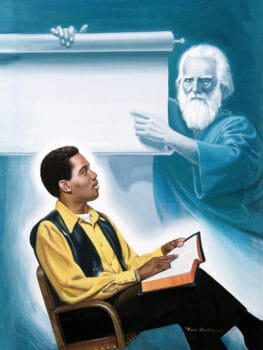
Image © Review & Herald Publishing at Goodsalt.com
Paul makes clear that the past record of humanity’s experiences with God—be they good or bad—are not to be overlooked or discounted. In fact, God thought it so important that He codified it as examples “to the intent that we should not lust after evil things as they [our forebears] also lusted” (1 Corinthians 10:6, NKJV). In other words, the past is often prologue to the future. The past often sets the context for what is presently happening and what will happen in the future.
In effect, God is saying that we are not doomed to repeat the mistakes of past generations, if only we heed the admonitions of Scripture and the prophetic messages sent by Him to us through His prophets. If we listen, learn, and obey, our lives will be established, and we will prosper (2 Chronicles 20:20). For some, even spiritual prosperity has been defined by having nice homes, cars, clothing, and other material possessions. While God promises to take care of our needs, He also wants our souls to prosper, even as we prosper in other ways (3 John 1:2). But true lasting spiritual fullness in the Christian life requires obedience to God’s messages.
God does not waste words. When He speaks, His Words are eternal. Their power and efficacy never end (Isaiah 40:8). They are given for our admonition, “upon whom the ends of the ages have come” (1 Corinthians 10:11, NKJV). If that were true back then, how much more should those words apply to us today?
|
When you read accounts in the Bible of rebellion and disbelief, what lessons can you draw from them that could help you avoid doing something similar? |

It’s been said that unless we learn the lessons of history we are doomed to repeat them. Yes, the good and the bad are written for our admonition to encourage us to walk in the ways of righteousness. This also gives credibility to the veracity of the scriptures. Think about it, if you wanted to fabricate a “Holy book” you would only write about the good, the victories. You definitely wouldn’t write about the bad things, the losses, the moral failures. You would sanitize it to reflect an idyllic utopian state. However, the Bible writers didn’t “whitewash” things, they told it as it was, as they were inspired by the Holy Spirit.
We can learn a lot from both the victories and the losses, the obedience by faith, as well as the disobedience. The fallen sinful nature of mankind hasn’t changed. The more things change the more they remain the same. We may just have found different ways to rebel, but the carnal heart still remains at enmity against God. (Romans 8:7) Experience still remains the greatest teacher. May we learn from the experiences of others so that we can emulate their victories and avoid repeating their failures.
Throughout Scripture God is constantly calling His people to remember what was written or said in the past. For instance:
– Noah remembered God’s covenant (Genesis 8:1, Genesis 9:15-16)
– Abraham remembered God’s promises (Genesis 12:2-3, Genesis 15:5-6)
– Israel was told to remember their wilderness experience (Deuteronomy 5:15, Deuteronomy 8:2).
– Kings were required to read God’s Law and rule accordingly (Deuteronomy 17:18-20).
– Prophets repeatedly said, “Remember the Law of Moses.” (Malachi 4:4)
Jesus reminded His listeners to, “Remember Lot’s wife” (Luke 17:32).
– Peter wrote that he intended to “always remind” believers (2 Peter 1:12-15).
– Jude reminds believers of Old Testament judgments (Jude 5, 7, 11).
– Revelation repeatedly calls churches to remember what they had received and heard (Revelation 2:5, Revelation 3:3 , Revelation 2:10).
Now Solomon the wise man made a conclusion which is profoundly important for us all who read the Word of God.
“That’s the whole story. Here now is my final conclusion: Fear God and obey his commands, for this is everyone’s duty” (Ecclesiastes 12:13 , NLT).
Now it is instructive to keenly hear Paul’s warning, “Now these things happened to them as an example and warning [to us]; they were written for our instruction [to admonish and equip us], upon whom the ends of the ages have come” (1 Corinthians 10:11, AMP).
Time has drastically changed when a reminder of the “end of time has come” made many believers to sober up. It is so sad that we have become impervious or insensitive to this sound warning. As a matter of fact, human life is “mist”, Scriptures says.
“You do not even know what will happen tomorrow! What is your life? You are a mist that appears for a little while and then vanishes” (James 4: 14)
Now Let Us Hear This!
“Lord, remind me how brief my time on earth will be. Remind me that my days are numbered- how fleeting my life is. You have made my life no longer than the width of my hand. My entire lifetime is just a moment to you; at best, each of us is but a breath” (Psalm 39:4-5 , NLT).
The lessons that we(2nd person) can draw from the Israelites is 3 fold.
First, they disobeyed Solomon their king, as he said in, Ecclesiastes 12:13, that the conclusion of the whole matter is that we love God and keep His commandments. Yes, I know I said this for Wednesday’s blog train, I wanted to repeat it.
Second, they did not repent, instead they looked to the prophet who pleased their ears.
Third, they loved evil rather than God, yes, rather than believing in God and following through with their belief. John 3:19.
The experiences of the children of Israel recorded in the Old Testament were not merely historical events and good stories they were written for our admonition, instruction and as spiritual warnings to us. 1 Corinthians 10:6, 11 Paul notes that these things happened as examples to teach us not to repeat their mistakes. Although the Israelites experienced the same beginning, witnessed God’s mighty deliverance from Egypt and shared in His provisions, not all remained faithful to the end. Many israelites fell in the wilderness because of disobedience and unbelief. Similarly, our Christian journey begins with the same invitation to salvation through Christ, calling us to remain faithful throughout the journey. Their experiences is a reminder that a good beginning does not automatically guarantee a faithful ending. We must learn from their failures and guard against the sins that separated them from God (Hebrews 3:16–19; Romans 15:4).
The emphasis is that as much as the Israelites experienced God’s deliverance and spiritual privileges, God was not pleased with many of them, and their bodies were scattered in the wilderness (1 Corinthians 10:1–5). 𝗧𝗵𝗲𝗶𝗿 𝘀𝗮𝗹𝘃𝗮𝘁𝗶𝗼𝗻 𝗳𝗿𝗼𝗺 𝗘𝗴𝘆𝗽𝘁𝗶𝗮𝗻 𝗯𝗼𝗻𝗱𝗮𝗴𝗲 𝗱𝗶𝗱 𝗻𝗼𝘁 𝗺𝗲𝗮𝗻 𝘁𝗵𝗲𝘆 𝘄𝗲𝗿𝗲 𝗳𝗿𝗲𝗲 𝘁𝗼 𝗹𝗶𝘃𝗲 𝗶𝗻 𝗱𝗶𝘀𝗼𝗯𝗲𝗱𝗶𝗲𝗻𝗰𝗲. 𝗜𝗻 𝘁𝗵𝗲 𝘀𝗮𝗺𝗲 𝘄𝗮𝘆, 𝗼𝘂𝗿 𝗻𝗲𝘄 𝗯𝗶𝗿𝘁𝗵 𝗮𝗻𝗱 𝗽𝗿𝗼𝗳𝗲𝘀𝘀𝗶𝗼𝗻 𝗼𝗳 𝗳𝗮𝗶𝘁𝗵 𝘀𝗵𝗼𝘂𝗹𝗱 𝗹𝗲𝗮𝗱 𝘂𝘀 𝘁𝗼 𝗮 𝗹𝗶𝗳𝗲 𝗼𝗳 𝗼𝗯𝗲𝗱𝗶𝗲𝗻𝗰𝗲, 𝗵𝗼𝗹𝗶𝗻𝗲𝘀𝘀 𝗮𝗻𝗱 𝗽𝗲𝗿𝘀𝗲𝘃𝗲𝗿𝗮𝗻𝗰𝗲. We must not take God’s grace for granted or assume that yesterday’s spiritual experience guarantees tomorrow’s faithfulness. Paul therefore warns of living according to the flesh which leads to death, but living in the Spirit meaning putting to death the deeds of the body, we will live (Romans 8:13). The history of Israel stands as a solemn admonition: 𝗚𝗼𝗱 𝗰𝗮𝗹𝗹𝘀 𝘂𝘀 𝗻𝗼𝘁 𝗺𝗲𝗿𝗲𝗹𝘆 𝘁𝗼 𝗯𝗲𝗴𝗶𝗻 𝘁𝗵𝗲 𝗷𝗼𝘂𝗿𝗻𝗲𝘆 𝗼𝗳 𝗳𝗮𝗶𝘁𝗵 𝗯𝘂𝘁 𝘁𝗼 𝗿𝗲𝗺𝗮𝗶𝗻 𝗳𝗮𝗶𝘁𝗵𝗳𝘂𝗹 𝘂𝗻𝘁𝗶𝗹 𝘁𝗵𝗲 𝗲𝗻𝗱 (Matthew 24:13; Hebrews 3:12–14).
The Bible is a combination of absolute commands and a series of case studies. On the one hand we have rules such as the Ten Commandments, and the summary texts, Love God and your neighbours. These are the foundational axioms of Christian ethics and morality. On the other hand we have stories of good and bad behaviour and how they predicated outcomes for God-believers. In some respects, it’s a bit like English “Common Law” which lies at the foundation of the legal systems of many countries like Australia and the United States of America.
One feature of this system is that when new situations arise, we apply and adapt the original law and previous cases. This is how the New Testament Church worked when they considered circumcision and dietary law.
For modern Christian applications we can use that principle in defining the ethical and moral boundaries of modern technology and even Artificial intelligence.
The Bible is quite clear about this principle:
It makes sense to understand the principles of both the codefied law and the case studies as we face the complexities of the modern world.
It has been said,
“Any fool can learn from his own mistakes. It takes a wise man to learn from the mistakes of others. “
One of the most sobering lessons in Scripture is that God’s people can read about the failures of previous generations and still repeat the very same mistakes.
We condemn Israel for rebelling against Moses, the religious leaders for persecuting the prophets, and the people for rejecting Jesus. Yet, are we willing to examine whether we are guilty of similar behavior today?
Why do we fail to learn from history?
Perhaps it is because we recognize rebellion in others but struggle to recognize it in ourselves. We sometimes reject the messenger because we dislike the message. Pride makes correction difficult, and familiarity with truth can create spiritual complacency.
This should cause us, as Seventh-day Adventists, to examine our attitude toward the prophetic gift. While Scripture remains our ultimate authority, we must be careful not to dismiss, discredit, or selectively ignore the counsel given through Ellen G. White simply because it challenges us or makes us uncomfortable.
The tragedy would be to study the mistakes of those who rejected God’s messengers, condemn their actions, and then repeat their behavior while believing we are spiritually better than they were.
Perhaps the question we should be asking is not, How could they have rejected God’s messengers? but rather, Am I willing to hear and accept God’s message, even when it exposes my shortcomings and calls me to change?
Q1 asks based on the verses, why is it written.
1 Corinthians 10:11 says it is written for our admonition. For us in the last days. And then 1 Corinthians 10:12 tells us to be careful of being not to stand on our own unless we fall.
What does presumption look like in a believer, in a church? How is presumption different from confidence in God? This could be treating grace as a license. “I can do this once; I can always repent later”. Or maybe it is spiritual drift dressed as maturity. Not studying because I heard it all, stop praying because I am fine, skipping fellowship because I am strong enough. Sounds like Laodicea. I say these because I have done them all in the past. Which only led to me backsliding.
If my story is written in the books of heaven, what do I change this week? I won’t pretend my condition; Christ will see it anyway, and I will cling to Christ. The One keeping the record is the same One who hung on the cross. He is not a hostile auditor, but our advocate.
What witness will I be in that book? What will my children, coworkers, church family see. Keep claiming Christ is the victory, his grace is sufficient for me.
Israel wanted stuff done on their schedule. I will seek God to help my patience.
And like 1 Corinthians 10:13 says, I with the help of the Lord, will take the exit when God provides it.
Well said. Good explination of presumption.
Yes, the Word of God – the Testimony of His Son, Jesus Christ – has been preserved in writing for our admonition. It is the testimony of those inspired by the Holy Spirit to speak it in their time. But what is the core-message of God’s admonishment toward mankind? Is it not to love Him with all our heart and mind; that by this we will avert all evil?
I want to answer the lesson’s question “what lessons can you draw from them [biblical accounts] that could help you avoid doing something similar?” Am I being ‘rebellious’ – going to far – when ‘feeling uncomfortable’ with the ‘wording’ used to ‘inspire’ the need for ‘obedience’? The lesson’s author uses words like ‘rebel’, ‘not lust after evil things’, ‘listen, learn, obey’ – ‘obedience to God’s messages’. But is this all we can learn from the ‘accounts in the Bible?
We cannot only look at one side of the ‘coin’ which represents God’s interaction with man. What about learning to trust God, that He is long-suffering, to understand that He is always available to strengthen us in our faith, to teach us spiritual Truth powerful enough to overcome all the temptations present in this world?
What does the other side of the coin represent? Every time we speak of His Justice we will also need to speak of His Mercy which continously draws us closer to Him. The works of ‘obedience’ in and off themselves do not safe us if they are not inspired by the love we have for our God to let His Light shine through us.
Is it not the power of the Holy Spirit of God entering our heart and mind which turns them away from seeking ‘evil’? Is this not what saves man? Then, the fruit of ‘rebellion’ is replaced with Love, forgiveness, compassion – righteousness. When we love God unconditionally, by His Grace and Mercy, the Holy Spirit brings about His fruit within us! Only loving God more than anything else reverses our heart and mind’s ‘rebellion’. More than anything else, we need to TRUST His Love for us by LOVING Him – and He will make our path straight. Prov.3:5-7; Psalm 91; Psalm 91:14-16
Amen! Amen! Love and trust Him. He does the work in and through us. Learning to lean, learning to lean. I’m learning to lean on Jesus. Thank you DearHeart for the reminder. Blessings all around!
I have to be thankful to God because He is always trying to bring me back to the right path. He uses His Word, His Spirit, and other people to encourage me. Hopefully, in my choices, I may influence others to do the same!
☀️🙏 𝐀 𝐌𝐎𝐌𝐄𝐍𝐓 𝐖𝐈𝐓𝐇 𝐆𝐎𝐃 ❤️
_Heavenly Father, as we continue with this day, remember every heart carrying silent struggles. Bring healing to the sick, provision to the needy, peace to troubled families and new opportunities to those searching for a breakthrough. Let nobody lose hope before their blessing arrives. 🙏❤️_
*📖 Isaiah 41:10 (NIV)*
> “So do not fear, for I am with you; do not be dismayed, for I am your God.”
_May God’s presence go with us throughout the rest of this day._
> Have a blessed afternoon, everyone! ❤️