HomeDailyWhat Was Really Wrong With the Sinai Covenant?    

Comments

What Was Really Wrong With the Sinai Covenant? — 5 Comments

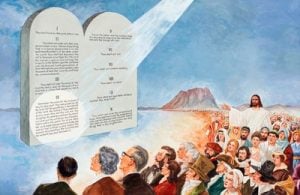
  1. This comment actually is in response to both William Earnhardt’s article “What was really wrong with the Sinai Covenant?” and Inge Anderson ‘s article, “Are the Ten Commandment *The* Law of God?” Both are excellent compositions. You both nailed it, bottom line, the problem was the mentality of the people. “All these things we will do!” Exodus 19:8

    The problem really was that the people weren’t in a loving relationship with God. In fact, they were terrified of him. (Exodus 20 18-19) They consented to obey to appease what they perceived to be an angry and vengeful God. Inge, that fireworks display of “shock and awe” at Sinai terrified the people. They didn’t want God to speak directly to them but through Moses only. They were scared to death of God. Exodus 20:19

    Have things changed all that much today? People reject and deliberately disobey God because they do not know his true character. “God is not someone to be afraid of, but to be a friend of.” Rules without a relationship still lead to rebellion.

    It is impossible to obey God if you don’t perceive him as a God of love. If our perception of him is skewed then our relationship to him will be likewise. The PR department in heaven got the memo that most of humanity was terrified, terrorized, and turned off to what they perceived to be a pagan concept of God. Then Jesus came to clear up the ambiguity.

    “When Jesus came to this world, He came to demonstrate the love of God to all who had heard Satan’s accusations:

    Satan represents God’s law of love as a law of selfishness. He declares that it is impossible for us to obey its precepts. The fall of our first parents, with all the woe that has resulted, he charges upon the Creator, leading men to look upon God as the author of sin, and suffering, and death. Jesus was to unveil this deception. As one of us He was to give an example of obedience. For this He took upon Himself our nature, and passed through our experiences. “In all things He had to be made like His brethren.” Hebrews 2:17.

    The Desire of Ages, p. 24

    Satan in heaven had hated Christ for His position in the courts of God. He hated Him the more when he himself was dethroned. He hated Him who pledged Himself to redeem a race of sinners. Yet into the world where Satan claimed dominion God permitted His Son to come, a helpless babe, subject to the weakness of humanity. He permitted Him to meet life’s peril in common with every human soul, to fight the battle as every child of humanity must fight it, at the risk of failure and eternal loss. . . .

    God gave His only-begotten Son, that the path of life might be made sure for our little ones. “In this is love.” 1 John 4:10. Wonder, O heavens! and be astonished, O earth!

    The Desire of Ages, p. 49

    The Incarnation of Christ revealed to all Creation that God was for us and not against us all along. He is someone to be a friend of, not to be afraid of. He wants to write His law upon our hearts not just that we would obey it, but that we would love it and do it because His Law is a transcript of His character. God so desperately wants to see His image restored in mankind. It is for this reason that Jesus, God incarnate, God in the flesh, stepped into our world with “healing in his wings.” Malachi 4:2

    Indeed Inge and William, when we know God as it is our privilege to do so, then we will be empowered to live out the precepts of the Law of God. Then we will at last love Him with all our being, and our neighbor as ourself.

  2. This lesson has been another opportunity to ask, “What was wrong with the law?” meaning the Sinai covenant, and the same answers are given. However, I submit that there is more to the story.

    First, the covenant was given to the Jews only, and this is a problem for those who want to universalize it to cover others. Second, as Paul tells us so clearly in Galatians, the law was for those “under the law”. It was a school master” to bring people to Christ, but now that Christ has come, nobody is “under the law”. So, you see, it’s not just the fault of those trying to be saved. We are not condemned because we fail to take the law to heart. Even if we did, it would not add to our salvation one iota.

    Non-Jews were never under the law, and Gentile Christians are not to be brought under the Sinai covenant. Yes, we can learn from all religions, especially Judaism, but Christianity does not take its orders from Sinai.

    • Jordan, I must say that while I agree with you on some points, I also disagree with you on others. The Jews were not to think of themselves as exclusive possessors of God’s favor. They were to be God’s ambassadors and missionaries to the non-Jews (Gentiles). It’s interesting that God chose Paul, who was a staunch persecutor of the Christian faith, who was in favor of Judaism as the only true religion. He experienced a radical conversion and became the stauchest missionary to the Gentiles as well as the Jews. He no longer believed that Judaism was the only way to God but that Jesus was. He believed and taught that the Gentiles were grafted into Judaism through faith in the Messiah. (Rom. 2:29; Rom. 11)

      The Covenants are an interesting study in and of themselves. The problem wasn’t with the law, it was with the people believing they could obey it in their own power, and as a means of salvation. Paul addressed that dichotomy between the covenants in Romans 3:19-31 and elsewhere. The Covenant of Grace empowers us to obey the law, not as a means of salvation, rather as a Holy Spirit inspired and empowered expression of appreciation for salvation. The righteousness that God requires is by faith empowered by the Holy Spirit who then writes that law upon our hearts as members of spiritual Israel.

      I found this explanation and summary from AI overview to be both instructive and helpful.
      “Christian theology generally teaches that grace does not nullify the law; rather, it fulfills it by empowering believers to live by its righteous principles, freeing them from the penalty of the law through faith in Jesus, not from its principles. The law reveals sin and God’s character, while grace provides the power (through the Holy Spirit) to live in alignment with God’s will, establishing a “law of Christ” or “law of the Spirit” written on the heart, not abolishing the moral law.”

  3. Paul exalts the 10 Commandments in Romans 7 & 8, while dealing with this very problem you have mentioned. The carnal nature without Jesus is defenseless. God is love, 1 John 4:16; the devil is sin personified, Romans 7:8. Paul says of the human condition without Jesus: (Romans 7:18) For I know that in me (that is, in my flesh,) dwelleth no good thing: for to will is present with me; but how to perform that which is good I find not.” Satan realizes there is a death penalty attached to the law so he says to himself “All I have to do is to tempt them to break just one and my goal to destroy them will be accomplished. Now reread these verses with the new eyes pastor William and Paul are giving us:
    Romans 7:‎‭7 What shall we say then? Is the law sin? God forbid. Nay, I had not known sin, but by the law: for I had not known lust, except the law had said, Thou shalt not covet. ‎‭8 But sin, taking occasion by the commandment, wrought in me all manner of concupiscence. For without the law sin was dead. ‎‭9 For I was alive without the law once: but when the commandment came, sin revived, and I died. ‎‭10 And the commandment, which was ordained to life, I found to be unto death. ‎‭11 For sin, taking occasion by the commandment, deceived me, and by it slew me. ‎‭12 Wherefore the law is holy, and the commandment holy, and just, and good. ‎‭13 Was then that which is good made death unto me? God forbid. But sin, that it might appear sin, working death in me by that which is good; that sin by the commandment might become exceeding sinful. ‎‭14 For we know that the law is spiritual: but I am carnal, sold under sin. ‎‭15 For that which I do I allow not: for what I would, that do I not; but what I hate, that do I. ‎‭16 If then I do that which I would not, I consent unto the law that it is good. ‎‭17 Now then it is no more I that do it, but sin that dwelleth in me. ‎‭18 For I know that in me (that is, in my flesh,) dwelleth no good thing: for to will is present with me; but how to perform that which is good I find not. ‎‭19 For the good that I would I do not: but the evil which I would not, that I do. ‎‭20 Now if I do that I would not, it is no more I that do it, but sin that dwelleth in me. ‎‭21 I find then a law, that, when I would do good, evil is present with me. ‎‭22 For I delight in the law of God after the inward man: ‎‭23 But I see another law in my members, warring against the law of my mind, and bringing me into captivity to the law of sin which is in my members. ‎‭24 O wretched man that I am! who shall deliver me from the body of this death? ‎‭25 I thank God through Jesus Christ our Lord. So then with the mind I myself serve the law of God; but with the flesh the law of sin. ‎‭1 There is therefore now no condemnation to them which are in Christ Jesus, who walk not after the flesh, but after the Spirit. ‎‭2 For the law of the Spirit of life in Christ Jesus hath made me free from the law of sin and death. ‎‭3 For what the law could not do, in that it was weak through the flesh, God sending his own Son in the likeness of sinful flesh, and for sin, condemned sin in the flesh: ‎‭4 That the righteousness of the law might be fulfilled in us, who walk not after the flesh, but after the Spirit. ‎‭5 For they that are after the flesh do mind the things of the flesh; but they that are after the Spirit the things of the Spirit. ‎‭6 For to be carnally minded is death; but to be spiritually minded is life and peace.
    7 What shall we say then? Is the law sin? God forbid. Nay, I had not known sin, but by the law: for I had not known lust, except the law had said, Thou shalt not covet. ‎‭
    11 For sin, taking occasion by the commandment, deceived me, and by it slew me.”
    12 Wherefore the law is holy, and the commandment holy, and just, and good.
    22 For I delight in the law of God after the inward man: ‎‭23 But I see another law in my members, warring against the law of my mind, and bringing me into captivity to the law of sin which is in my members.
    25 So then with the mind I myself serve the law of God; but with the flesh the law of sin. ‎‭1 There is therefore now no condemnation to them which are in Christ Jesus, who walk not after the flesh, but after the Spirit. ‎‭2 For the law of the Spirit of life in Christ Jesus hath made me free from the law of sin and death. ‎‭3 For what the law could not do, in that it was weak through the flesh, God sending his own Son in the likeness of sinful flesh, and for sin, condemned sin in the flesh: ‎‭4 That the righteousness of the law might be fulfilled in us, who walk not after the flesh, but after the Spirit.

Leave a Reply

Please read our Comment Guide Lines and note that we have a full-name policy. Please do not submit AI-generated comments!

Notify me of follow-up comments via e-mail. (You may subscribe without commenting.)

Please make sure you have provided a full name in the "Name" field and a working email address we can use to contact you, if necessary. (Your email address will not be published.)

HTML tags allowed in your comment: <a href="" title=""> <abbr title=""> <acronym title=""> <b> <blockquote cite=""> <cite> <code> <del datetime=""> <em> <i> <q cite=""> <s> <strike> <strong>