
Monday: God Is Holy

Daily Lesson for Monday 6th of April 2026
Holiness is not a word that most people use very often in their everyday language, perhaps because there are so few holy things around us and about us. The Sabbath is a holy day in time, and God is, of course, holy. Apart from God, our everyday lives lack holiness.
If you do a study into the attributes most often associated with God’s character, you’ll discover that holiness is at the center of who God is. But what does that mean?
How do the following verses describe God: Leviticus 20:26, 1 Samuel 2:2, Isaiah 57:15, and Ezekiel 38:23?
When the Bible describes God as the epitome of holiness, it means that He is completely void of and completely separated from evil and sin. God is 100 percent good from beginning to end. In this sense, God’s holiness is central to all His other attributes.
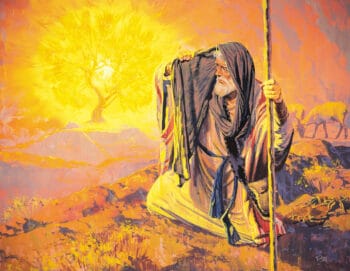
Image © Lifeway Collection at Goodsalt.com
For example, God’s love is a pure, holy love—a love that is completely free from all selfishness and egotistic motives. His omniscience (all-knowing) is holy omniscience, meaning it is free from evil intentions. Would we trust an omniscient God if He weren’t holy? Of course not! We would be afraid of Him, and rightly so.
God’s omnipotence (being all-powerful) is holy omnipotence. Imagine a God who is omnipotent but not holy. He could be a powerful, evil tyrant. Only God’s holiness allows and enables us to really love Him, because He is good from beginning to end. This is why holiness is perhaps the most important characteristic to understand about God’s character. Yet, perhaps, it is one of the most misunderstood, as well.
Think about Bible characters such as Moses, Isaiah, Ezekiel, Daniel, and John who came into God’s presence. What was their first response? They removed their shoes, hid their faces, or fell down as though dead. As human beings, we are sinful and so unholy that we can’t bear to stand in God’s presence. Any human who looks at God’s face will not live. Similarly, when Ellen G. White went into vision, she often cried “Glory . . . glory . . . glory” because it was the one word that seemed to most capture what she saw. And, of course, the four living creatures do not rest day or night without saying, “ ‘Holy, holy, holy, Lord God Almighty, who was and is and is to come!’ ” (Revelation 4:8, NKJV).
|
Truly, God is pure holiness, and when we come to Him, we must see Him as such. How does knowing this inspire you? In what ways does this challenge you regarding your own character? |

In an earlier comment I mentioned we often hide behind Christianese, generating comments that sound good to us but are meaningless to those who are unfamiliar with the language. I would like to think that at least some of what I write would resonate with my secular friends.
We say that God is Holy. I guess the simplistic answer is that God deserves respect, and while my secular friends would understand what I am saying, they would say that such behaviour is meaningless. How can you respect something which you cannot see or experience?
Most of us have a sense of respect (for the want of a better word) for some of the less less tangible things we encounter. For example, complex machinery that works well (steam engines or rocket motors) We also have a feeling of awe for something that is beautiful. I have just been admiring the work of a photographer in Western Australia who has made an art form by photographing the small salt lakes that dot the dry landscape. It has a wow factor that is difficult to describe.
My birdwatching friends and I have that feeling when we watch Ospreys diving from a great height into Lake Macquarie and coming up with a fish. The combination of keen eyesight, muscular coordination, flight accuracy to capture the fish, and power as the Osprey breaks free of the water with the fish in its talons,is something that is awe inspiring to watch and photograph.You often hear expressions like “Wow! That was amazing!”
When I visit the dark sky regions of NSW to photograph the sweep of the Milky Way with my atheist friends, I often hear expressions of almost spiritual appreciation for the beauty and scope of the visible universe.
If we move from the physical to the ethical, we find that most of us. irrespective of our spiritual beliefs, agree ideas like human rights, or environmental protection should not be taken for granted or used for profit. We may disagree about where to draw the line, but there is an idea that these things are beyond human reasoning. I am involved in a secular class in ethics and my secular friends and I have a remarkably agreement that the idea of ethics is something beyond ourselves.
That shared sense of wonderment and respect is noted particularly by Rudolf Otto, a German theologian in his book, “The Idea of the Holy” and is also taken up by C S Lewis in “The Problem of Pain” Both point out the universality of the sense of the Numinous, a sense of awe and fascination that goes beyond ourselves and our rationality
My atheist friends of course don’t associate those with a deity but prefer to call it “nature”. “Human values”, “principles of the universe”, or something. Perhaps it is just a naming issue! I have to admit that I am not surprised. After about 1500 years of God being described in terms of dogma often with condemnation, and seeing many modern churches concerned more about avarice and self-preservation, it is no wonder they have rejected the Christian God and called him something else.
Back to our Lesson. If we limit our view of holiness to the idea of sinlessness I think we are restricting our view of God. Even if there was no sin, the idea of holiness would still be associated with respect, joy, wonderment, and appreciation, and that God is too important to be considered common or disposable.
I hope that my secular friends would understand what I have written today.
I was kind of surprised that the lesson defined holiness as sinlessness because when I look at holiness it seems to most reflect the idea of being set apart. Of course, God’s perfection is surely a part of that. But I think that definition fits with the experiences of your friends.
The Lesson title for this quarter, “Growing in a relationship with God” , strongly indicates that it was specifically written for people who have some knowledge and understanding of God. One aspect which is common amongst all Christian believers is that they all acknowledge that God is holy. Therefore, today’s lesson will receive a resounding yes. However, the challenging question is what do we do with the knowledge and understanding that God is holy? Knowing that God is holy, does it make us reflect on our characters, behaviours, thoughts, and actions? Today’s lesson is not simply to inform us that God is holy, but it is to help us make a reality check on whether our ways are wicked and crooked. Knowing that God is holy is not an end in itself but a reminder to examine one’s Christian walk. “Be holy, for I am holy” (Leviticus 11:44; 1 Peter 1:16). God is calling us to holiness. He wants our lives to reflect His character.
As believers, knowing that God is holy and yet living contrary to the character and nature of God is terrible spiritual hypocrisy. Our knowledge of who God is should quicken us from spiritual darkness because God is light.
“Yes, they knew God, but they wouldn’t worship him as God or even give him thanks. And they began to think up foolish ideas of what God was like. As a result, their minds became dark and confused” (Romans 1:21, NLT).
God’s holiness should impact our lives immensely.
1. We should give God the highest reverence in our lives. Unfortunately, at times, we give our greatest reverence to other things. I have a concern when I see God’s house treated with a lot of irreverence.
2. God’s holiness should bring deep awareness of sin in our lives. God’s purity must make us stop minimising sin. Knowing how holy and pure God is should make us be more sensitive to sin.
3. God is calling us to holiness – “Be holy, for I am holy” (1 Peter 1:16). All that we do and say, our desires, relationships and everything must reflect the character of God.
4. Our worship must be transformed. In heaven, the four living creatures, the 24 elders, and the angels are worshipping God, day and night. The quality of our worship to a holy God must be acceptable in His sight.
5. We must resolve to be different from the world. Yes, we are in the world, but we must not be of the world.
“Think about Bible characters such as Moses, Isaiah, Ezekiel, Daniel, and John who came into God’s presence. What was their first response? They removed their shoes, hid their faces, or fell down as though dead.” quoted from todays lesson.
Is there sanctity in our sanctuary today? We refer to our individual churches as God’s Holy Sanctuary!
Whenever God has showed up in history, His presence has been undeniable, and the first appropriate reaction has always been worship and gratitude for who He is—holy, as it is written, “Who shall not fear You, O Lord, and glorify Your name? For You alone are holy” (Revelation 15:4). It is afterwards that people get to understand of His character. The Holy Scripture demonstrates that the greatest hope for Israelites was to see God, yet their greatest fear was to see God for He is absolutely holy, making Him both attractive and terrifying. God’s holy nature runs right through the entire life, death, and resurrection of Christ Jesus. If God’s holiness was to be demonstrated in our lives and communities we live in through the power of the Holy Spirit, the Good News of Jesus’ death and resurrection on our behalf will spread to all nations, for “the earth will be filled with the knowledge of the glory of the Lord as the waters cover the sea” (Habakkuk 2:14). Indeed, when God will brings a final defeat to evil, there will no longer be a need for a temple with a “holy of holies,” for the Holy God will dwell in our midst forever and ever.
I am struck by the idea that “God’s holiness is central to all His other attributes”. With all His power and other magnificent characteristics at His disposal,His Holiness is the medium of dispensing these attributes to man.
Humans endowed with exceptional qualities and in positions of power but without holiness abuse their qualities and power to oppress.
We are encouraged in Hebrews 12 to “seek holiness, without which, none shall see God”.
The beauty about all of this is that all we have to do is ask of Him and He will give freely to all who accept Him!!!!!
Of the several text the author presented of Holy is our Lord I do like also Isaiah 57:15. Our God dwells in us as we have a contrite spirit( remorse for our sins), and are humble. The parable Christ gave to those who needed it, Luke 18:9 was quite the contrary to those described in Isaiah 57:15. The parable of the two worshipers is found in Luke 18:9-14. As we discussed last week, our walk with God is an attitude of I cannot live a day without time spent with Him, which is humbling ourselves before the Lord with a contrite spirit. When we humble and have accepted the help of the Holy Spirit. He heals our haughty attitude, and sinful ways, leads us, and restores us. Isaiah 57:18 Another example of the two opposite worshiper is Cain and Able. Genesis. 4:1-5. Peter had a similar attitude at Christ trial . These examples are amplified or illuminated, found in Christ Object Lessons chapter 13.
God is Holy, which inspires me to allow Him to continue to heal me, lead me, and restore and/or revive me. Isaiah 57:15,18. Basically to strengthen my faith in Him to remain strong with all the armor of God. Ephesians 6:13-18.
It pays to be in tune on a daily basis with Our Father through Christ. Our reward is found in the One who covers us with His feathers.
Ps. 91.1 He who comes to the secret place of the Most High will find rest in the shadow of the Almighty. Ps. 91.2 I will say of the Lord, “He is my refuge and fortress, my God, the One I can trust.” Ps. 91.3 He will deliver you from Satan’s snare and from the coming dreadful pestilence. Ps. 91.4 He will cover you with His feathers and hide you under His wings. His truth will defend and protect you. The Clear Word.
I would say the secret place or shelter if you prefer, is the relationship we have with Christ.
God‘s holiness has given the perception to many people that He is unapproachable. His holiness is placed in contrast to our sinfulness and creates a wall of separation both physically and spiritually.
1 Timothy 6:16 KJV
Who only hath immortality, dwelling in the light which no man can approach unto; whom no man hath seen, nor can see: to whom be honour and power everlasting. Amen.
Isaiah 59:2 KJV
But your iniquities have separated between you and your God, and your sins have hid his face from you, that he will not hear.
And yet Jesus presents God as abundantly approachable through His merit of sinlessness. More than this God does not see His holiness as a barrier to our relationship with Him but is actively pursuing us and encourages us to come boldly to the throne of Grace.
Hebrews 4:16 KJV
Let us therefore come boldly unto the throne of grace, that we may obtain mercy, and find grace to help in time of need.
Praise God for Jesus Who bridges the huge gap between God’s holiness and our sinfulness!
Love between two people is holy; life is holy; Jesus is holy; all goodness that we may achieve is holy; we, as humans, may not be holy, but we are full of God’s attributes, and they are holy; our body is holy; our mind and emotions are also holy. We sometimes misunderstand holiness; that’s why we lie, because the truth is holy too.
I like that “truth is holy” also.
The holy spirit in Psalm 29:2 asks us to worship the LORD in the Beauty of holiness! This means that worship should go beyond processions, but must invoke in us the desire to be like the LORD. Yeah, in his character. His character is something we should strive for, as it is attractive.How do we do this? Peter in his second epistle, chapter one suggests the addition plan – to faith add virtue, to virtue add knowledge, to knowledge add temperance (self control), to temperance add patience, to patience add godliness, to godliness add brotherly kindness, to brotherly kindness add love – he who lacks these is blind, has forgotten that he was purged from his old sins (2 Peter 1:1-9).