
5: How to Study the Bible — Teaching Outline
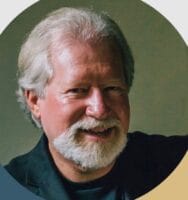
Introduction: This year marks the 30-year anniversary of my son’s posting my Bible studies on the Internet. Beginning in 1975, while I was a law student, I was part of a rotation that taught the adult Sabbath School lesson at church. From about 1980, I have taught a Bible study each week at church.  Each new church I joined graciously invited me to teach. Writing these Bible studies and teaching them to a live class forced me to study the Bible regularly. That turned out to be one of the greatest blessings of my life! Space does not allow me to explain all the ways studying and writing Bible studies has blessed me. First, I think it has sharpened my intellect. Second, I am positive that Bible teaching has made me a better lawyer. Third, and most important, it has helped me better understand God. Let’s dive into our study of the Bible and see whether we can find proof that Bible study will improve your life!
I. Sharpening the Intellect
A. Read Psalm 119:98. What does the Psalmist tell us about how God’s Word gives him an advantage over his enemies? (The Bible makes him “wiser.”)
- How familiar is the Psalmist with the Bible? (He writes that it is “ever with me.” This tells us that the Psalmist not only knows the Bible, but that he considers it a source of instruction.)
B. Read Psalm 119:99. What other advantage does the Psalmist enjoy based on his study of the Bible? (He has greater understanding than his teachers.)
- What does this assume about his teachers? Are they students of the Bible? (If they are Bible students, they have not spent as much time with the Bible. They must be people the world considers to be well-educated.)
- What does this add to our knowledge of the way the Psalmist approaches the Bible? (He meditates on it.)
a. What do you think it means to “meditate” on the Bible? (I think it means to study the Bible deeply and to contemplate what it means.)
C. Read Psalm 119:100. Who else is at a disadvantage because the Psalmist studies the Bible? (The “aged.”)
- Let’s discuss this for a little while. What makes an old person smart? Or wise? (In my observation, young fools sometimes become old fools. What the passing of time should teach us is how to deal with problems. This would include solving difficulties and avoiding problems in the first place.)
a. In what practical way does Bible study help us in that area? (The Psalmist tells us that he “keeps” the teachings of the Bible. The Bible is a guide to better living. You can learn the lessons of life either by smashing your face into the problem, or learning from the Bible how to avoid problems.)
D. Quickly review Psalm 119:98-100. What is the Psalmist’s overall message? (Whether you are an enemy, a helpful teacher, or an elderly person, the Psalmist has an advantage over all of them. Why? Because of his knowledge of the Bible.)
E. Read Psalm 119:101-102. Is the Psalmist someone who only knows what the Bible says? (No. He says that he obeys what God has shared in the Bible.)
F. Read Psalm 119:103. How does this turn out for the Psalmist? (Life is good. He loves what he learns from the Bible.)
- How many people say that they love reading and studying the Bible? (Many find it difficult because they reject what it says. The Psalmist tells us that it makes his life better, that is why he finds it such a positive experience.)
G. Read Psalm 119:104-105. Why do you think the Psalmist hates “every false way?” (His path in life is made clear from his Bible study. He sees that turning away from the Bible ultimately creates sorrow.)
H. Read Isaiah 55:10-12. When we obey God’s word, what kind of attitude should we expect? (We should experience joy, peace, and celebration.)
II. Mysteries Revealed
A. Read Genesis 1:1 and Hebrews 11:3. How important is it for you to understand how we came to be in our universe?
B. Read Daniel 2:20-22. What does Daniel tell us that we can learn from having a relationship with God? (The deep and hidden things of the world.)
C. Read Daniel 2:16 and Daniel 2:27-28. What is the context for Daniel saying that God will reveal the deep and hidden things of the world? (This is the account of King Nebuchadnezzar’s image dream. What God revealed through Daniel and this dream is the subsequent history of the world! We read about this in the Bible and learn about our future. Thus, the Bible reveals where we came from and where the world is going.)
D. So far we have looked at our motivation to study the Bible. Let’s turn next to how we should study the Bible.
III. Setting Aside Time
A. Read Matthew 6:33. Is there a lesson in this for our Bible study? (We need to make it a priority. I try to follow this literally by making my first task of the day studying the Bible so that I can write this lesson.)
B. Read Acts 17:10-11. How often did the Jewish Bereans study the Bible? (They studied daily.)
- What kind of attitude did they have in approaching their study? (They were eager to determine the truth. They wanted to separate truth from falsehood.)
C. Read Isaiah 28:9-10. When the Bible tells us to study “precept by precept,” what do you think that means? (It means that we should build our understanding of the Bible on the Bible’s overall teaching. Our understanding of truth should not be based on a single verse that may be out of harmony with the rest of Scripture.)
D. Read Joshua 1:8. Do you think we are told to do nothing but study the Bible? (That is unlikely. Instead, this tells us to think about the Bible and what it teaches us.)
- How much “thoughtful time” do you have in your life? (Most of the people I know have something entertaining going on all the time. They are watching television, scrolling through their phones, or wearing headphones that pipe in music or other entertainment. Quiet time to think is rare.)
- Think about times when something interesting or troubling was going on in your life. Did you think about it in your spare moments? (That happens to me. The Bible encourages us to have this kind of an experience with the Bible.)
- Do you think the Bible suggests conscious meditation, or will unconscious meditation suffice? (When opposing counsel sent me their brief, I would try to read it immediately, even if I had a couple of weeks to respond. I did that because my mind would unconsciously work on answering their arguments.)
a. Can you do this with the Bible?
IV. Outside Tools
A. Read Psalm 119:18. What is the Psalmist requesting? (This is a prayer that God will help him understand the great things in the Bible. This is an acknowledgment that we need God’s help to understand.)
B. Read 1 Corinthians 2:11-13. Why is the Holy Spirit so critical to understanding the Bible? (It is God’s Spirit, and no one understands God like He does.)
- What does this teach you about studying the Bible through lessons like this? (I ask for the Holy Spirit to aid in writing these lessons. But ultimately, the reader must pray for the Holy Spirit to understand the things “freely given to us by God.”)
C. Read John 14:26 and 2 Timothy 3:16-17. How do the Holy Spirit and Scripture work together in our reading and understanding of the Bible? (The Holy Spirit teaches us and brings to mind truths we have already learned. Scripture teaches, reproves, corrects, and trains us in righteousness so that we may be equipped for every good work. Notice that Scripture is “breathed out.” That suggests the Holy Spirit is the active agent.)
D. Friend, God promises that if we study His Word, and make His guidance part of our life, we will not only enjoy intellectual advantages, we will have a peaceful and joyful life. Would you like that? Why not decide right now to make studying God’s Word part of your daily routine?
V. Next week: Prayer Warriors.
Copr. 2026, Bruce N. Cameron, J.D. Scripture quotations are from the ESV® Bible (The Holy Bible, English Standard Version®), copyright © 2001 by Crossway, a publishing ministry of Good News Publishers. Used by permission. All rights reserved. Suggested answers are found within parentheses. If you normally receive this lesson by e-mail, but it is lost one week, you can find it by clicking on this link: http://www.GoBible.org. Pray for the guidance of the Holy Spirit as you study.
