
Sunday: Just Give Me a Sign!

Daily Lesson for Sunday 17th of May 2026
Maybe you’ve heard it said, “If I could just see the Red Sea parted, or manna on the ground, or Jesus heal a blind man, I’d believe.” Or perhaps you have had those same kinds of thoughts yourself.
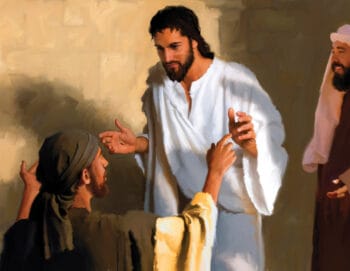
Image © Jim Howard at Goodsalt.com
Why should it be easier for us now to have faith than it was for those in ancient Bible times? The Israelites didn’t own a whole Bible, nor did they have such a long history to look back on as we do. Moses reinforced the importance of looking back in order to remember God’s leading and goodness (see Deuteronomy 4:7-10; Deuteronomy 8:2-3). Unlike the Israelites, we have 6,000 years of Bible history to draw from (see John 20:30-31).
Every generation wants a sign, and ours is no different. But signs are all around us. If you read Matthew 24:1-51, you will see how many things have been and are being fulfilled even now.
People even in Jesus’ time wanted a sign that Jesus was really God’s Son, even though they had received many signs. How did Jesus respond? (See Mark 8:11-12.)
Do we argue with Jesus and test Him as did the Pharisees? Do we make Him “[sigh] deeply in His Spirit” (Mark 8:12, NKJV) because of our lack of faith, when He has already given us all we need to believe?
“These signs were not what the Jews needed. No mere external evidence could benefit them. What they needed was not intellectual enlightenment, but spiritual renovation.”—Ellen G. White, The Desire of Ages, p. 406. Could it be that we, too, need spiritual renovation—a genuine, real, moment-by-moment walk with God? Perhaps we actually don’t need a sign, because we have a lot of knowledge at our fingertips, especially from our own Bibles.
So, instead of making Jesus “[sigh] deeply” because of our lack of faith, may we remember the words Jesus spoke to Thomas: “ ‘Blessed are those who have not seen and yet have believed!’ ” (John 20:29; see also Hebrews 11:1). God does not ask us to have blind faith—He has already given us so many reasons to believe. And yet, even with all these reasons, there is always room for doubt. The key is to focus on what affirms faith, not on what brings doubt.
|
In just 60 seconds, how would you describe your faith in God? What does your answer tell you about your walk with God? |

The issue of signs was a contentious one in the gospels. The Pharisees were a pretty persistent bunch and came to Jesus, asking for a sign. Surely that was a reasonable request. But Jesus saw through their request:
Why would they ask for a sign? They had just seen Jesus heal a man with a withered hand on Sabbath. Then he healed a demon-man who was both blind and dumb. But they had dismissed is as the work of the devil. Apparently, miracles of healing performed on Sabbath were not to be counted. So, when they asked Jesus for a sign, he knew where their hearts were. They did not really want a sign; they just wanted an excuse to condemn Jesus.
The Pharisees teamed up with the Sadducees a little later on and asked the same question:
Jesus had demonstrated that the kingdom of heaven was based on compassion, not signs and wonders. And in this modern world the best miracle we could pray for is that we will show the compassion of Jesus to one another and those in need. That is an exercise of faith.
Maurice, thank you for your amazing, insightful words. I certainly do pray to be even more compassionate, to be more like Jesus. I so pray that!
Hi Maurice, Do you have any insight to the apparent contradiction of Mark 8:12 and the text you quoted Matthew 12:39,40? Mark said, no sign to this generation, but yet Jesus fulfilled the Jonah miracle
Hi Alfred, I am not Maurice, but a while back when our Sabbath School Quarterly was on the book of Mark, I realized then that Matthew gives a lot of explanations that Mark does not give. The reference you were giving is just one example. Another example is Mark seven and Matthew 15. I know there are others, but that is the one that comes to the top of my head. It is not a contradiction. It is just in a lot of places Matthew provides the explanations that Mark does not.
The conversations about seeking signs occur in the three synoptic Gospels in varying levels of depth. My layman’s guess is that different people remember the conversation slightly differently.
I have conversations with my wife, and when it becomes important to remember what was said a week later, we often have different views of the conversation. Sometimes I get told I have selective hearing!
So I don’t think the Gospels contradict one another. The synoptic Gospels give similar but different accounts of several events – that is why they are called synoptic – and we, the readers, have the privilege of seeing the same events through three different writers.
We live in an entertainment age where everything appears magical, making it difficult to tell the difference between reality and illusion. We are often captivated by glitz and glamour, listening closely as celebrities influence what we should wear, eat, believe, and even how we should vote. This blending of entertainment and faith can slowly draw our hearts away from God’s truth. Yet Romans 12:2 reminds us, “Do not conform to the pattern of this world, but be transformed by the renewing of your mind.” God calls us to live with discernment, allowing His Word—not the culture around us—to shape our thoughts and decisions.
Most times, we desire a sign from God to show us what to do, but constantly seeking signs can become dangerous when we ignore the greatest sign already given to us- Jesus Christ Himself. By entering human history, being conceived by the Holy Spirit, and becoming Immanuel—“God with us”—God revealed His heart and His plan for humanity. John 14:6 declares, “I am the way and the truth and the life.” In Christ, we already have the truth, guidance, and hope we need. May His Spirit help us recognize the sign before us and understand its meaning for our lives and our future.
Jesus said in John 20:29, “Blessed are those who have not seen and yet have believed.”. This is when Thomas, the disciple of Jesus, demanded to see physical evidence of His resurrection. This does not mean that evidence is useless, but mature faith is not controlled by constant demands for extraordinary experiences. What happens when miracles stop, or when prayers seem unanswered, or suffering comes, and when God seems to be silent? Faith must not be sign-dependent but in trust, conviction, and in a relationship with God. Signs should not be the foundation of our faith, but they only affirm or point us to God. Signs should not be the end by themselves. The ultimate foundation of our faith should be on the character of God. God will surely do what He has promised because God does not change, God is faithful, and God is love.
Signs alone do not reflect genuine conviction. The Pharaoh in Egypt witnessed several signs and wonders but did not believe. The Israelites witnessed the powerful signs of God in the wilderness, but they continued to be rebellious. The Pharisees saw many of Jesus’ miracles, but they demanded more before they believed that He was the Son of God. “A wicked and adulterous generation asks for a sign.” (Matthew 12:39). Signs can cause fascination but not conviction and transformation. A multitude of people followed Jesus because they were fascinated by His miracles and not because they were convicted by His messages. Sign-dependent faith is transactional faith. That is, seeking for signs and not seeking God. This kind of faith is not genuine because it is only sensational and self-centred.
Jesus warned against sign-dependent faith because signs can be counterfeited or misused. Signs-driven faith can promote deception. “For false messiahs and false prophets will rise up and perform great signs and wonders so as to deceive, if possible, even God’s chosen ones” (Matthew 24:24, NLT). Faith must be tested by the truth, obedience to God and our character. Even the devil believes in the existence of God, but his character is inherently evil.
I am just realizing now that even men of faith in the Bible had this question, “The Sign.” Some not very expressly, like Jacob, (Gen 28:20-22), but Abraham’s servant, —a sign (Genesis 24:12-14); Moses, (Exodus 4:1-5)—a sign; Gideon, “the fleece of wool” (Judges 6:36-40)—many signs; and even King Hezekiah, (2 Kings 20:8-11).
…and that says quite a lot, and confirms how, as humans, seeing and believing go together. Generations today expect the unexpectable; the miracles count, and that gives out the bleak picture of what drives throngs of people around the world, following charismatic preachers and going through unimaginable trials to get a miracle or blessing from preachers. It’s all about the sign, and depending on “signs” impedes true faith.
Look at the disciples, for instance: a raging tempest, doubt reigns, even after all the “miracles” (Matthew 24:3; Acts 1:6)
What am I trying to say here? Talking to myself here—must a sign be seen for my faith to begin? Something triggers me a lot in church: listening to many of us just before we begin to pray or for giving (offering) at the pulpit are these words, . It seems God has to do something for us to thank Him—once again, signs seem to take precedence.
I ask myself this question—if “signs” must be, does it count calling it “faith”? Think of it.
Hi Stanley, I believe you bring up some good points. Though everyone is given a measure of faith, we don’t seem naturally inclined to faith.
Another question is how faith is connected to correct theology. The two examples in our lesson of great faith, the centurion and Syro-Phoenician woman, probably knew little of correct theology. Our church is theoretically united around the same theology but we all have different degrees of faith.
As sister White said, “the church militant is not the church triumphant”. Testimonies to Ministers p. 61
I totally hear and agree with what you are saying Michael, but I believ we can turn it around. If someone knows exactly what day the Sabbath is, doesn’t eat pork, and knows exactly what happens when you die, but passes by another human being lying wounded in a ditch, is that person’s theology really correct?
No William, we are supposed to help our neighbor who needs help. We are supposed to give them food, clothing and water to drink. which could mean we are showing “What would Jesus do?”
I see where you are coming from, Michael! In fact, so many people today confuse theology, religion, and faith. Listening to many of us today, you’ll hear them mix them up—faith and religion, or theology and faith. It may be best to first realize what makes the difference between theology versus faith. I came across this definition when I ran a search: …. and that says so much.
The centurion and the Syro-Phoenician woman, just as Jesus would define, were people who connected their hearts and spirit to an undeterred belief in Christ, just from hearing about Him from others. They depended on no theory or theology, but they heard or even saw, and their belief was sure that Jesus was all they needed (the best man for the job)- remembered Rahab?. That’s how faith works—not so much proof or due diligence—a leap and confidence. However, with God’s guidance, it is really not a free fall.
On the other hand, and I think this is why so many get tied up in a quagmire, when we box faith in theorem, theory, or even theology (study). Studies are intended to make us understand, but not necessarily to prove. Faith—little or large—is hard not only to quantify but to rationalize, yet it is a driving force. It is this that theology attempts to study. Theology attempts to establish parameters, but doesn’t dictate faith—faith operates in a spiritual sphere that connects one to another.
Through the grace of God, faith is really the main ingredient. Theology enables us to study and see other experiences, to enable us to relate to what happens within us. For the centurion, however, he accessed his faith in Christ, and at that time that was all that mattered.
Michael, I can tell you for free that anytime I read about these two faithful people, I just ask myself, what does it take to be like them? The beauty is that with the little faith we have, God still accepts it and allows it to grow.
A lot of people need to see signs in order to believe in Jesus.
The only sign I need is His constant working in my life, and even if I don’t see those signs, my faith is still anchored in Jesus Christ our Savior and Lord!
I love this! Thank you!
The Theme of this week’s Lesson is “Having Faith” and and today’s theme is “Just give me a Sign”.
There is no doubt that signs and miracles can fan the flames of Faith. However our faith in God cannot only rest on the basis of seeing and experiencing signs and miracles.
My brothers and sisters in Jesus we cannot WILL to love and trust anyone. Love and Trust are the fruitage of a Relationship. The point is this : no quantity of miracles performed by my Lord would cause you to love and trust in Him , as compared to personal quality time spent in growing to know Him and love Him, and trust Him ; trust me, it does take time.
The greatest Sign , the greatest Miracle that we can “see” and “experience” is to grow to know Him, to love Him and to trust Him. And as we trust in Him we are enabled to experience miraculous signs; such as the ability to stop telling lies, not coveting our neighbour’s goods and even keeping the Sabbath Day holy. It is in this manner that we realize the truth of Sacred Scripture that states -” the righteous person will live by his faithfulness” Habakkuk 2:4 NIV ; “the righteous will live by faith Romans 1:17 NIV.
This truth is captured beautifully by the Habakkuk when he says :
“Though the fig tree does not bud
and there are no grapes on the
vines,
though the olive crops fails
and the fields produce no food,
though there are no sheep in the
pen
and no cattle in the stalls,
yet I will rejoice in the Lord,
I will be joyful in God my Savior.”
Habakkuk 3:17-18
NIV
In answer to the question at the end of the lesson. My faith took a giant leap almost 50 years ago when I attended a SDA evangelistic meeting. The subject was Daniel 2. I found that I can believe in a God who knew the future, thousands of years ahead. That was faith building for me. I am thankful for the Historicist method of interpreting prophecy and feel sorry for those that have to speculate in Futurism’s method of interpretation.
Mine is a question of is my faith in God centered only on what God can do for me or is my faith in God unconditional?
Maybe – asking for a ‘sign’ is just another excuse for not wanting to believe that Jesus Christ represents our God.
Maybe – asking for evidence manifested in the material world tries to circumvent the Spirit who prompts God’s Truth to our heart and mind to help us understand the power and mysteries of faith.
Maybe – people would like to intellectually know what can only be understood through the revelation brought about by the Holy Spirit.
Maybe – those wanting to argue on points are not really serious about finding the Truth. If they did, they still would want to quibble about it.
Using Ellen White’s quote: “What they (Jews) needed was not intellectual enlightenment, but spiritual renovation.” Developing faith is an entirely spiritual process. Those still seeking signs to support their faith won’t be able to find it. It is true for everyone in our days as well.
Answering today’s question:
In my opinion, – ‘requiring signs’ – represents the deep chasm that separates our physical world from the spiritual Kingdom of Heaven. This chasm can only be bridged when/by accepting that man is never be able to ‘proof’ the validity/evidence of spiritually based faith.
Only – faith, in and of itself, – is capable to provide evidence. But this requires that we engage it. Acting, living by faith, brings about that which we cannot yet see – ‘God’s faithful work on behalf of our Salvation’-. It is impossible to maintain our relationship with Him without faith – Heb.11:1; Heb.11:6
The fact that I exist gives me faith…the rise and fall of my chest due to an all-powerful being, THE GOD of the universe is my sign…Nothing else is needed. No evolution or anything such caused all the signs we live in and around every single minute of our lives besides our Father God. Why do we focus on needing signs when we already are so intricately created, when we live in a world of beauty, though it be fallen. We are too blessed to be desiring or seemingly needing signs…we need Jesus.
How shouldn’t we trust and have faith in God. Doesnt the things He created and all the marvelous things He did on earth drives our soul…If nothing at all, you just think of this whole universe, created with just a command from His lips. Lets pray for the renewal of Faith in God in us…The prince of darkness grims everyday. We can only tremble not for him if we have much faith in God…Lets watch and Pray
My faith in God is not based on other people’s miracles. My faith in God is based on the miracles I see in my own life. It is amazing how well he handles the details of my everyday life. God solves all the problems I cannot. And I have peace with Him.