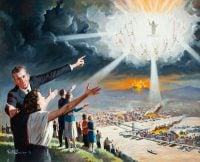
The wages of sin is death. But God, who alone is immortal, will grant eternal life to His redeemed. Until that day death is an unconscious state for all people. When Christ, who is our life, appears, the resurrected righteous and the living righteous will be glorified and caught up to meet their Lord. The second resurrection, the resurrection of the unrighteous, will take place a thousand years later. (Rom. 6:23; 1 Tim. 6:15, 16; Eccl. 9:5, 6; Ps. 146:3, 4; John 11:11-14; Col. 3:4; 1 Cor. 15:51-54; 1 Thess. 4:13-17; John 5:28, 29; Rev. 20:1-10.)
Resources by other Christians
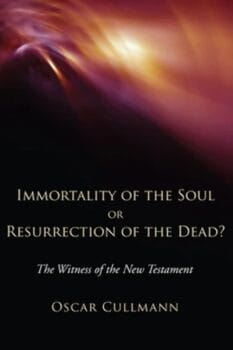
The Adventist view is known as “conditional immortality,” that is, humans are granted immortality on condition of their acceptance of salvation in Christ. Scholars from other denominations have also written on this subject.

The Fire That Consumes: A Biblical and Historical Study of the Doctrine of Final Punishment, by William Edward Fudge, an American Christian theologian, lawyer, and author who grew up in a devout Churches of Christ family. He is best known for his advocacy of annihilationism (conditional immortality), the view that the wicked are ultimately destroyed rather than eternally tormented, as explained in this book.
 There’s also a movie based on Mr Fudge’s exploration of the subject. It’s called Hell and Mr Fudge.
Currently (Aug. 2036) I see it viewable for free on Youtube: Hell and Mr Fudge (2012) You can also find more on Edward Fudge ministries.
See also these Bible lessons from our archives:
- Condition in Death Lesson 8 in the series, The Nature of Man (1999b), by Jack J. Blanco, examines state of man in death, with many biblical references.
- On Death, Dying and the Future Hope – a series of lessons for the fourth quarter of 2024.